I watched a demonstration at Paisley Artists by Gareth Reid.
Gareth Reid is a graduate of Glasgow School of Art and Florence Academy of Art and is currently Visiting Lecturer in Drawing, and Portraiture Tutor at Glasgow School of Art.
He has shown on five occasions at the BP Portrait Award in the National Portrait Gallery in London, and in 2007 won the BP Travel Award. Having travelled to Finland, he gave talks on his work in the National Gallery of Scotland, Edinburgh and the National Portrait Gallery. His work has been published by the NPG.
Gareth also took part in Series 2 of Sky Arts Portrait Artist of the Year.
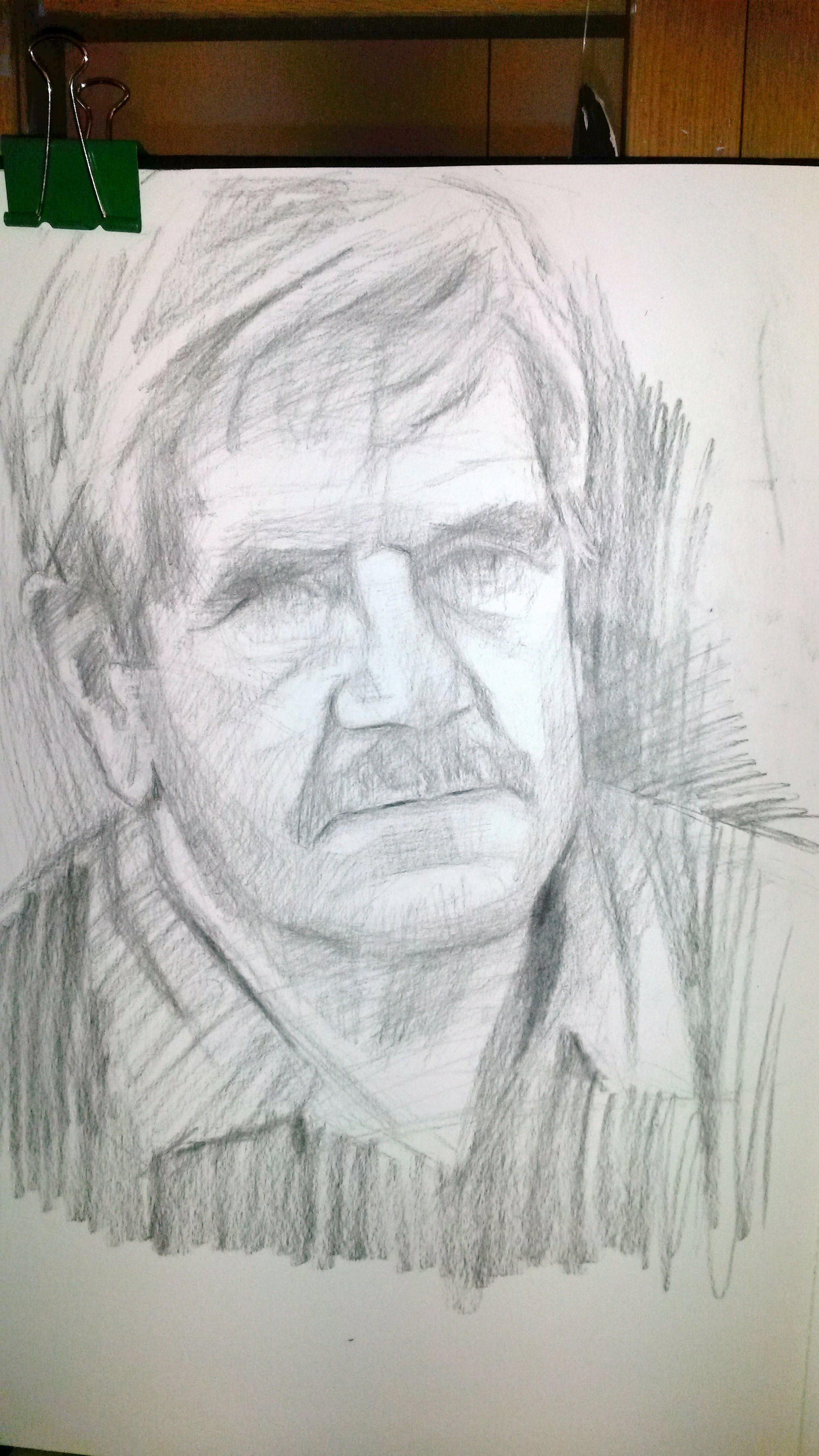
I was quite excited when I realised the artist had appeared on Sky Arts Portrait Artist of the Year, as I really enjoyed watching this. He stood very close to his model, with the paper of an A3 hard-backed sketch book, supported vertically on a studio easel. He started off very lightly, drawing loose geometric lines to establish the structure of the head. He held the charcoal pencil very loosely about 3 inches from the tip. He said to work on the image as a whole; not on small individual parts. When he had too many loose lines he defined them with an eraser.
He said to take special care measuring the distance between the shadow under the eye and the nostril, as it is a lot shorter than people imagine, and it is this error that causes people to elongate faces. Measuring also helps with getting a likeness in a portrait.
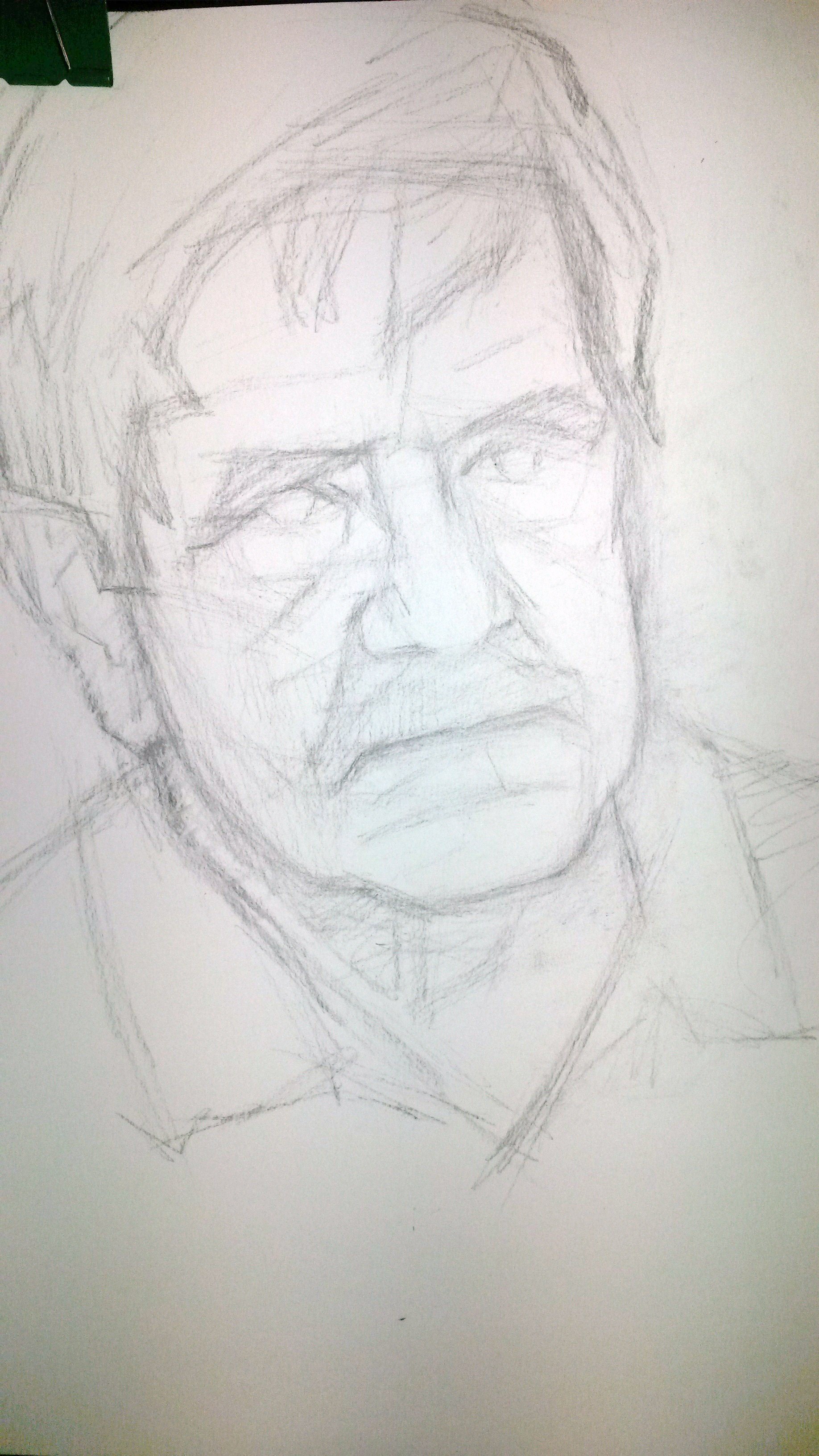
He said to be flexible when drawing a portrait; things can change, the person can move etc, and keep changing anything that isn’t correct. He constantly checked the drawing in a mirror, as this makes mistakes jump out at you. All parts of the face have equal importance to make a solid, believable head.
He said he always encourages students to slow down at the first stage, and to make sure the basic drawing is correct before polishing it.
He said to draw hair not hairs. Focus on volume and shapes, and break it into areas of tonal shapes which lock together. The whites of the eyes are often dark because they are in shadow because of the overhang of the eye brows.
The end stage is to unify the image and more vigorous lines can be used towards the end.
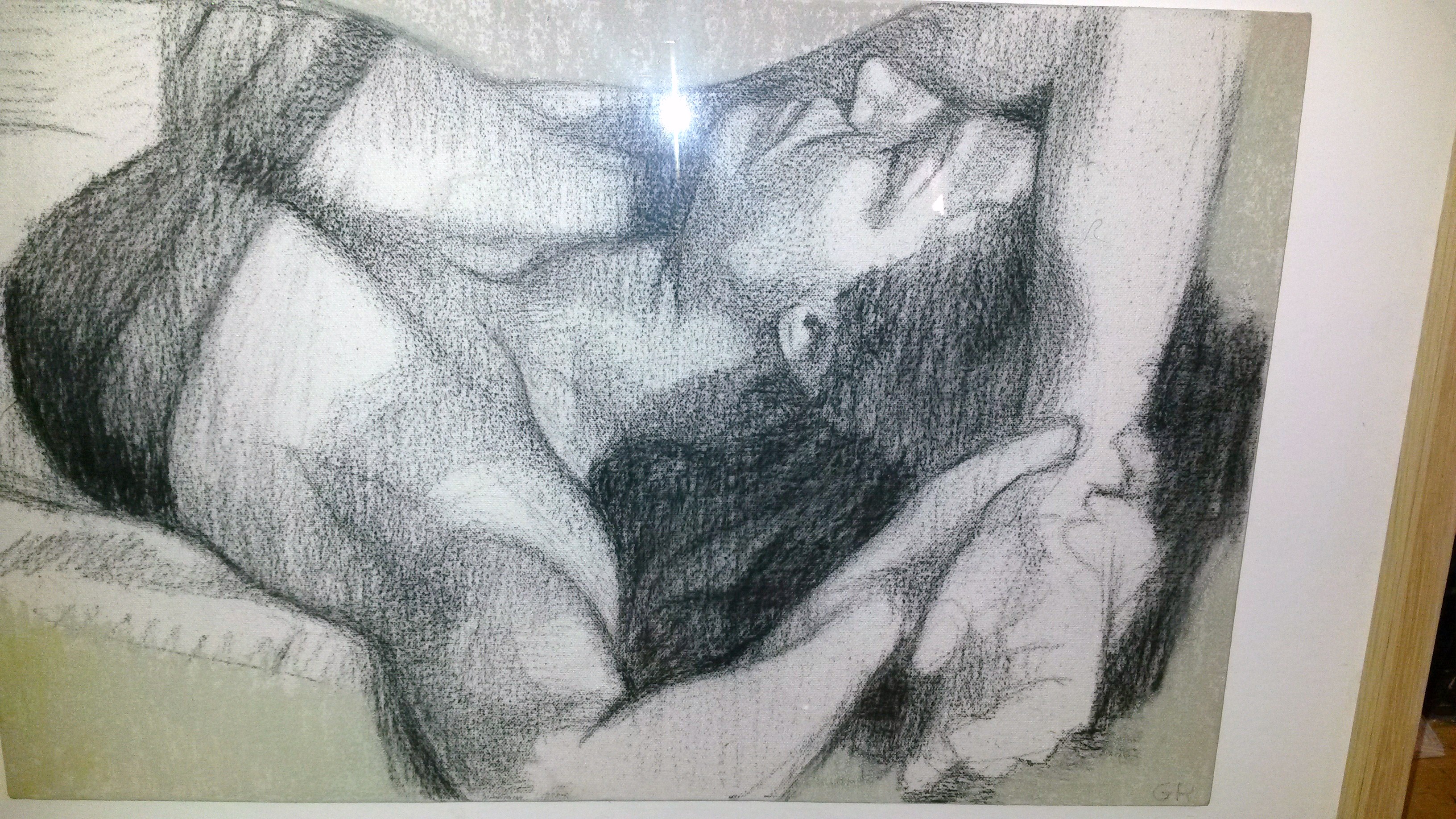
He showed us some finished pieces done in completely the same manner, although they were done on canvas board primed first and with a touch of soft pastel added for colour.
We couldn’t resist the opportunity to ask him about his experience of taking part on sky Arts Portrait Artist of the Year. He said that overall it had been a very enjoyable experience. He has a “process” that he follows when doing a portrait, pretty much what he was demonstrating to us, and for that reason he did not panic during the competition, whereas he could see other artists struggling to complete their portraits in the 4 hours timescale. He also practiced really hard before the competition.
Other artist, he worked purely from photographs taken on their ipads, and didn’t spend much time looking at the live model. They also used squaring up apps, and he didn’t “think there was much draughtsmanship involved”. Others appeared to throw a lot of paint around the canvas (for dramatic effect?) for the cameras but the finished painting was very tight.
 My drawing2 blog