This was to be a visit to the Roy Lichtenstein exhibition, however due to flooding the gallery was unfortunately closed, therefore we decided to head to Gallery 2 instead, where myself and another student decided to see the Two Roberts Exhibition, while another student and our tutor Olivia Irvine visited other rooms in the gallery.
Robert MacBryde was born in Maybole in Ayrshire in 1913, Colquhoun in Kilmarnock in 1914. From poor, working-class backgrounds, they met at Glasgow School of Art in 1933, and soon became lovers. In 1941 they moved to London where they became part of the celebrated Soho set that included artists such as Bacon, Keith Vaughan and John Craxton, and the poets Dylan Thomas and George Barker. Colquhoun specialised in figure painting, MacBryde in still-life. Hard drinking, volatile and uncompromising, their lives were as passionate and compelling as their art.
The Lefevre Gallery on Bond Street held a string of successful shows of their work; the Museum of Modern Art in New York and the Tate acquired paintings. By 1950 they were among the most famous artists working in Britain. But as abstraction became the dominant force in European art in the late 1950s, and as their drinking increased, so their popularity suffered. Colquhoun died penniless in 1962, aged just 47; MacBryde was knocked over by a car and died in 1966. Few artists have catapulted to celebrity or descended into obscurity so swiftly: their remarkable careers lasted scarcely twenty years.
The first thing that I was struck by was the similarity between Colquhoun’s and MacByde’s paintings; in everything from the colours, subjects and style. As I progressed through the exhibition I began to be aware of small differences, such as the texture in MacBryde’s paintings through use of brush strokes. I wasn’t initially taken by the paintings, particularly the colours in the early works (again, both used the same colours), however the later works were more appealing to me. I was interested to read that the dark shapes in the foreground were the shadows of people standing in front of it and this was often repeated. I bought the guide book of the exhibition, so plan further research on these two interesting characters.
We headed for the National Gallery and stopped briefly at St Mary’s Cathedral to look at a painting The Presence by A E Borthwick and the Paolozzi windows.
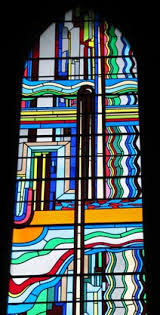
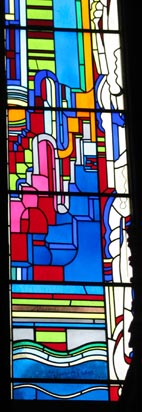
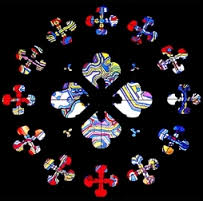
We then went to the National Gallery to see the Royal Scottish Academy (RSA) Exhibition. Olivia was very familiar with the members and it was good to get an insight from her about their work. I was most taken by the work of Michael Sandle Mount St Helens. It was difficult to tell the medium, although there was some wet into wet, there was also definite strokes, so I thought it was perhaps ink, however researching it on-line I see that it was actually watercolour, part of a series of four, each 97cm x 147cm completed in the 1980s. The scale was impressive and the image was powerful, and had a strong three-dimentionality about it, similar to the way that another sculptor; Henry Moore’s are. The artist’s handwriting stated it was taken from newspaper photographs.
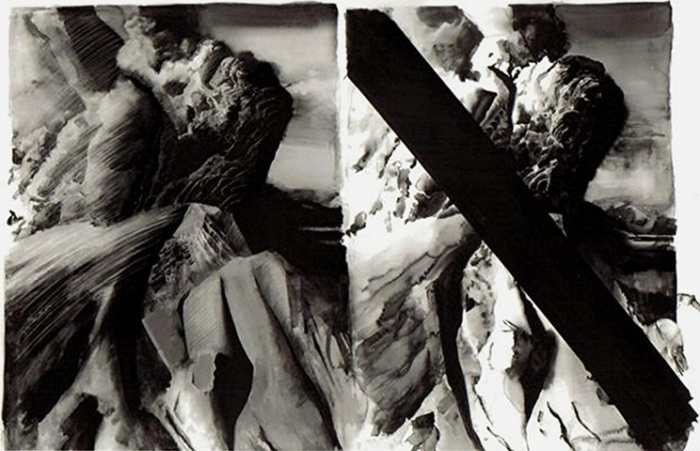
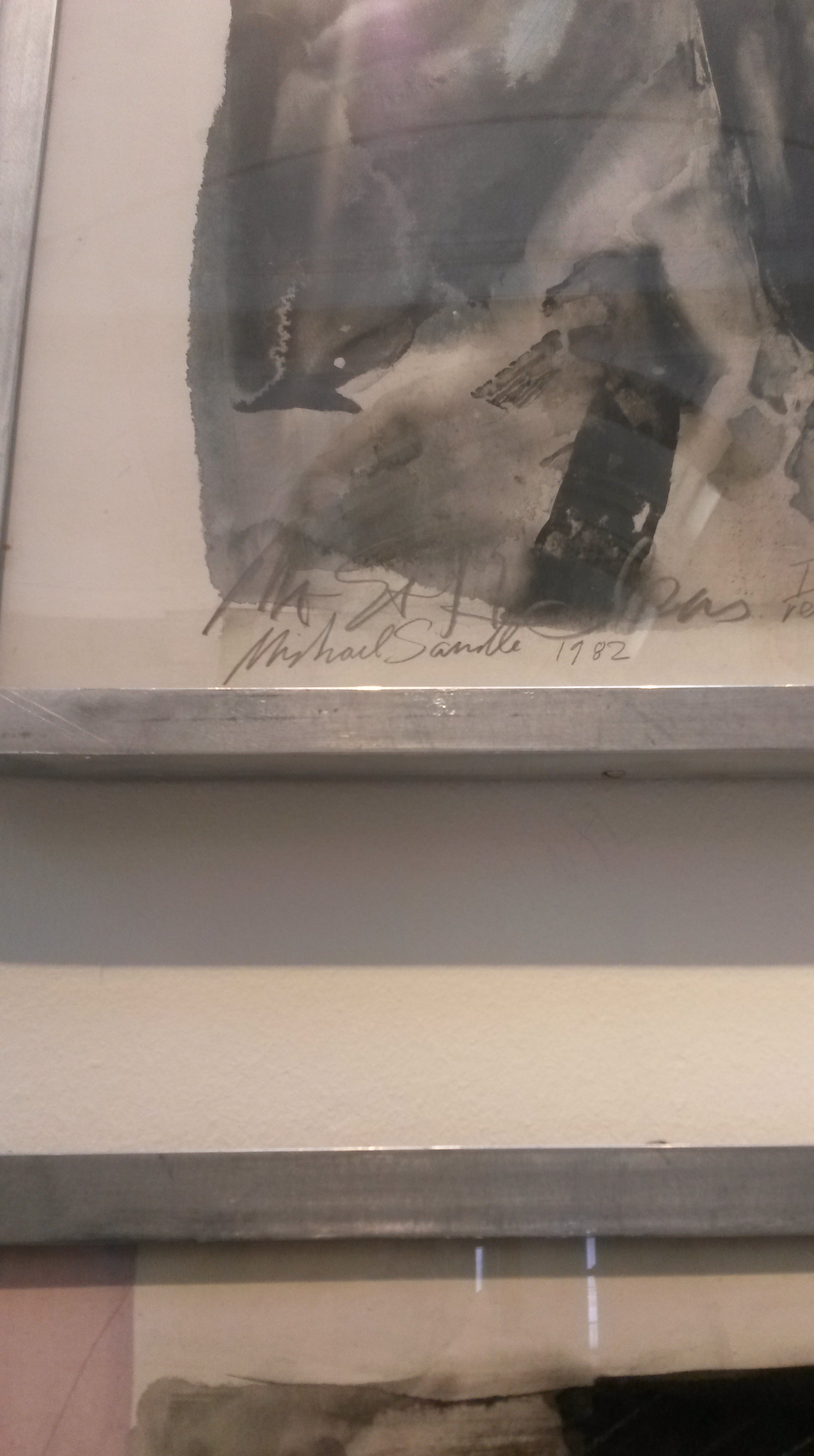

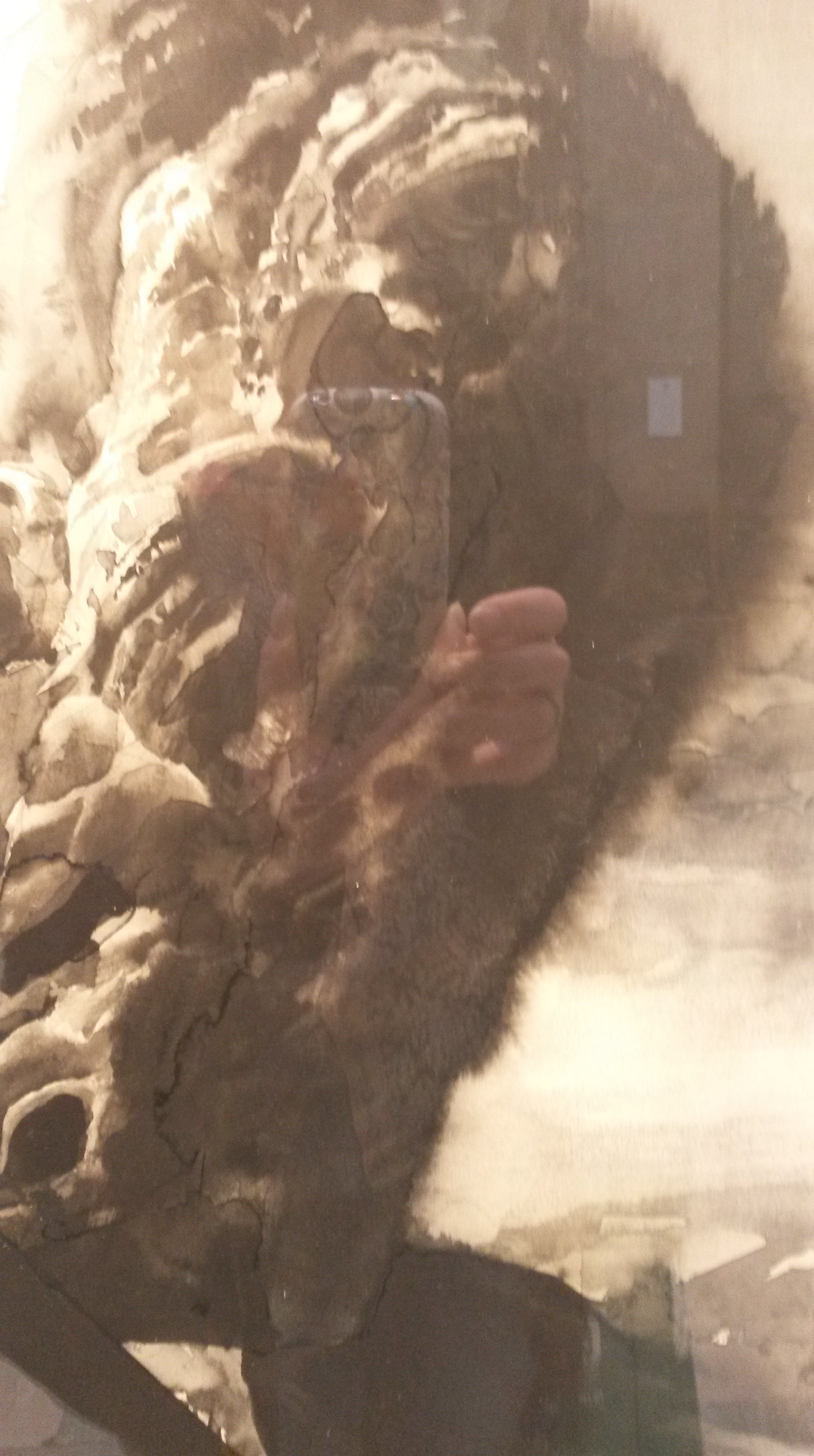
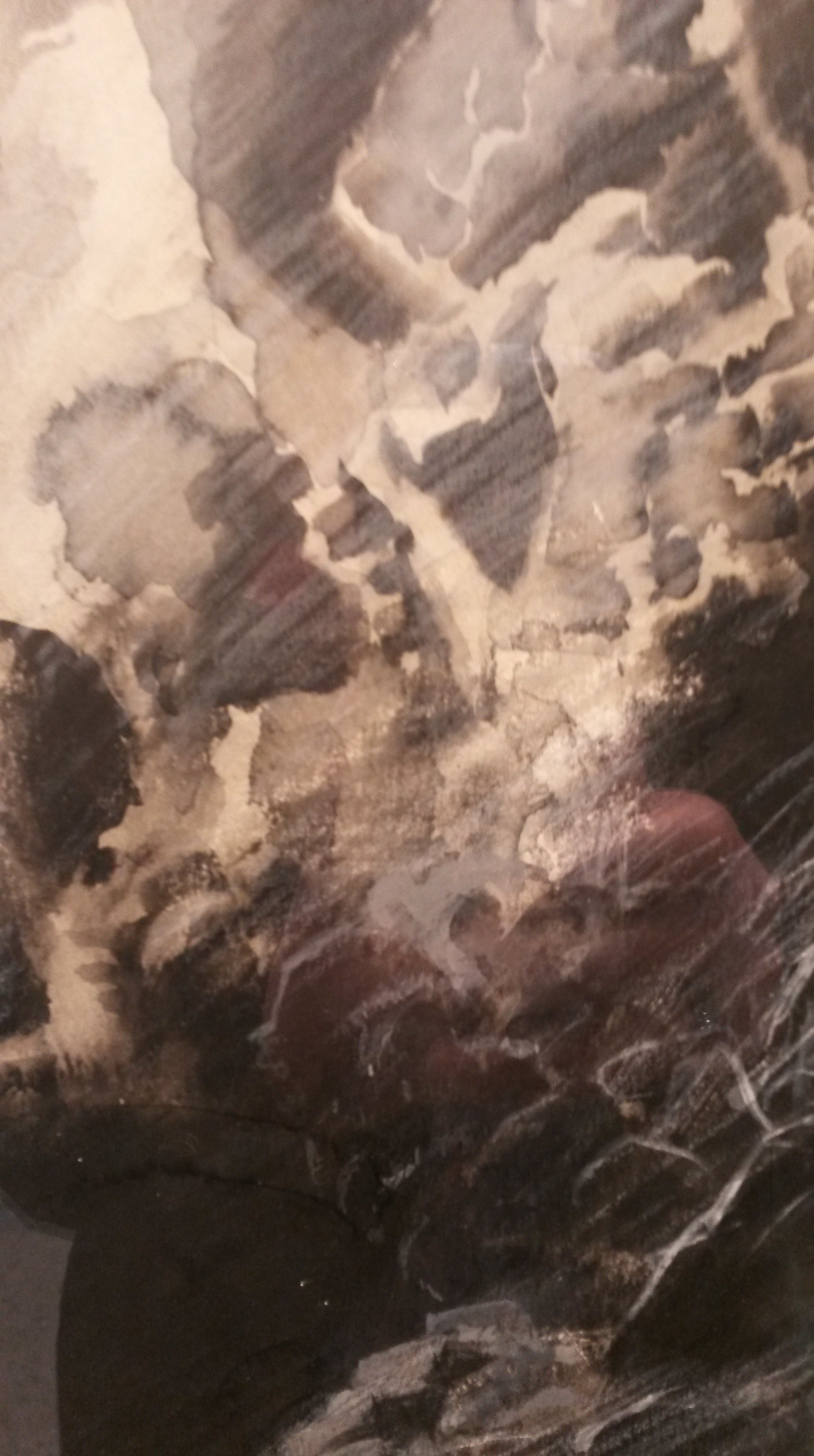
I was inspired by the scale the power of the images aided by the monochrome, and yet there was a delicacy; gorgeous wet into wet, layers, mixed media, energy and life. More and more on my Drawing Course I have been drawn by black and white, e.g. my barcode pictures, ink flowers drawings and assignment 6 figures, and this painting inspires me to be bolder, perhaps trying watercolours in monochrome in a similar way.
Refs;
http://en.wikipedia.org/wiki/Robert_Colquhoun
http://www.royalscottishacademy.org/pages/exhibition_frame.asp?id=440
 My drawing2 blog