Choose a smallish object you know well, preferably something with a fairly distinctive shape….Reach out for your object and feel it; as you do this, make a record of what you feel on your sketch pad with your pencil….Make several studies until you feel that you’ve arrived at something interesting.
I had a look around the room and decided to try drawing a hair brush and hair clip. The results were disappointing, I think because the shape is so familiar, I don’t think I was drawing what I felt, but what I knew a brush looked like.
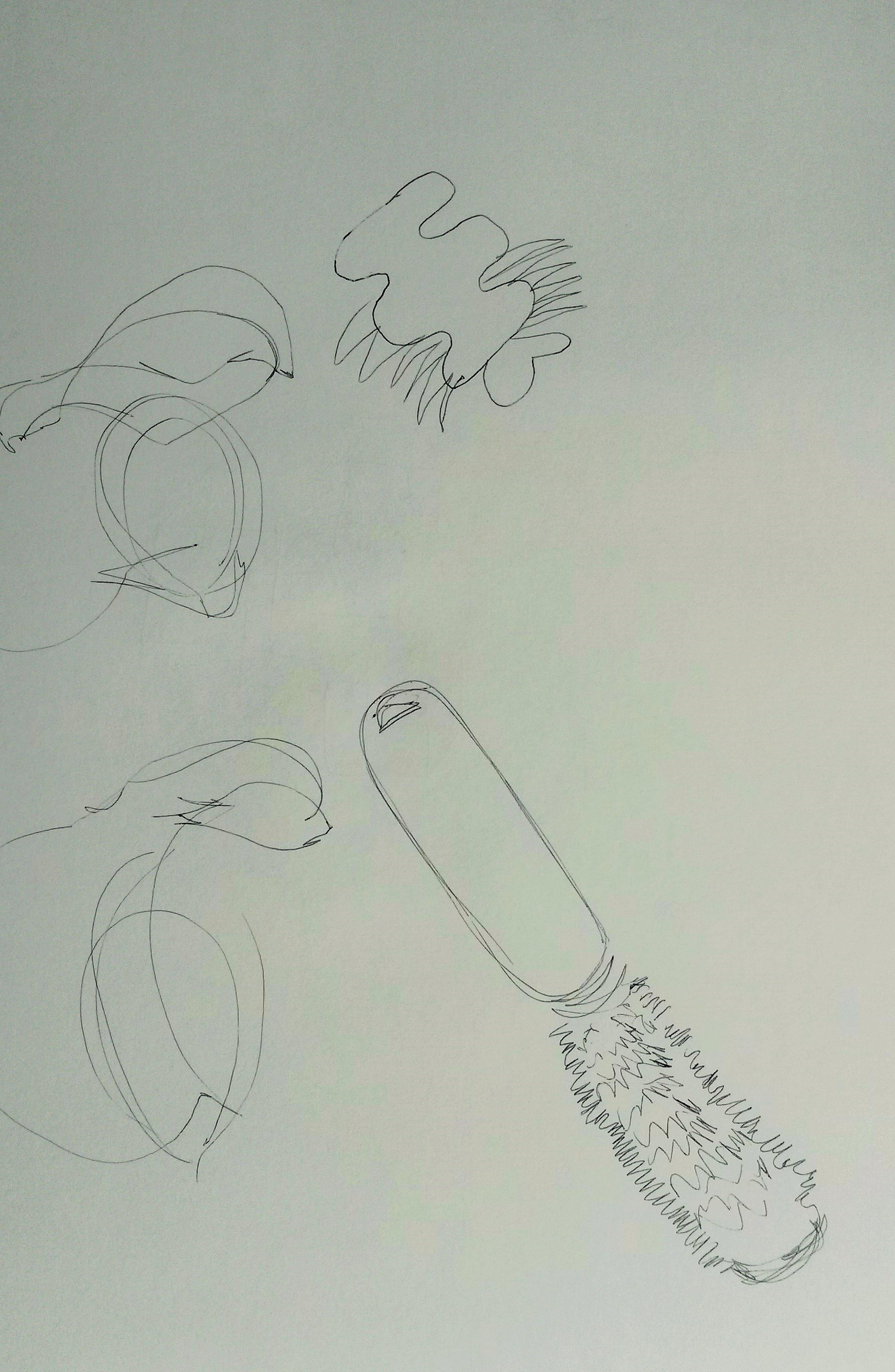
Pencil in A3 sketchbook
Next I tried a small jug. First I tried using pencil as the brief suggested. The results were better I think, because I was trying to record the shape I felt, rather than how I knew the jug looked.

Pencil in A3 sketchbook
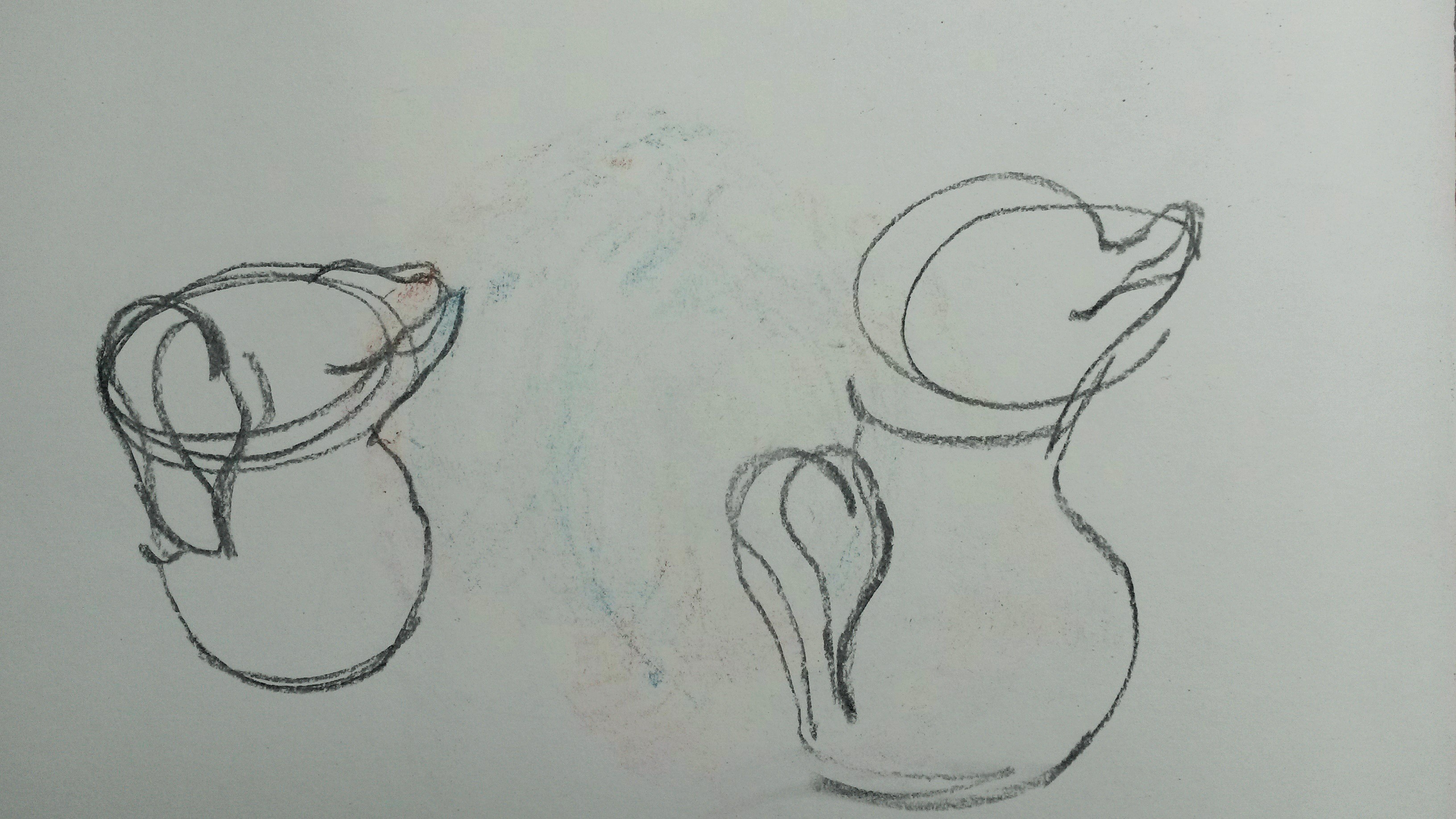
Charcoal in A3 sketchbook
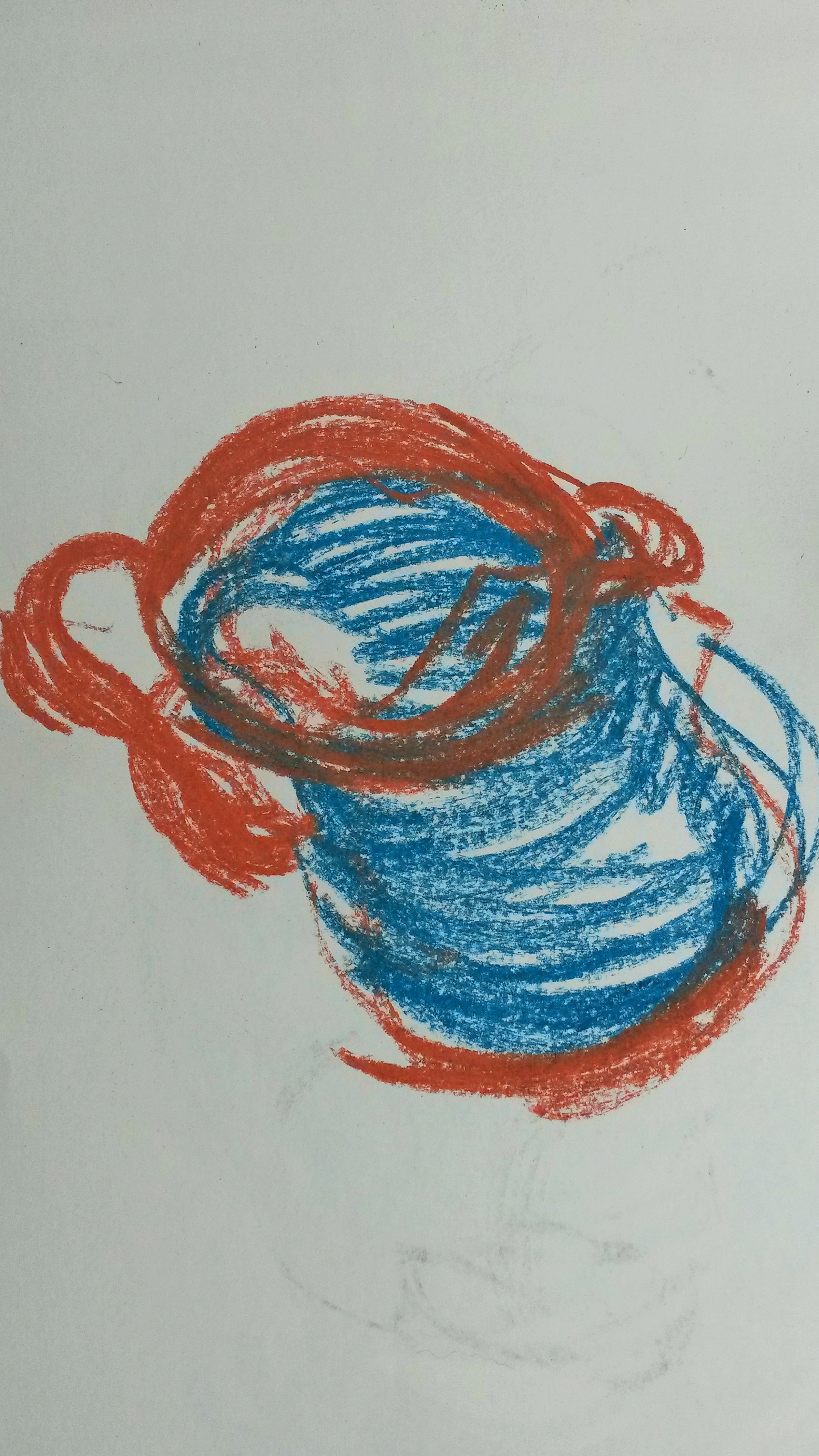

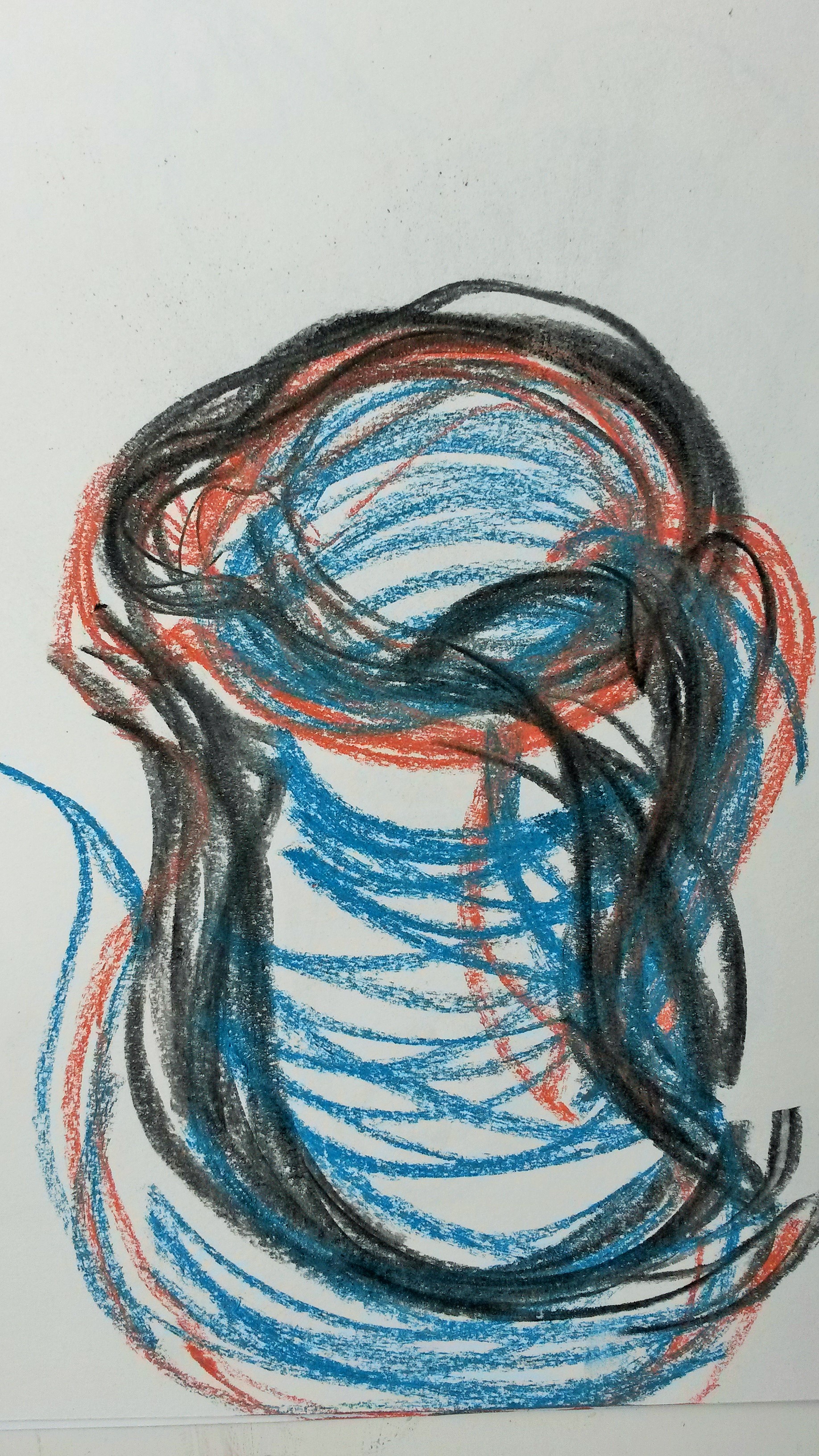
Soft pastels in A3 sketchbook
On looking at these, I could see that I was still drawing the vase from memory, and not from touch. So I sat with it in my hands for a good 15, 20 minutes, just running my hands over the surface and feeling the curves of the handle, neck and base and the smooth cold surface of the ceramic. Once I had examined it thoroughly by touch I then tried drawing it again in pencil.
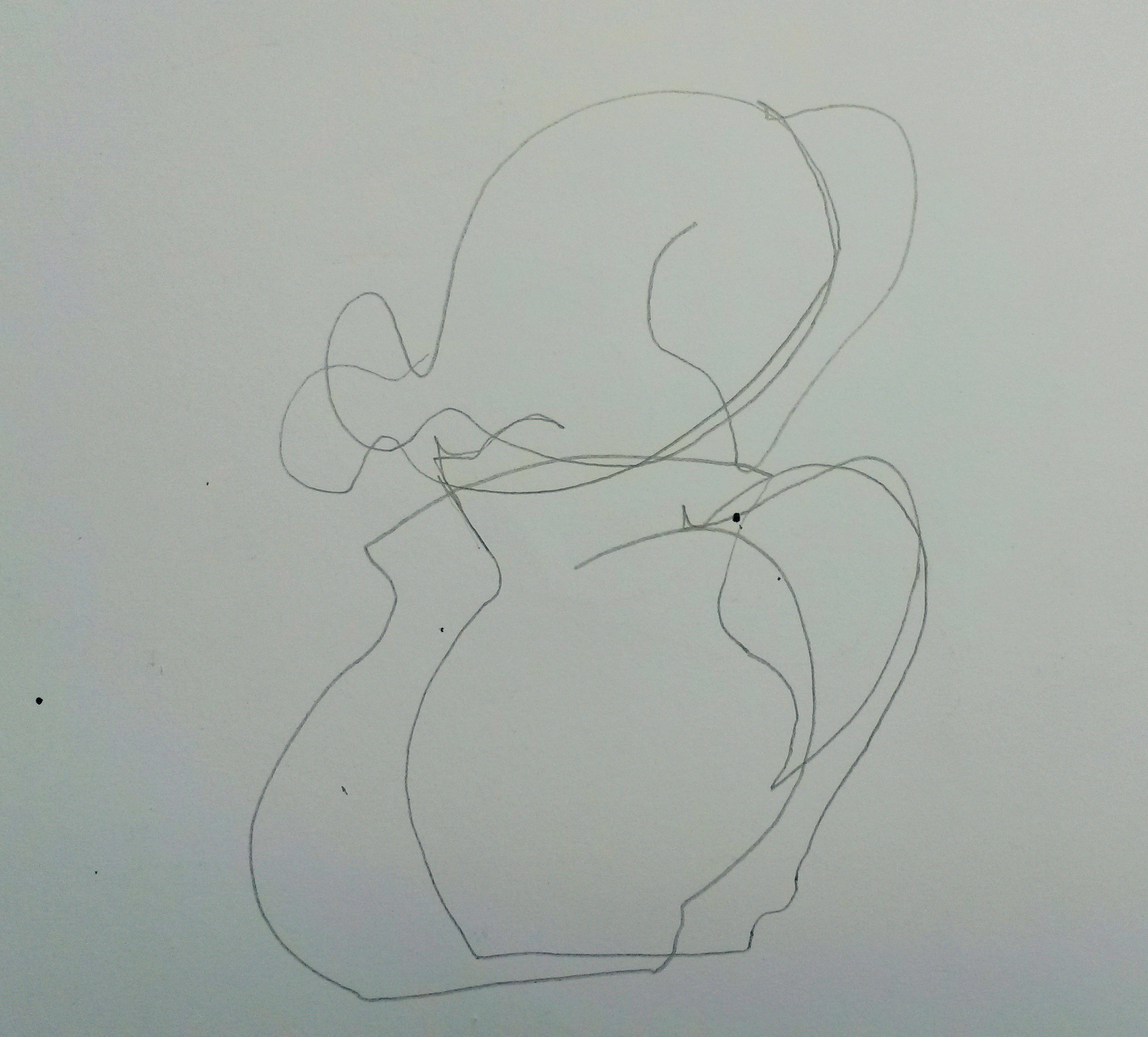
Pencil in A3 sketchbook
I was more pleased with this result; it seemed to be a more honest rendition. My pencil lines were more assured. Working from two planes, i.e. drawing the circle of the neck from above and the profile from the side describes the jug more honestly than my previous attempts.
Next I tried using black drawing pen as it gives a stronger, confident and more defined line with less room for hesitancy.
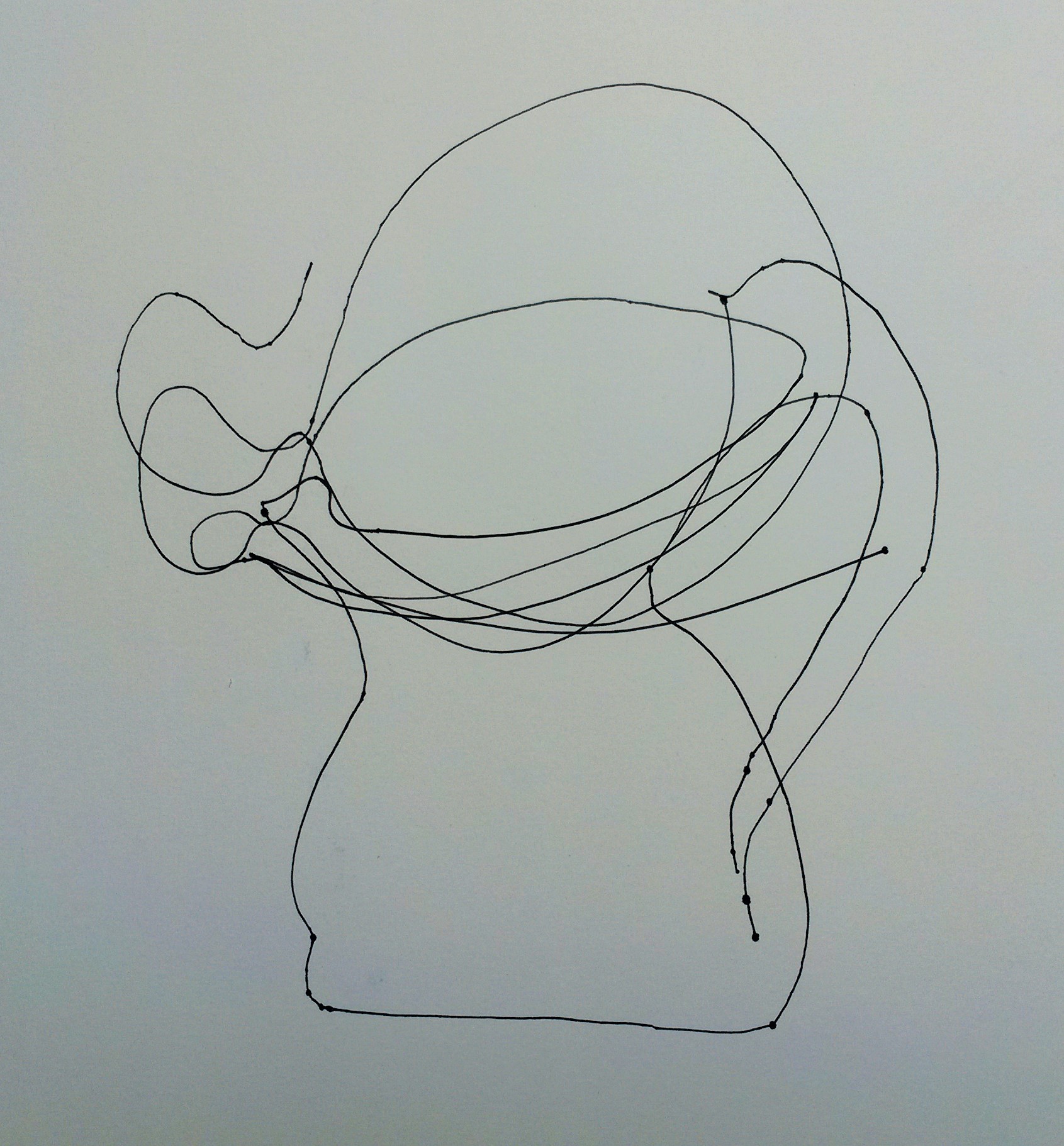
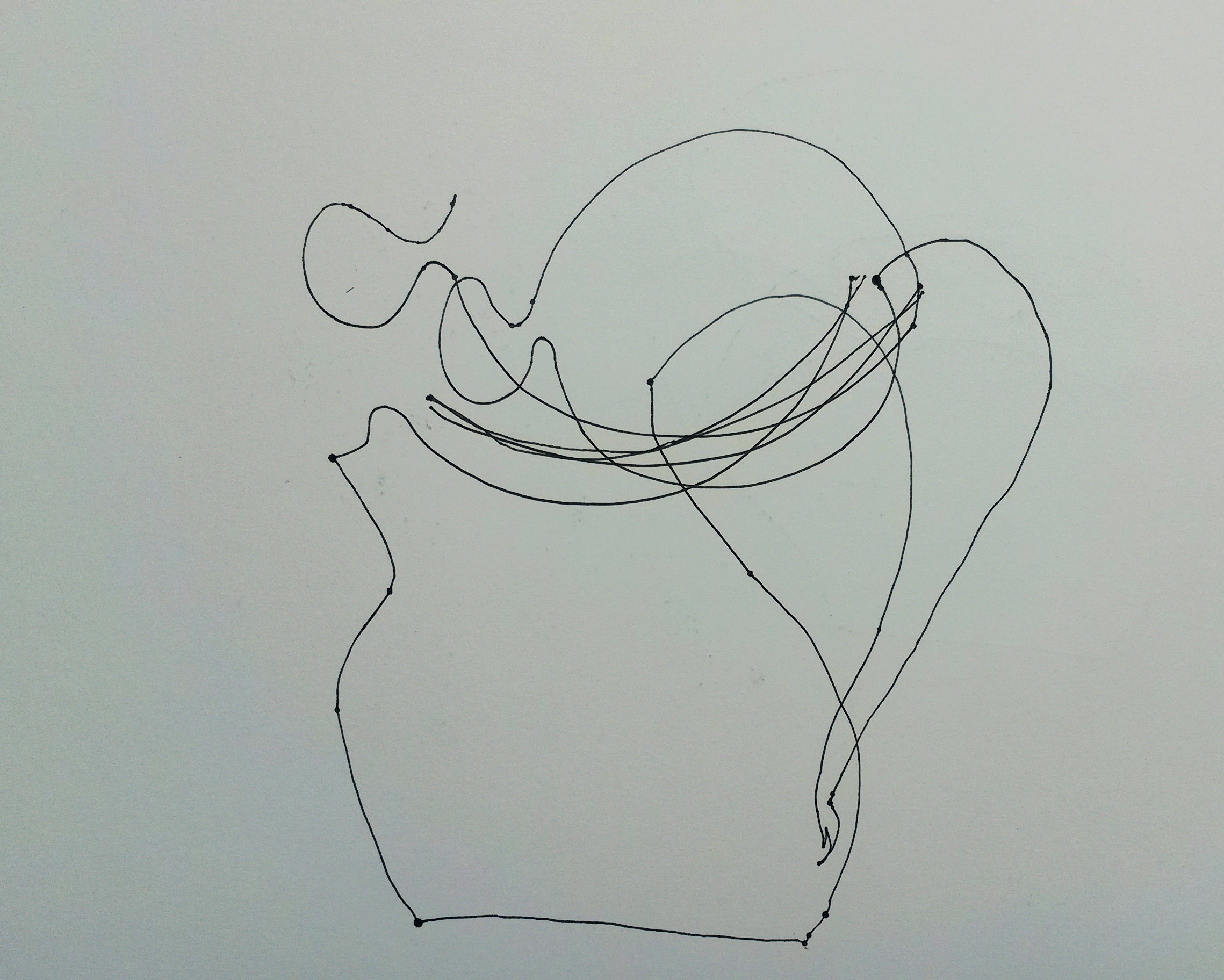
Black Pitt pen in A3 sketchbook
To a certain extent, these remind me of the Cubists, or Ben Nicholson’s etchings.
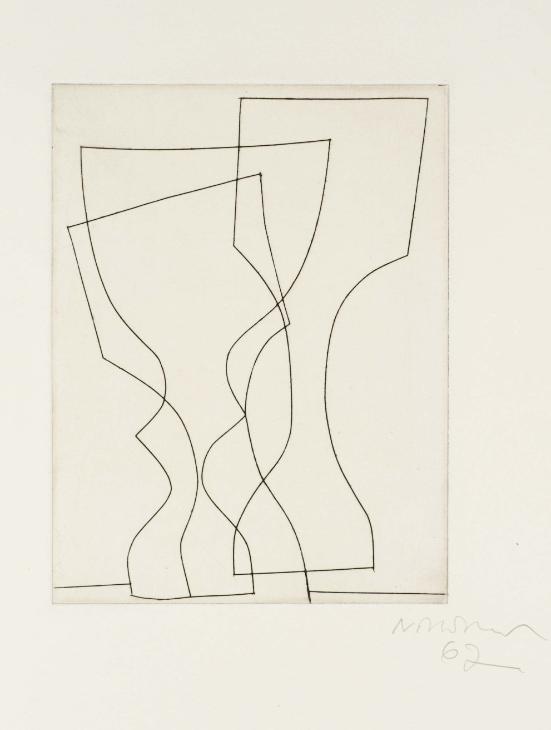
three goblets 1967 Ben Nicholson
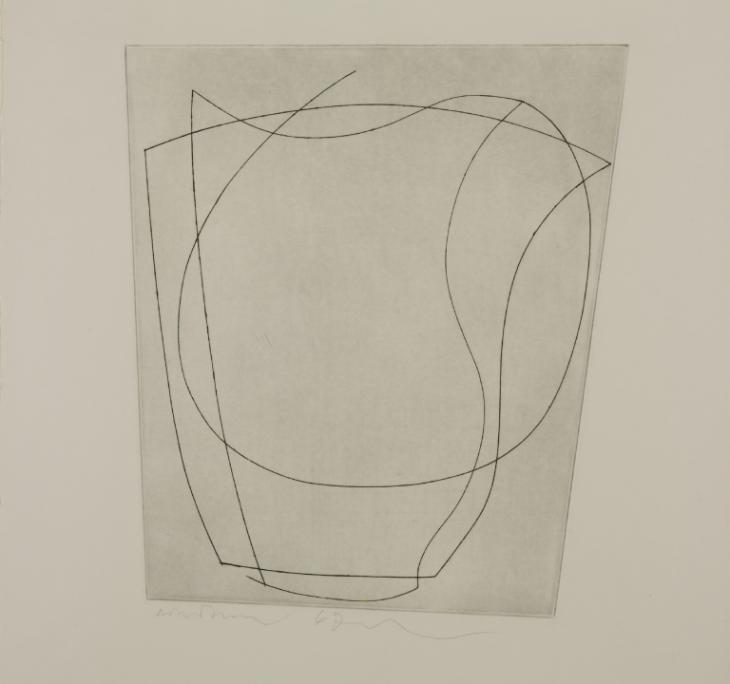
Rafael 1967 Ben Nicholson
Following the suggestion of ‘Drawing Projects’ I decided to try a self-portrait by touch only and the results were interesting.
“Your drawing should show a sensitive response to touch and contain a range of interesting felt marks. What is important in this drawing is the synchronised route of communication being made between the two hands, and the transfer and coding of one sort of information (touch), into another (visible marks).” (Maslen and Southern, 2014:88)
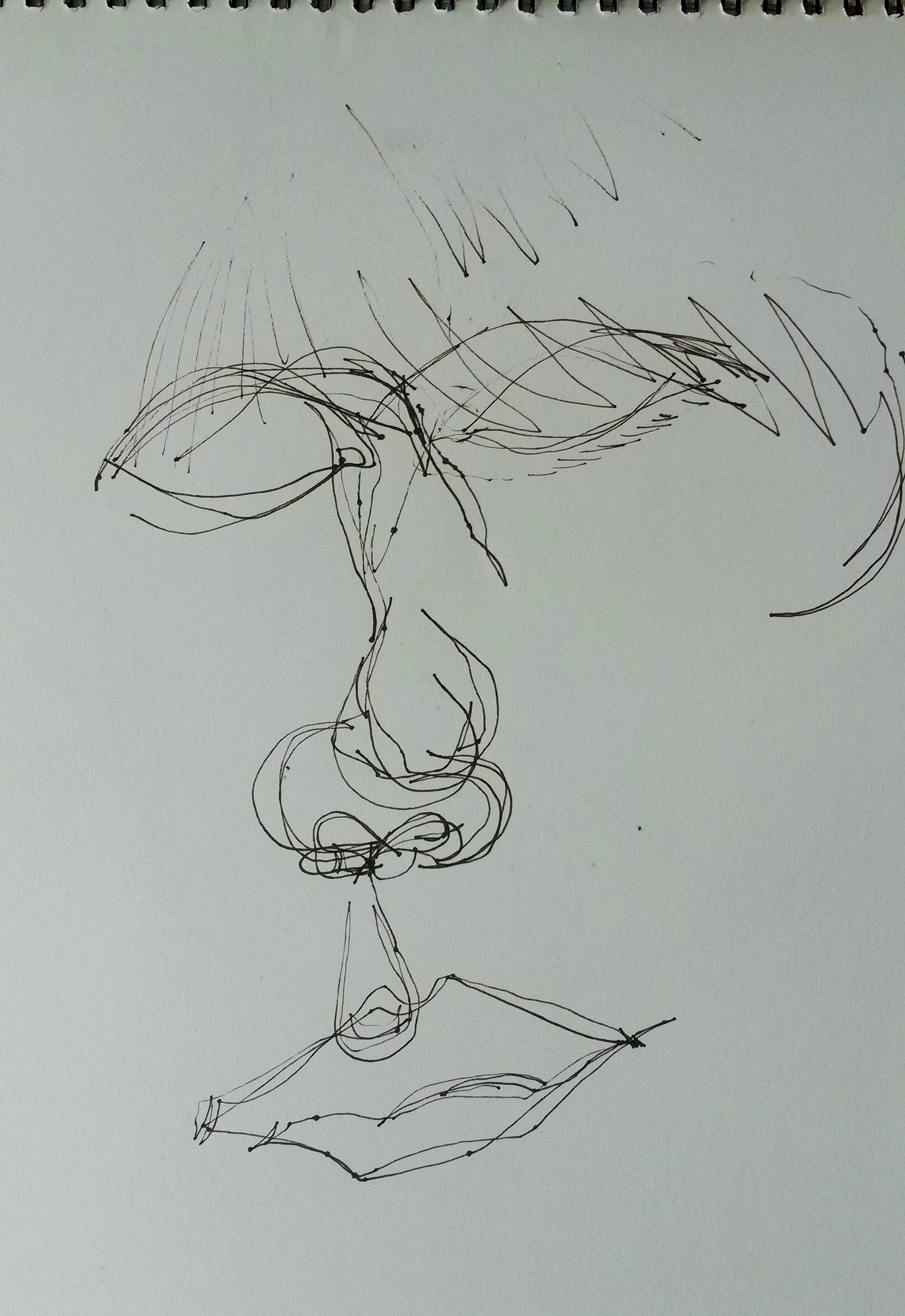
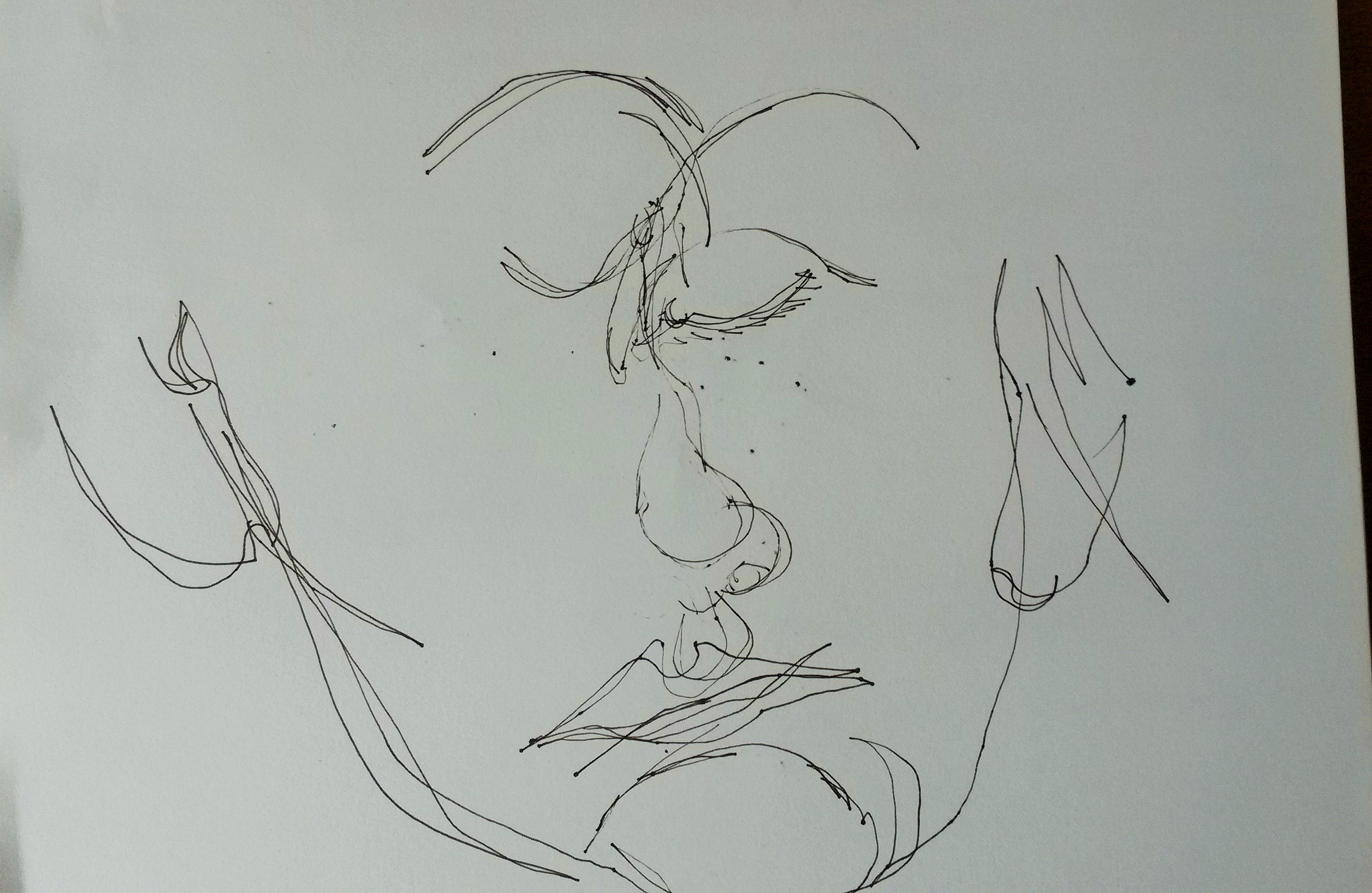
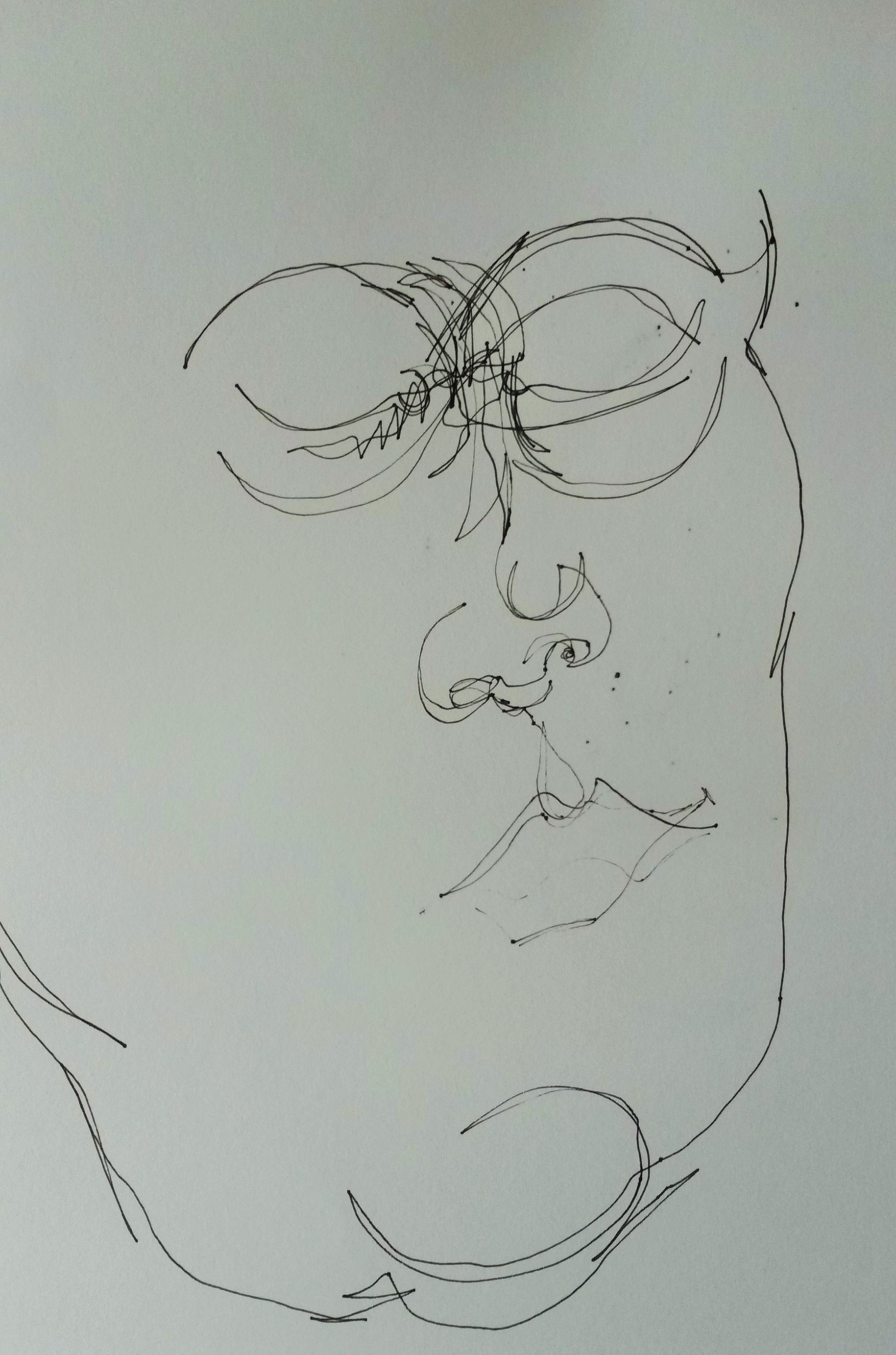
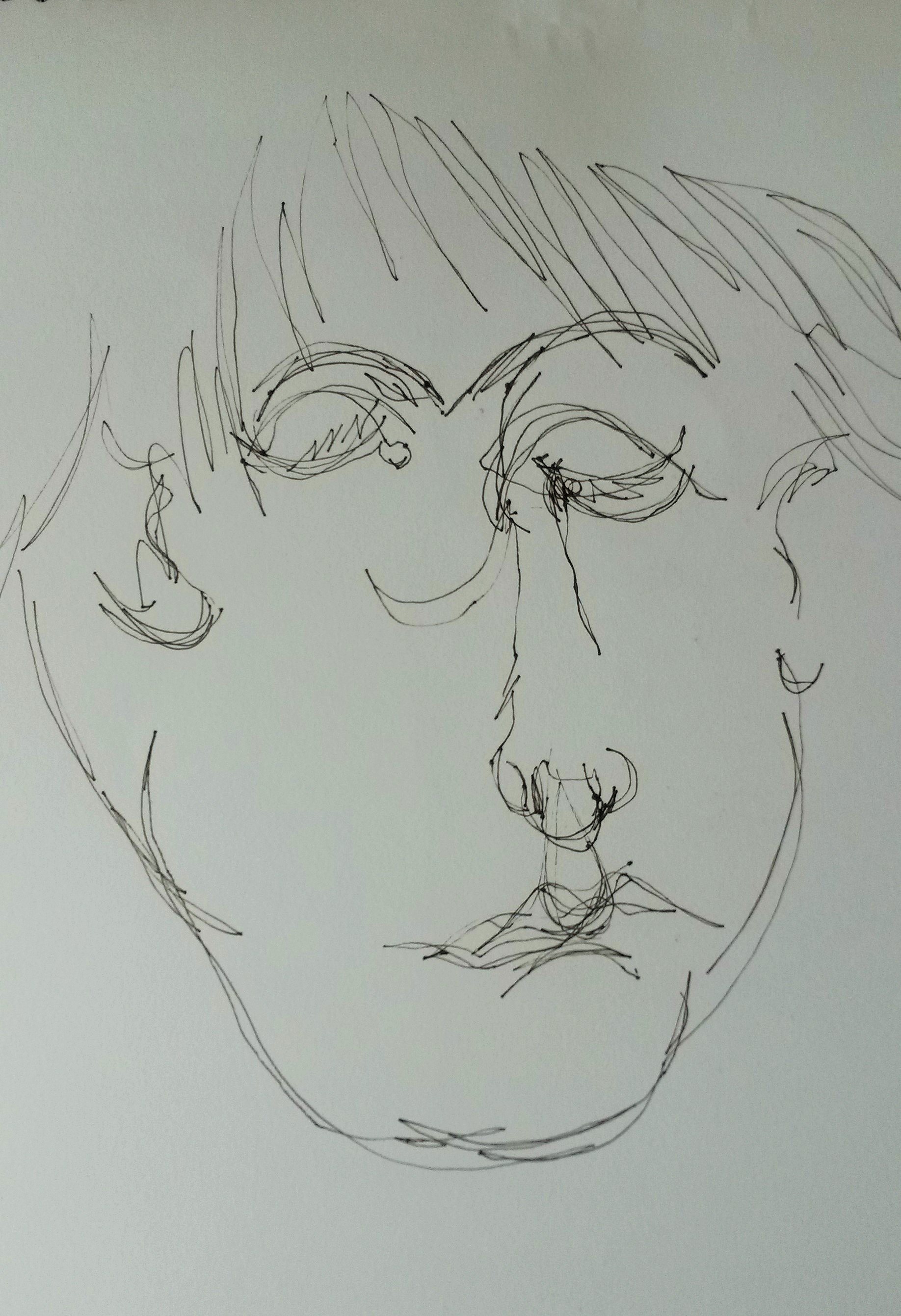
Black Pitt pen in A3 sketchbook
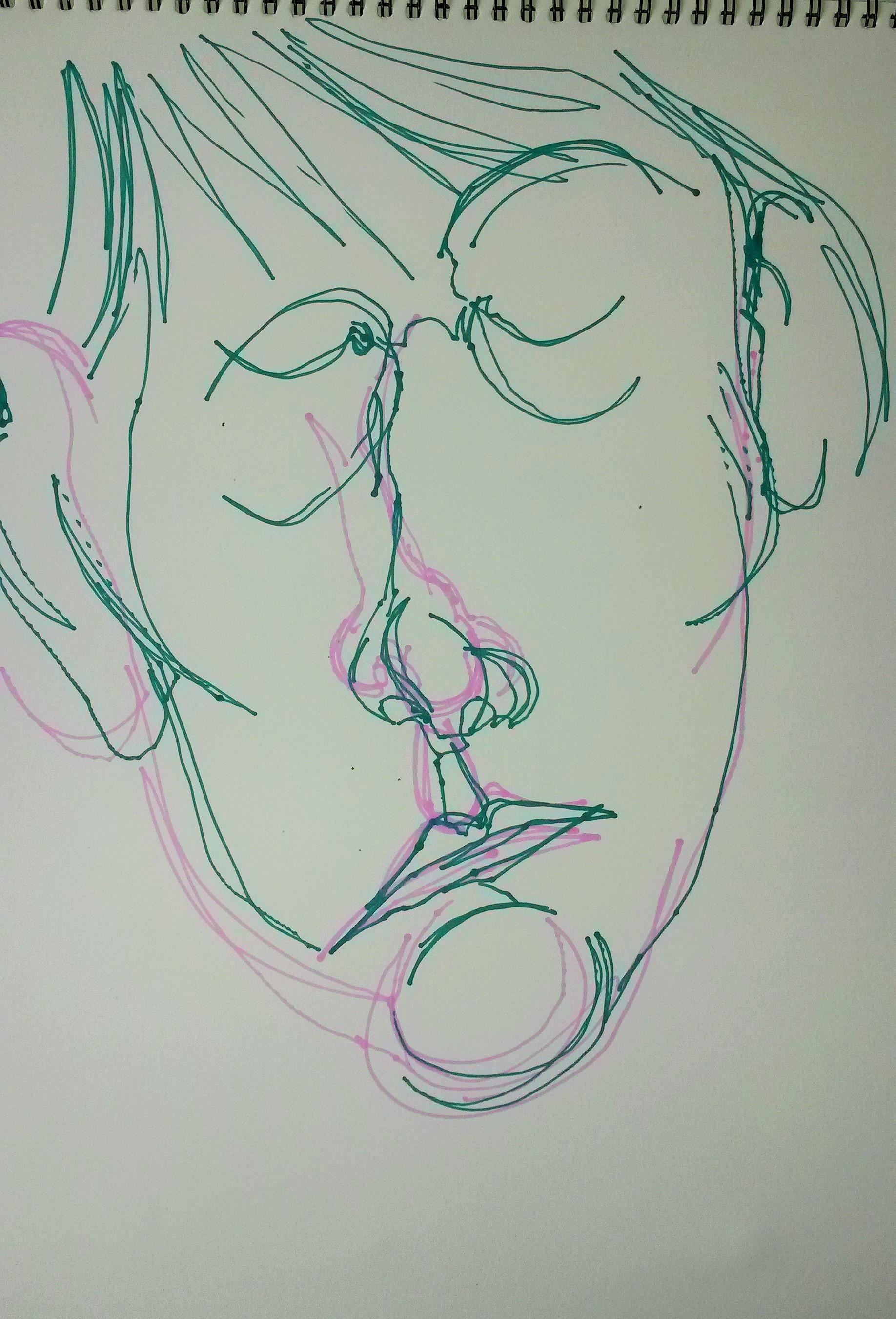
The attempt above was done using two colours of felt pen and was interesting because I did it first in green then picked up the pink, looked at the paper and positioned the pen on the nose where I’d started with the green, then closed my eyes. The pink lines are in the same position as the green, despite having my eyes shut.
Reflection: How far were you recording the sensation and the act of touching, and how far were you trying to use touch as a replacement for sight?
It was initially very difficult for me to draw from the sensation of touch only. I automatically reverted to drawing from memory. Touch can give an idea of shape and form, but your finger tips can only touch one area of an object at a time, and it is difficult to gauge where one part is in relation to another. You also have no idea of colour or tone. One advantage however, is that to compensate for the lack of information, the hand that is holding the media to record the sensations of the other, becomes very sensitive in its endeavour to form an image with very little information. The results can be economic, but effective. The resulting drawing is almost a distilled image, where a rendition of the shape and form are explained satisfactorily, without the unnecessary details such as colour.
 My drawing2 blog
These are beautiful, the self portraits in particular – very personal and sensitive.
LikeLike
Thanks Jocelyn. It was an interesting technique I hadn’t tried before and the results were quite a surprise.
LikeLike