Find something which moves and attach a drawing medium to it so that it creates a drawing by itself…..Develop these automatic drawings using source material from your sketchbook or simply by responding to what you find as you experiment. Note carefully what happens when you shift the drawing from automatically produced marks to considered ones.
I didn’t have a clue where to start with this one. I began by twisting an elastic band round two pieces of charcoal until the tension was such that when I let it go, the charcoal twists round at speed, but the results were disappointing.
Next I tried attaching charcoal to the blades of a hand blender but when I switched it on the charcoal came flying off at high-speed and I was in danger of losing a finger.
I then tried attaching charcoal to my electric toothbrush, suspending it from a table over paper and the results were much better. I also found it helped to let it sway a little, like a pendulum. The vibration caused it to rotate in a circular motion, without any interference from me, so it kept moving round the paper for the two minutes until it switched itself off.
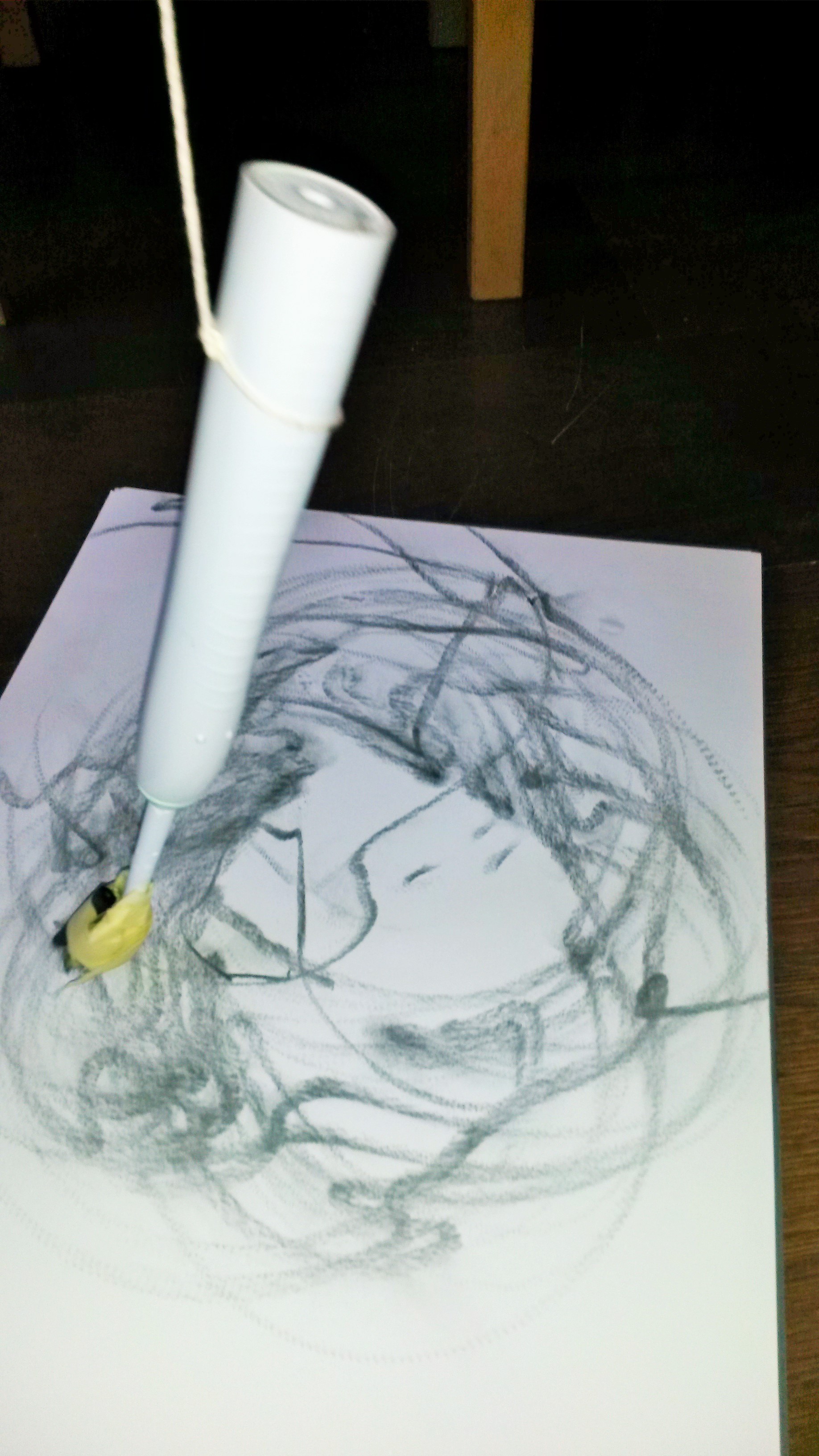
I was pleased with the result.

Charcoal on A3 paper
I tried the same process, this time using red and white pastel on black paper.
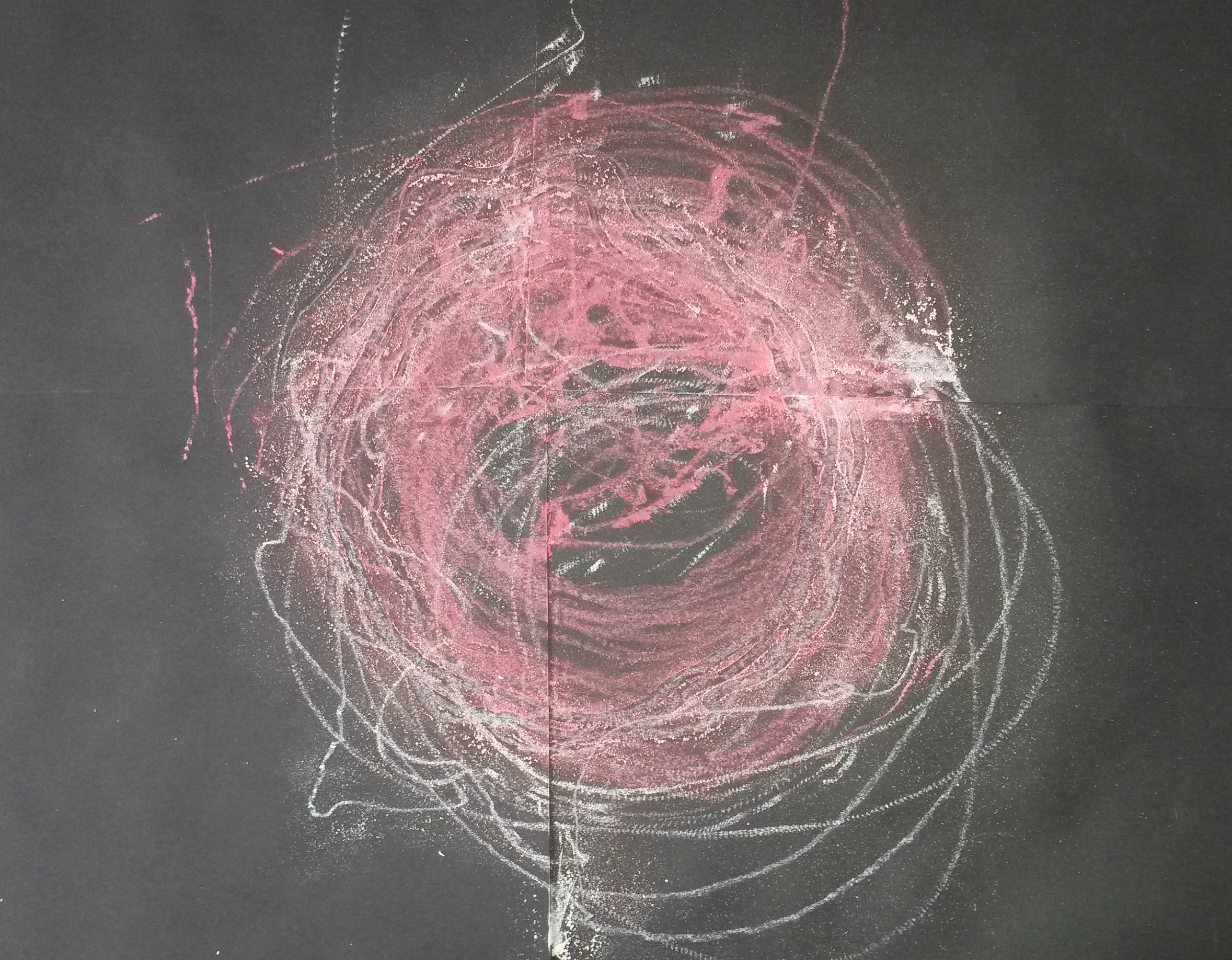
4 x A4 sheets of black paper with pastel
I like the outcome. I like the marks the circular motion has made, and the squiggles where it has gone its own way.
I tried using a black marker pen and the results were different, but equally as interesting. The weight of the marker as opposed to the light pastel, gave it more resistance and made the movements jerkier.
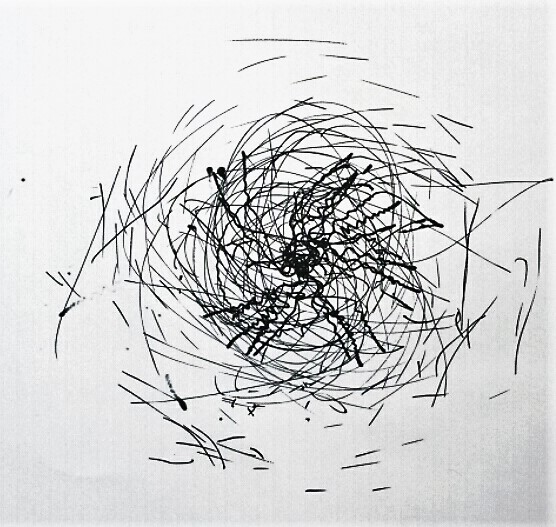
When making further attempts, my son came in and on observing the jerky movements as the pastel came into contact with the paper and the vibrations became louder, he observed “Oh it’s angry”. This made me smile as I thought of Rebecca Horn and her assertions; ‘My machines are not washing machines or cars. They have a human quality and they must change. They get nervous and must stop sometimes. If a machine stops, it doesn’t mean it’s broken. It’s just tired.’ (The Bastille Interviews 11:Paris 1993).

I found it interesting that, despite using the same ‘machine’, with the same method, i.e. the media attached to the machine, which is tied with string and attached to a table top, the results were often very different, and I found it hard to replicate a previous result. I think it depended on a number of things; how close the media was to the paper, i.e. whether it was resting lightly on it, or leaning heavily on it, whether there was any momentum making it go round, what resistance the media gave, e.g. the pastel was very responsive, leaving delicate marks, whereas the pen was quite clumsy and heavy in comparison.
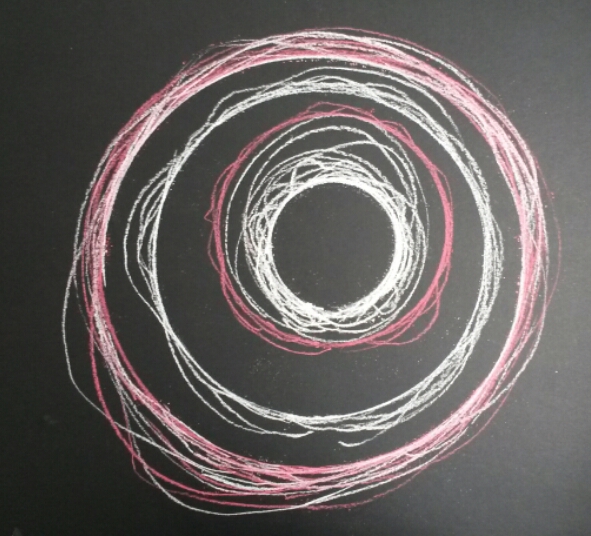
As a contrast, I tried to replicate the machine drawings by drawing them myself.
Because of the circular elements, I used a large plate, medium plate, bowl and cup as ‘templates’, as I knew I wouldn’t be able to draw circles freehand accurately. I used a charcoal stick and drew round each object, trying to vary the pressure and allowing my hand to slip and go wider than the plate etc. I found it extremely difficult to intentionally draw ‘accidently’. The result was interesting, but I much preferred the ‘machine’ drawing.

 My drawing2 blog