I attended the OCA Study Visit to the Turner Prize 2015 at the Tramway in Glasgow on 9th Jan 2016 with tutor Wendy McMurdo.
This is the first time I’ve taken more than a passing interest in the Turner Prize; I’ve seen articles in the newspaper and on television, but that’s been about it. I decided to research its history before I went.
1 ‘Over the recent decades the Turner Prize has played a significant role in provoking debate about visual art and the growing public interest in contemporary British art in particular, and has become widely recognised as one of the most important and prestigious awards for the visual arts in Europe. The Turner Prize is a contemporary art award set up in 1984 to celebrate new developments in contemporary art. It is awarded each year to ‘a British artist under fifty for an outstanding exhibition or other presentation of their work in the twelve months preceding. Nominations are invited each year, and the prize is judged by an independent jury that changes annually. The four shortlisted artists present works in a show normally held at Tate Britain before the winner is announced in December. Artists are not judged on their show at Tate. The decision is based on the work for which they were nominated.’
The exhibition
The study day began with a tour led by two curators. I learned that there have been several students from Glasgow School of Art nominated in previous years, and this is the first time it has been exhibited in Scotland, however none of the artists shortlisted this year were Scottish.
The information sent by OCA prior to the visit recommended that we watch the following film; https://vimeo.com/148607435 , in which Turner Prize Judge Alistair Hudson (Director of Mima) battles it out with artist Pavel Büchler in a discussion, Art: Useful or Useless? I did watch this video, and on the whole it was interesting, however the discussion began to become a little pedantic to me, as they debated the meaning of the word ‘art’. It did give me food for thought though. I am familiar with the idea of a conceptual art, but I’m not sure if I believe that something is an artwork just because it’s labelled as such. I wasn’t swayed by the argument put forward that Art should be useful. I believe that if it does serve a purpose, such as the winning entry by Assemble, which worked with local residents in Granby to refurbish 10 houses in order to provide affordable housing, then that is a bonus and it is to be applauded but I don’t necessarily believe that the Artist should only seek out ‘worthy’ useful projects. As a Contemporary Art award it isn’t surprising that is influenced by whatever is current and environmently friendly projects, affordable housing, recycling materials and social justice are all subjects current with public focus. In addition, for me, art’s use can be to enrichen people’s lives, enhance their environment, educate and entertain.
Secondly, we were asked to read an article; http://conversations.e-flux.com/t/teleology-and-the-turner-prize-or-utility-the-new-conservatism/2936
This adds another dimension, where the winner of the Turner Prize isn’t a practicing artist at all, but instead is a group of 18 people from the fields of art, architecture and design. This makes it apparent that the selection of the winner is very dependant on who is on the judging panel, which changes annually. Some think it also adds a political slant to things.
I was very interested in attending this study visit, as I had hoped the experience would feed into my Critical Review in the parallel project, where I compare traditional drawing and representational art work to contemporary art and installation.
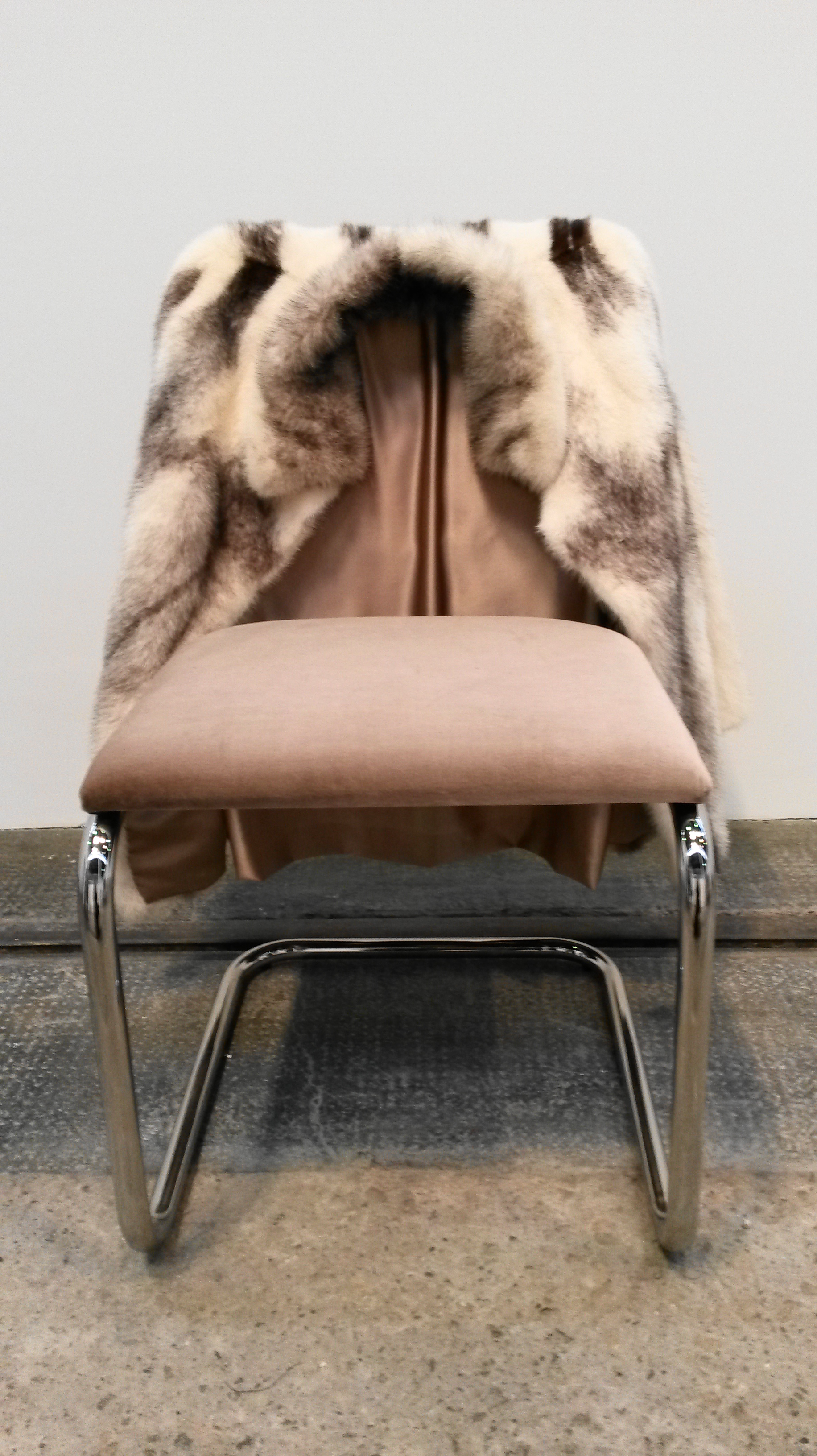
The first short listed artist was Nicole Werners with her Untitled Chair sculptures. I had no clue on first viewing these what they represented. It consisted of several tubular chairs with fur jackets draped over them. The curator explained that the chairs were an adapted version of Marcel Breuer’s Cesca chair. The lining of the vintage fur jackets are actually sewn around the chair so that the two become one and the purpose is to comment on a private claiming of a chair in a public space.

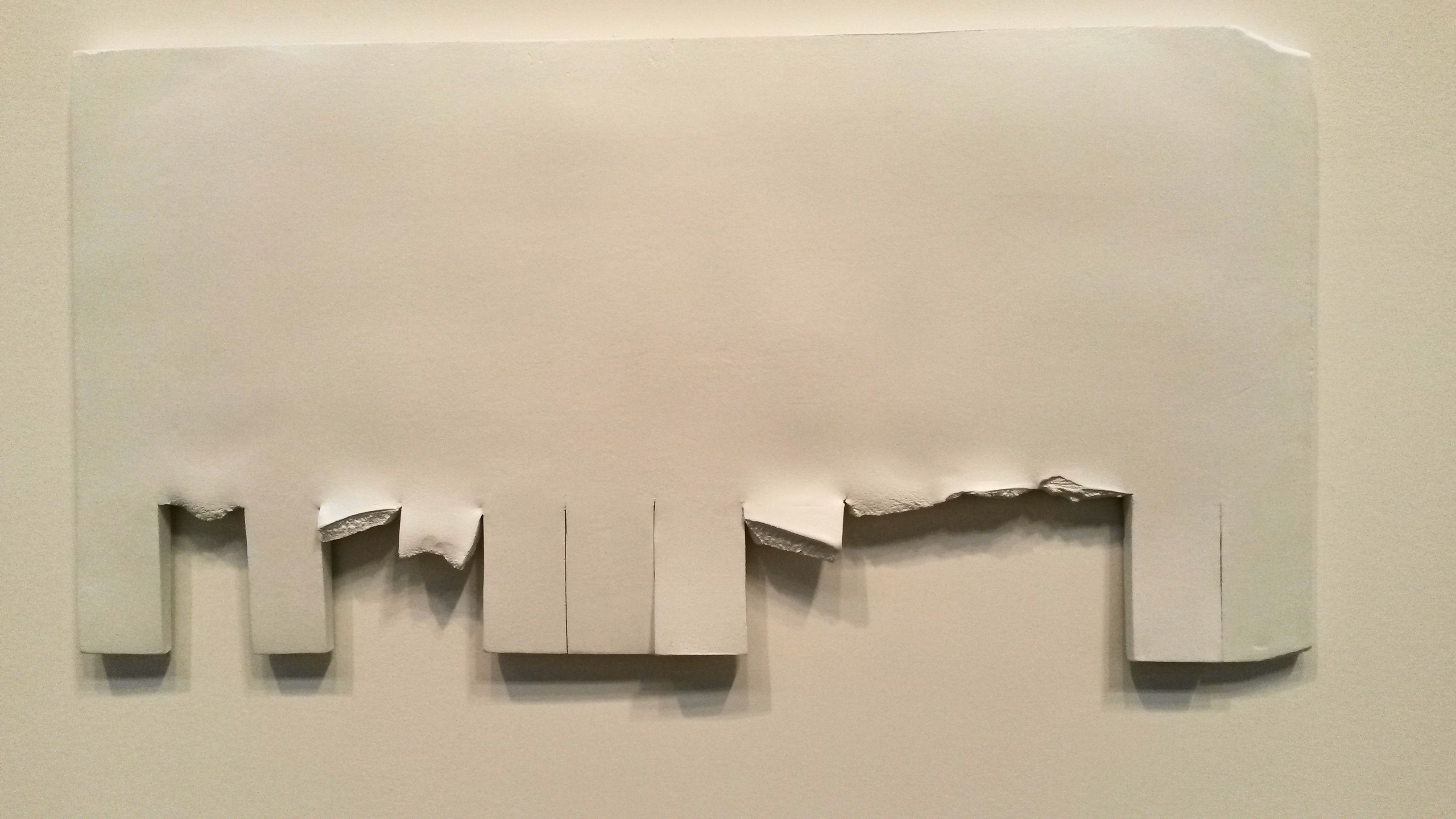
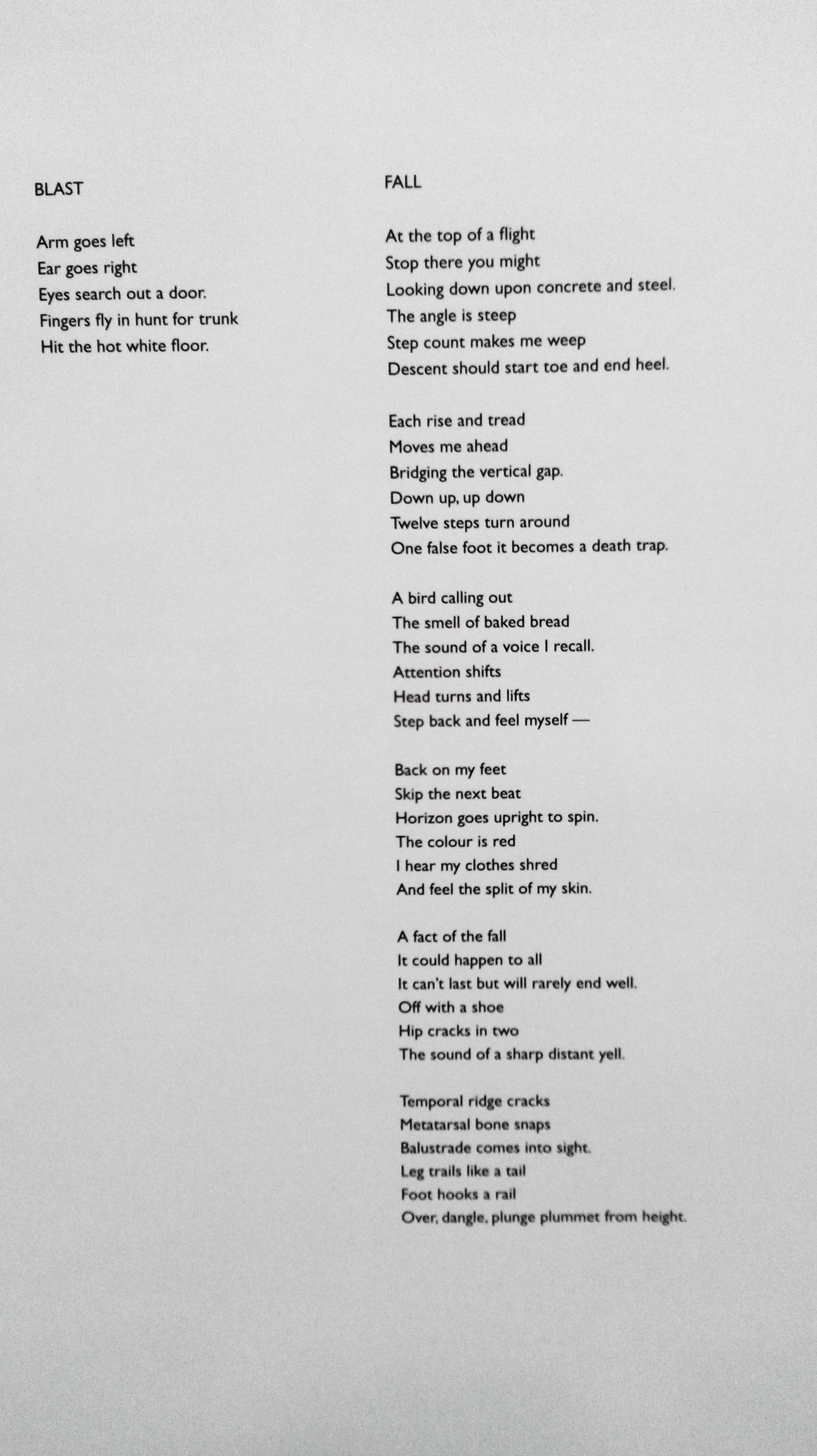
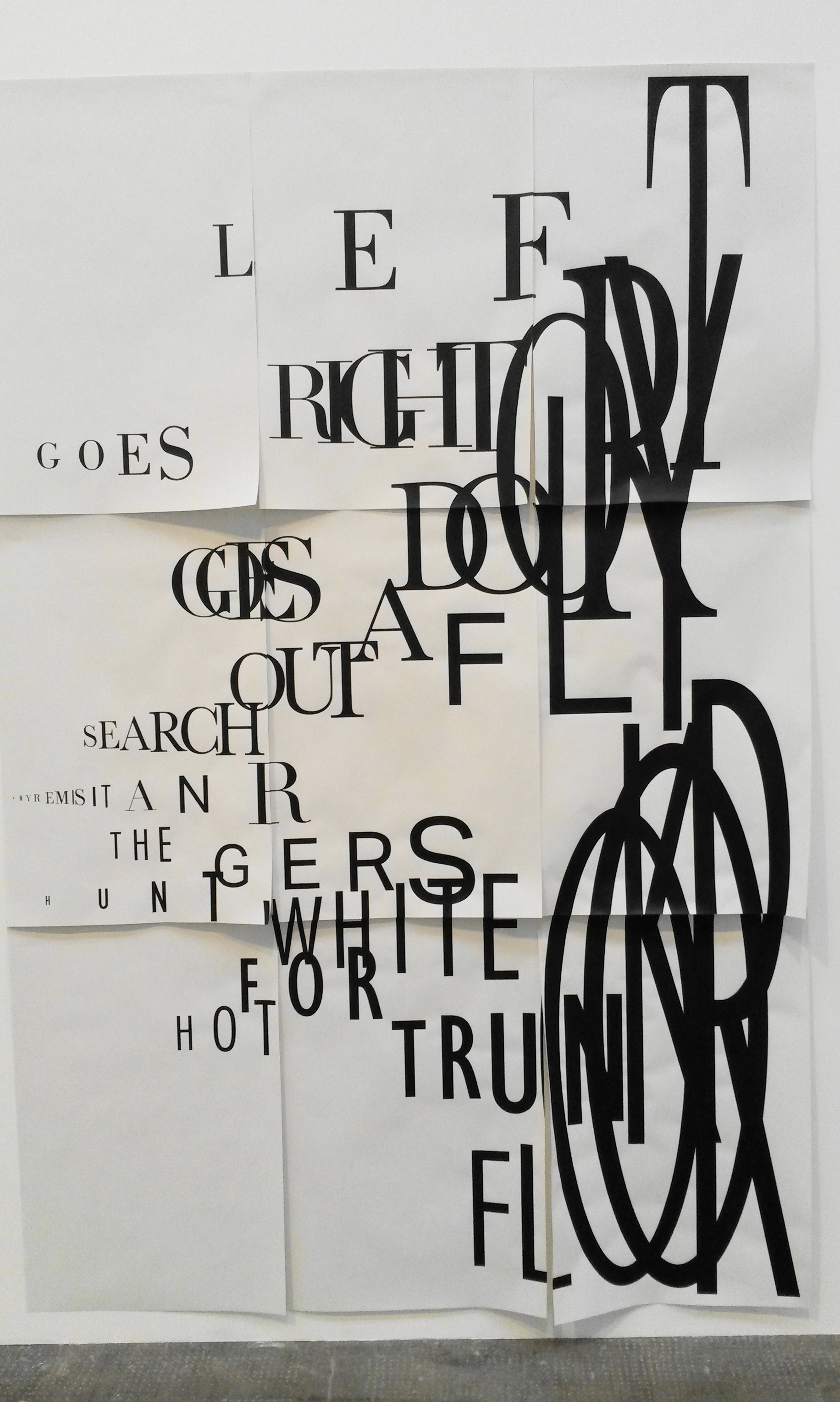
Next was Janice Kerbel, who wrote an operatic piece entitled DOUG, in the form of nine songs, written for six unaccompanied voices. It was inspired by cartoon violence and explores the different ways in which an imaginary figure could meet his death, such as falling down a flight of stairs (‘Fall), to being struck by lightning (‘Strike). Each song is designed to test the range of the vocals, stretching them from their highest to lowest notes. Our tutor suggest we go to hear one of the pieces and we duly went along at 1:00pm and joined the small waiting audience. There were six music stands at the front and at 1:00pm sharp the six singers came out and silently made their way to the stands. They began gently humming for a minute or two then suddenly each singer sang one word, each a different word, in a different key, in a cacophony of sound. Only one word was sung and then they bowed and walked off again. It was quite a surreal experienced and the audience appeared bemused (as did a few of the singers). The Exhibition Guide describes it thus; ‘Kerbel explores the possibilities of the written and spoken word to suggest material and visible states, giving form to impossible or imagined events.” And “DOUG calls on the history of physical comedy, animated cartoons, narrative ballad and operatic librettos to imagine a new kind of compositional choreography.’
2 15 Lombard St. is a rigorously researched master plan of how to rob a particular bank in the City of London. By observing the daily routine in and around the bank, Kerbel reveals the most detailed security measures such as: the exact route and time of money transportation; the location of CCTV cameras in and around the bank along with precise floor plans that mark the building’s blind spots. Kerbel’s meticulous plans include every possible detail required to commit the perfect crime. The ubiquitous fantasy of a bank robbery functions as a backdrop for Kerbel’s ‘play of subversion’. By surveying surveillance Kerbel shows how different systems are interrelated, forming a web of control. Kerbel’s aim is not simply to subvert but to emphasise the fact that the idea of absolute control and the fantasy of robbing a bank are interconnected and mutually sustaining.’
Next was Patterns by Bonnie Camplin. This was an installation consisting of a study room/library containing books, leaflets, magazines etc all of which referenced beliefs and Mental Health. The guide stated ‘An artwork that is also a research tool, Patterns centres around five video interviews in which individuals recall extraordinary experiences (from encounters with inter and extra-dimensional beings to systematic trauma-based mind-control techniques).’
There were screens with headphones in the centre of the room where you could watch the videos. The literature round the room was annotated with remarks hand written by the artist and many of the items were original copies, however we were told we could pick things up to read. In addition there was a photo copier, which the public were encouraged to use to copy any item of interest to them (although I never saw this happen). The material was arranged in a specific way in order to form pattern-based relationships between different ideas. The topics covered included the Occult, Alien Abduction, substance abuse and psychosis.
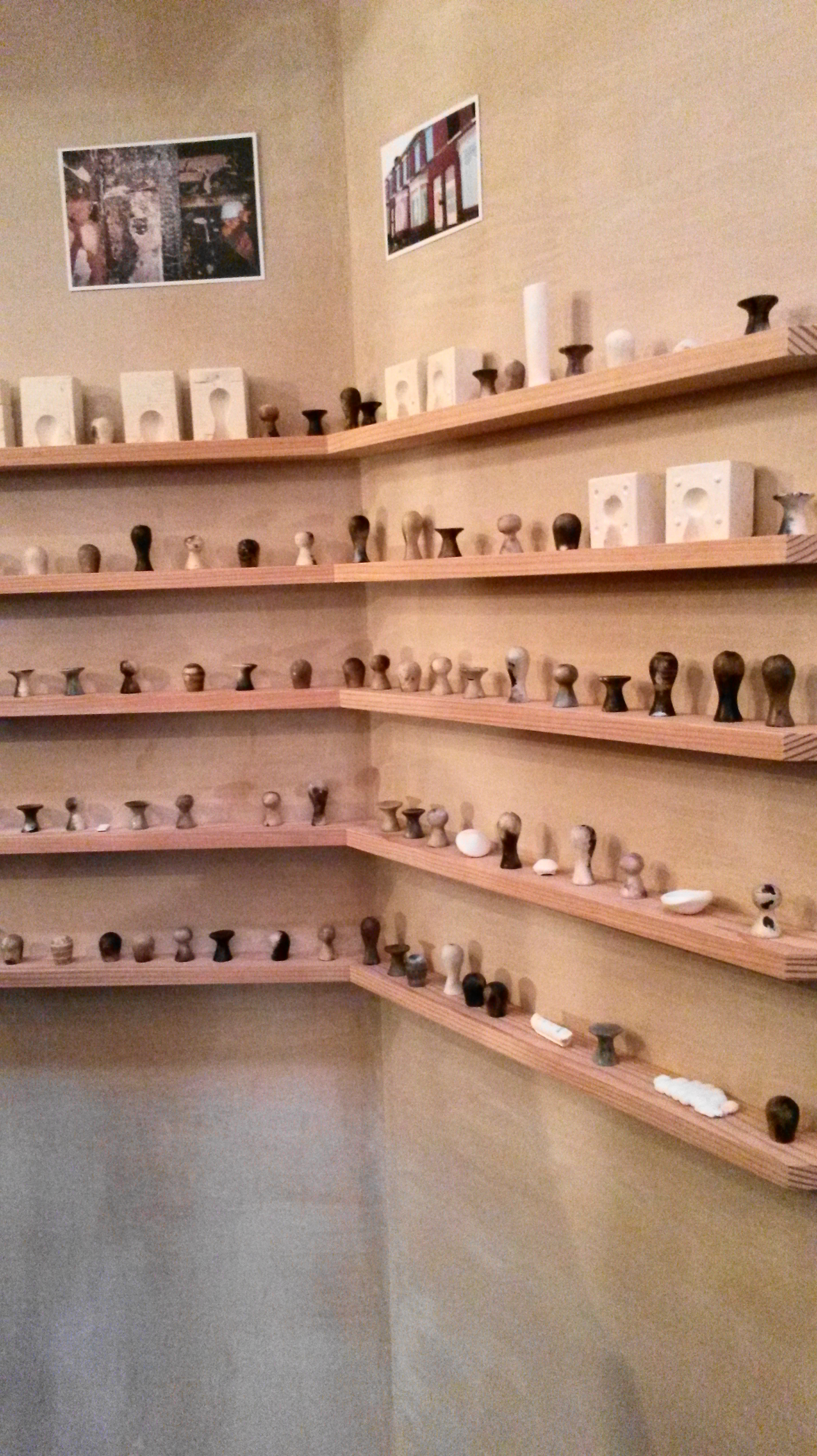
The final piece and winner of this year’s Turner Prize was Granby Workshop by Assemble. Assemble is a collective of 18 members from the fields of art, design and architecture. They assisted Granby Four Streets Community Land Trust to refurbish 10 boarded up houses in order to provide affordable housing for local residents which will remain in community ownership. The exhibit consists of a show room displaying hand-made items such as mantelpieces, door knobs, furniture and fabrics. The mantelpieces are cast using brick and rubble waste from the derelict houses. Their catalogue states; ‘All products are manufactured using processes which embrace chance, so that each is unique, developing in the hands of the people making it.’ I was interested to see that during an interview with one of the Assemble, they commented that ‘The nomination (to the Turner Prize) created an uncomfortable feeling.’ This, I imagine is why we were given the link to the video Art; Useful or Useless. I’m not convinced that I consider Granby Workshop to be a piece of art; yes there were artists involved in the collaboration, yes there is artistic skill involved in the design of the items for sale, yes it could be considered conceptual; the guide describes it thus; ‘Their practice seeks to address the typical disconnection between the public and the process by which places are made, working across the fields of art, architecture and design to create playful environments and spaces.’
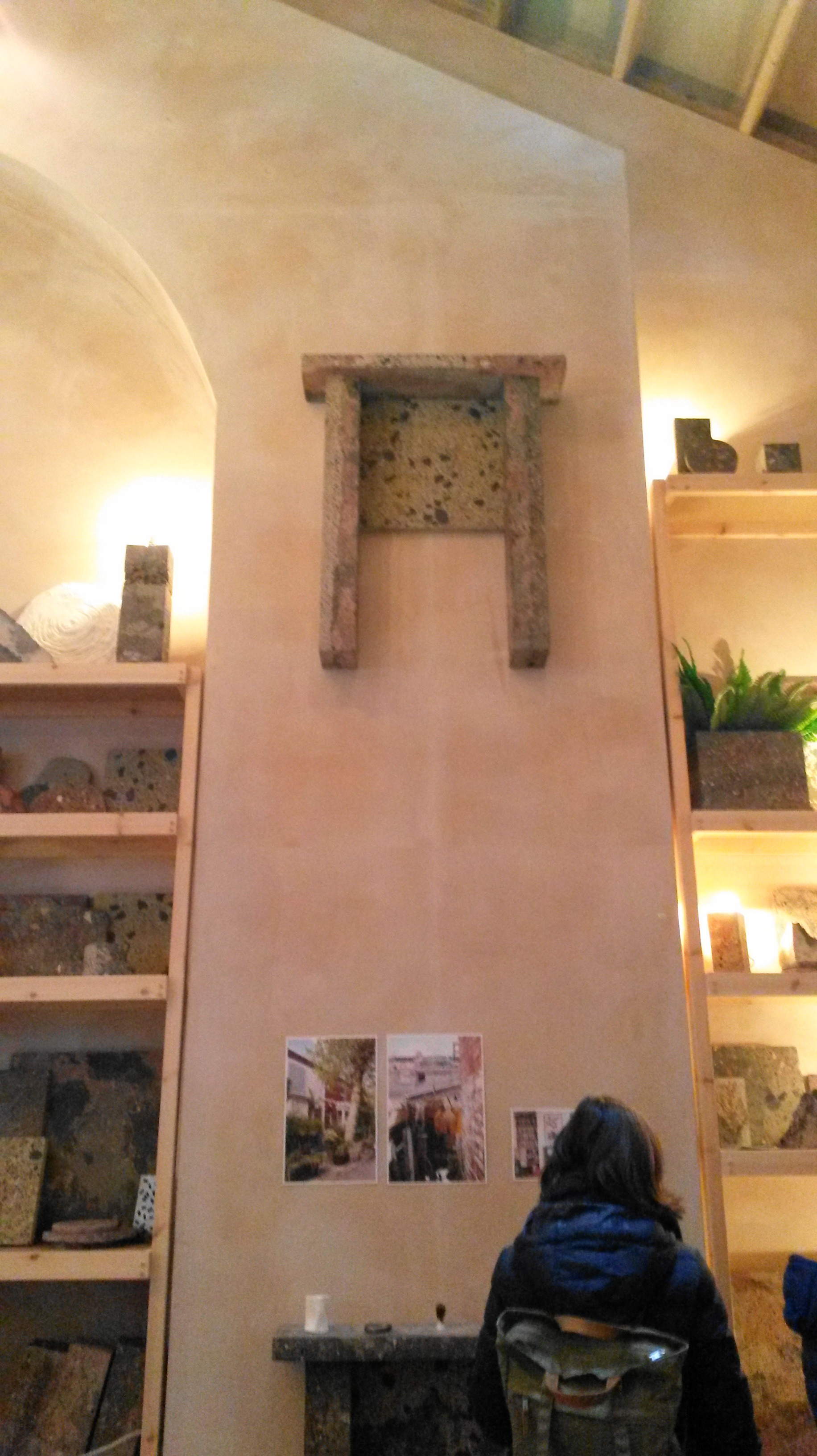
I see this as a very successful and creative social enterprise. I don’t see it as an artwork, but I can understand why it has won the Turner Prize; it is the first winning piece that cannot be defined as a fine art work, video or installation, therefore it is different from all previous winners, this causes controversy which keeps the public interested and it ticks all the boxes for ‘useful’ art, and it is a project with a social conscience, whilst remaining environmentally friendly.
2.http://www.theguardian.com/artanddesign/2010/may/12/artist-week-janice- kerbel
https://www.bookworks.org.uk/node/74
 My drawing2 blog