For your first assignment, review your sketchbooks and project work so far. Think about all you’ve learned about scale, cropping, selection, flexibility and judgement and make a decision about which area you’d like to develop for your assignment piece. This could result in one drawing or a series of drawings. Your subject can be anything you like but, whatever you choose, the relationships within your drawing(s) should set up an intriguing and engaging composition.
On reviewing my work, I felt that the first exercise Observational Drawing was the strongest. I particularly liked the black and white striped ones.
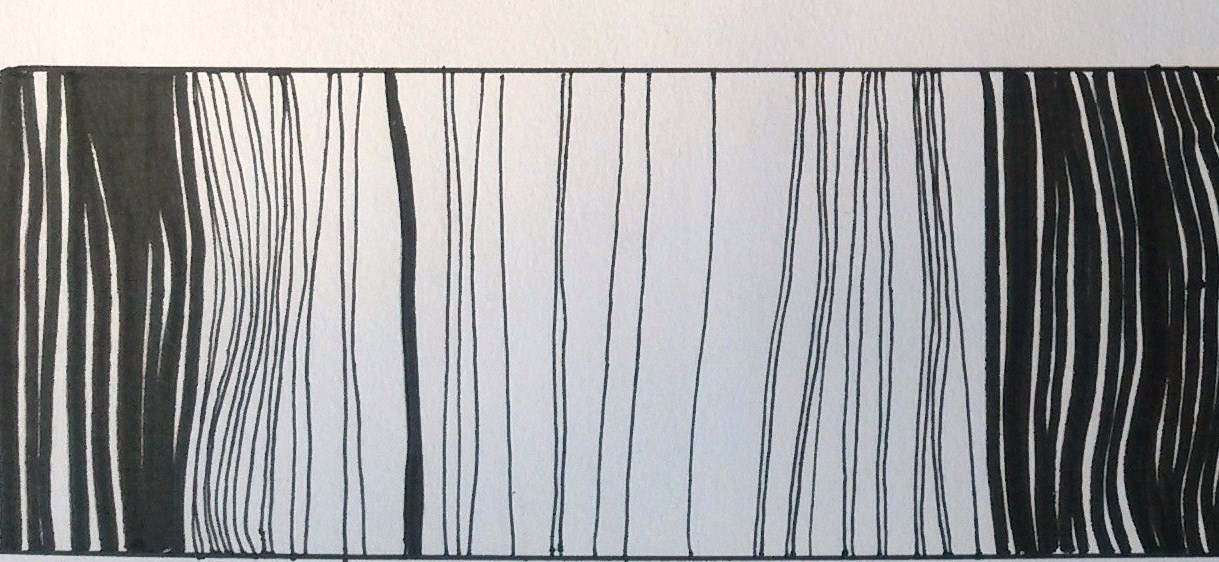
Extract from drawing 8 x 20cm
I decided to try this again but on a larger scale. I had recently bought Winsor and Newton Watercolour markers so I decided to try these out too. I used an A4 Winsor and Newton Water Colour Marker pad that I bought, which had 140lb pressed paper.
I did a long thin panel (8 x 30cm) using only black and white. The black watercolour marker looks more dark grey than black. The pens have one thick end and one thin, so I did a variety of lines. I then wet the whole area and the pens did behave like watercolours and the black pigment ran. The white became a light grey the lines had faded so that there was little contrast between the lines and spaces. Once dry I drew over some of the lines again with black watercolour marker.
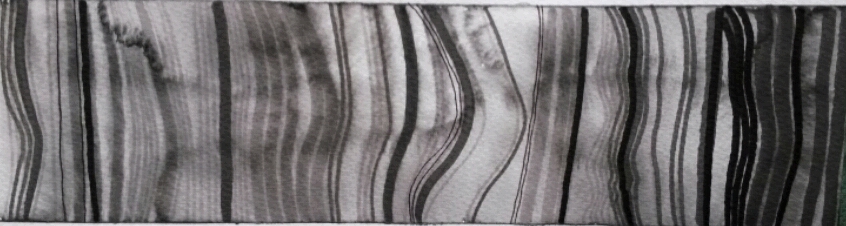
8 x 30cm watercolour marker, water added
Although I liked the strong contrast of the black and white, I decided to try one in colour for comparison (and it would be an opportunity to try out the watercolour markers again). Working on the same scale and same paper I used random colours in the same thick and thin striped way, still leaving some white space between. Once done I added water again and the colours ran together beautifully. Once fully dry, I added black lines this time using black Faber- Castel Pitt pen.
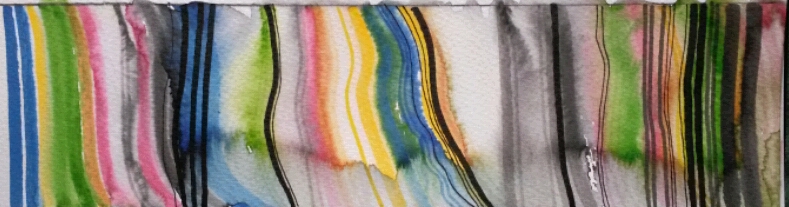
8 x 30cm watercolour marker and black Pitt pen
Next I decided to try it on a bigger scale. I used watercolour board 15 cm x 53 cm. I used black watercolour marker and worked in the same way as before. As before I wet the whole area afterwards and the pigment ran. Once dry I went over some of the lines with the watercolour marker again. I was becoming a little frustrated that it was all becoming grey and washed out looking and I wanted to get the dark black back, so as an experiment I added a strip of black electrical tape. Eureka, this contrasted well with the lighter wobbly drawn lines. I added some very fine lines using Pitt pen
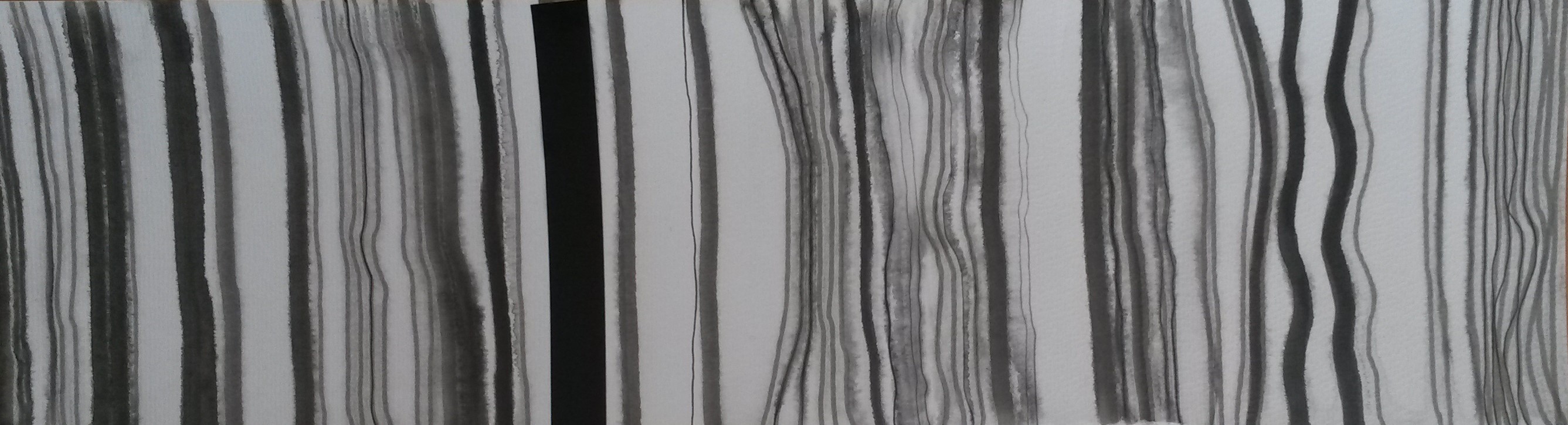
15 x 53cm watercolour marker, Pitt pen and electrical tape
I did another one I the same size and in the same way. This time I left most of it washed out looking, only adding some fine liner whilst still damp. For some reason this one reminded me of the rings in the trunk of a tree.
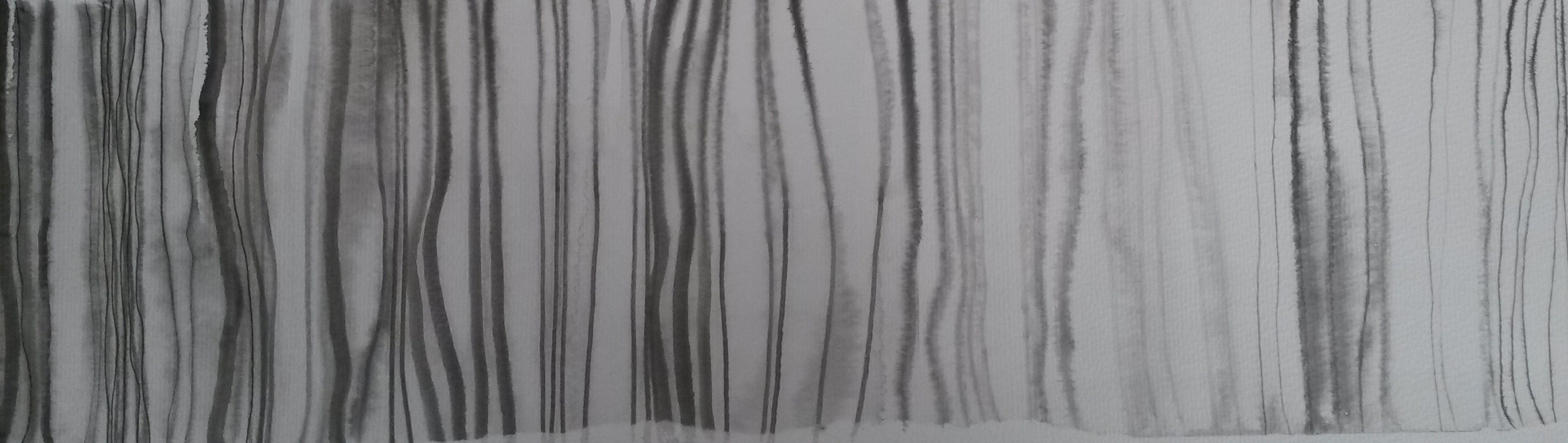
15 x 53cm watercolour marker
I then did one in the same size (15 x 53cm) in colour, washed out with some areas drawn in again. I wasn’t keen on this one.
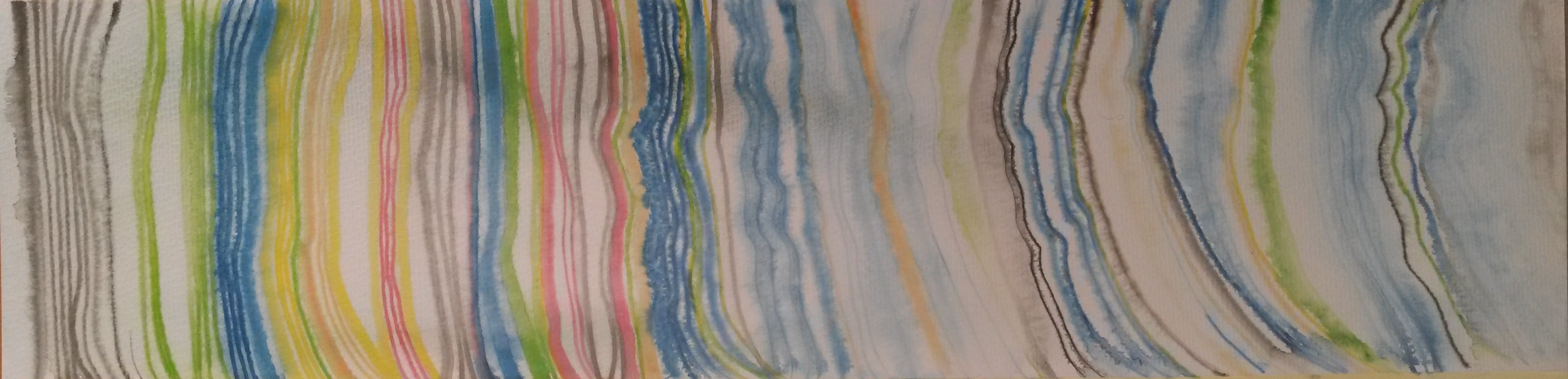
15 x 53cm coloured watercolour marker
I decided to pursue the use of the electrical tape further. The first one was very simple, just some strips of black electrical tape on a white A4 sketchbook. This also reminded me of the keys on a piano.
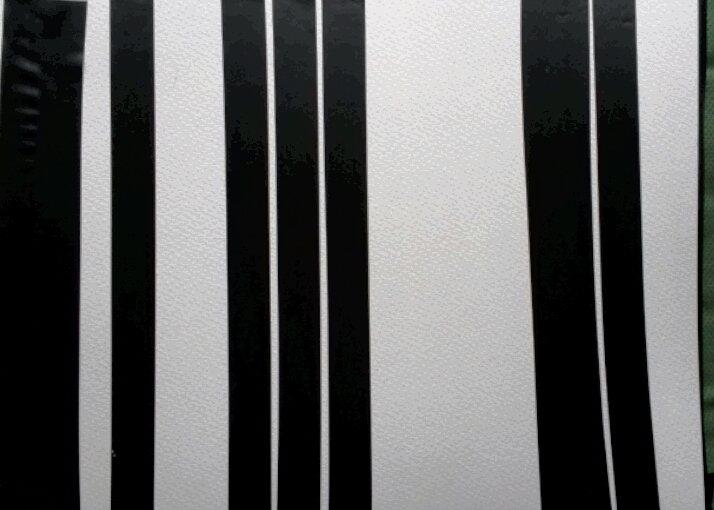
A4 electrical tape stripes
This wasn’t very interesting to look at. I had a look around to see what other types of tape I could find. I found parcel tape, masking tape, insulating tape and some coloured ribbon.
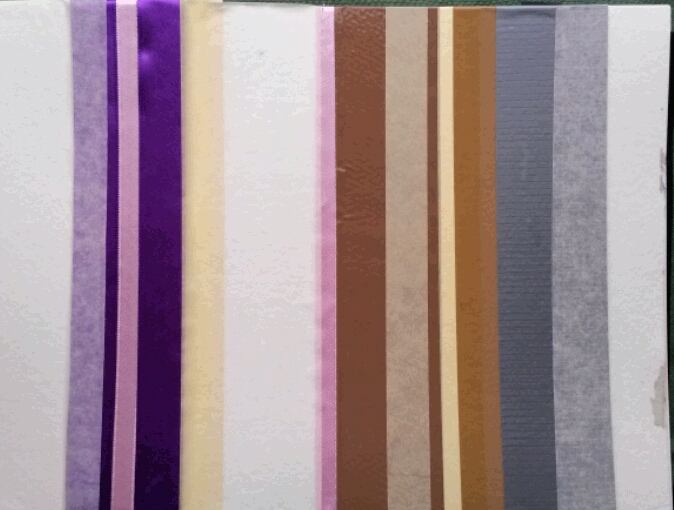
A4 coloured tapes and ribbons
I tried another one with just black, grey, cream and white tapes.
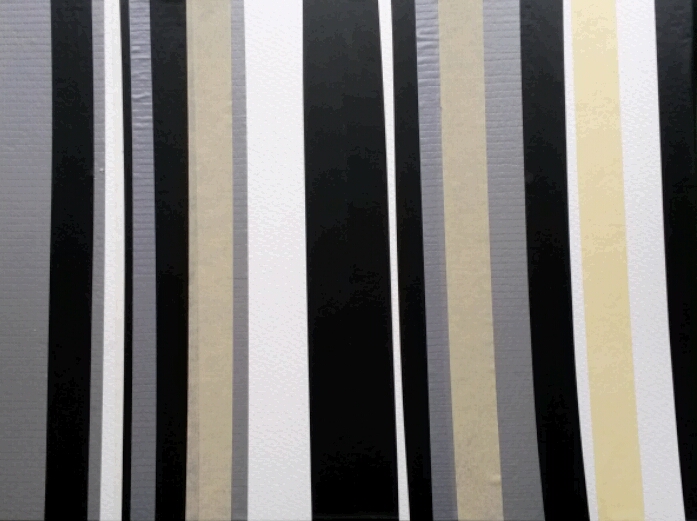
A4 Electrical tape and masking tape
I tried doing another one with more variation in it.

A4 electrical and masking tape
I decided on reviewing all the pieces so far, that I liked the black and white ones best, and I liked the ones with a variety of thick and thin, straight and looser lines. I decided to try the final piece in a much bigger scale. The next one was 28 cm x 53cm, on watercolour paper, and the lines were made using black electrical tape, with some parts torn to give a ragged edge, and lines drawn with black marker and fine liner.
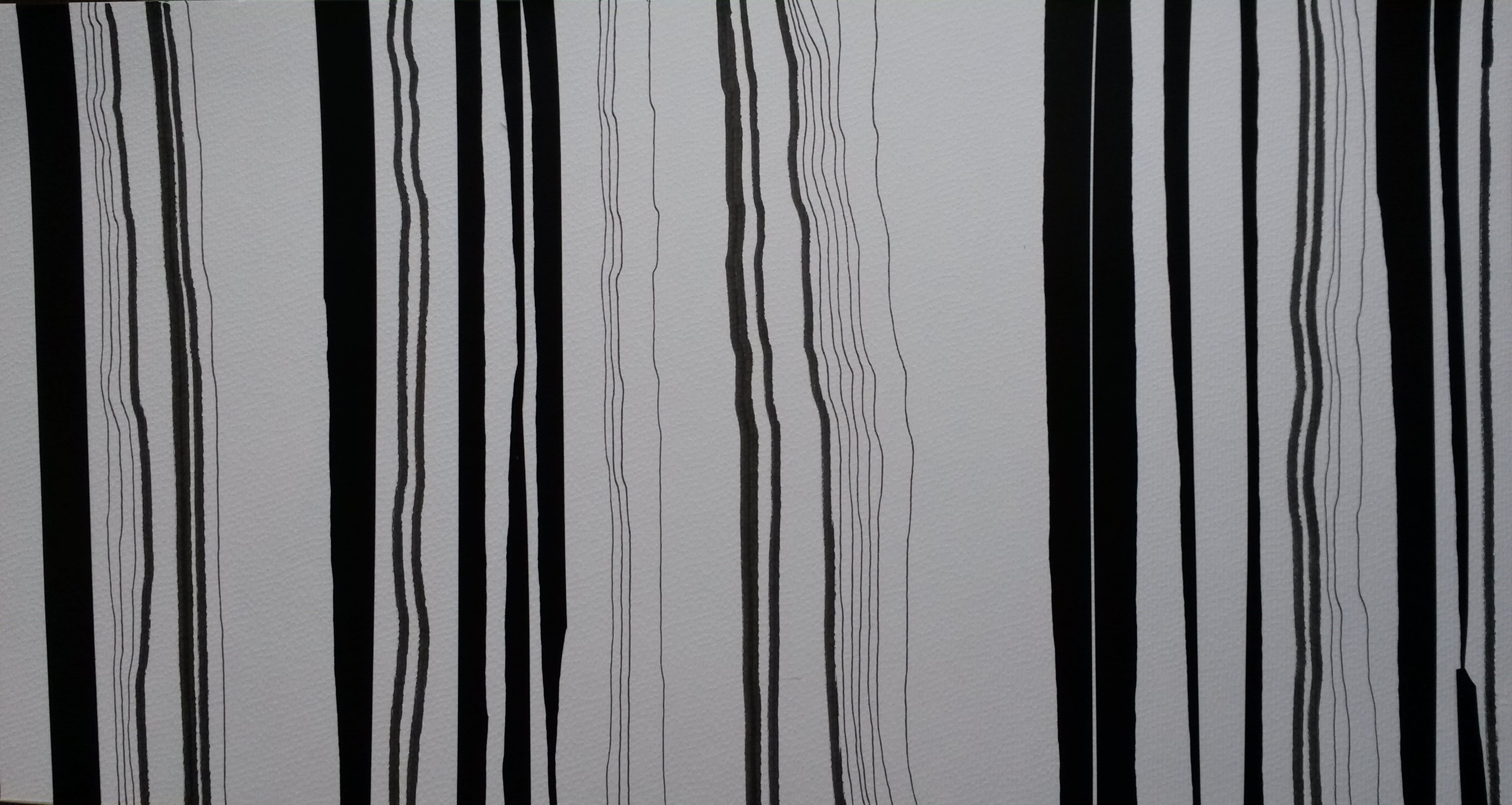
28cm x 53cm electrical tape, marker and fine liner
For the final piece of the series I decided to go even bigger. 40cm x 84cm, again using electrical tape, torn in places and black marker on card.
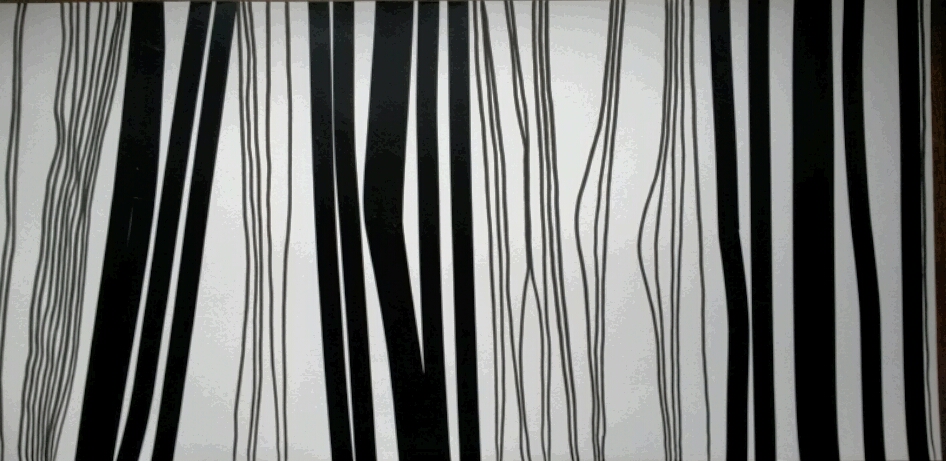
40cm x 84cm electrical tape and marker on card
I am fairly pleased with these outcomes, however I don’t know, on reflection, whether much has been achieved by increasing the size and use of other materials, and the ideas could have perhaps been developed further. It is however only the first Assignment, so hopefully there is plenty of scope for improvement.
I also asked for feedback on these pieces from other OCA students using social media. Here are some of their comments;
“Using tape reminds me of Monika Grzymala who uses tape to draw three-dimensionally into space.”
“being on level 1 I don’t quite get why this is drawing but love it for the visual effects and how the white sometimes becomes figure when otherwise we’re accustomed to see it as ground. I particularly liked the watercolour washed out effects in one of the coloured ones.”
“..for me especially the top piece, the could almost be landscape drawings remind me of topographic maps. I think they’re really interesting.”
“I particularly like the variety of the lines within the black and white ones, for me that adds interest. They also appear more organic, which I prefer.”
“Did you know you can translate text into bar codes. Your black and white ones have that cryptic look about them, like there’s a message.” I did look into this, but the mechanism needs to do this was too expensive for one project.
“This reminds me of Kenneth Noland and Morris Louis – I wasn’t familiar with these artist’s work, but having done some research I can see where the comment came from. Their work comes under the label of; Post-painterly abstraction – Post-painterly abstraction is a blanket term covering a range of new developments in abstract painting in the late 1950s and early 1960s, characterised by a more rigorous approach to abstraction. Their work is characterised by strong geometrical shapes, and Noland did a series of “Stripe” paintings, although his stripes were horizontal, not vertical, and this is something else that I could have tried.
Reflection
Before you send the assignment to your tutor, take a look at the assessment criteria for this course: ….Review how you think you’ve done against the criteria and make notes in your learning log.
- Demonstration of technical and visual skills – materials, techniques, observational skills, visual awareness, design and compositional skills
I think that my use of materials; trying out electrical tape and ribbons etc was experimental. I’ve never tried anything like that before. Abstraction is an area quite new to me. I tried to think about composition in the shapes and sizes of the drawings, however I could have developed this further perhaps, for example trying out horizontal compositions.
- Quality of outcome – content, application of knowledge, presentation of work in a coherent manner, discernment, conceptualization of thoughts, communication of ideas
I think, on reflection, the final pieces haven’t progressed very much from the original “bar code” drawings I did for Project 1. Perhaps I could have developed my ideas further, or perhaps tried to look for other artists working in similar methods. It is still only Assignment 1 so hopefully I will improve which each Assignment I do.
- Demonstration of creativity – imagination, experimentation, invention, development of a personal voice
I think I did experiment a little with use of materials, but perhaps this could have been taken further. I think it was imaginative to abstract the original book-case drawings, and this is an area quite new to me. I think it’s too early at this stage to talk of development of a personal voice.
- Context reflection – research, critical thinking, (learning logs and, at second and third level, critical reviews and essays)
I have spent a lot of time writing up this blog and trying to describe the processes of completing the projects. I have conducted the basic research as suggested and have begun to read the suggested book list, so this will be reflected in the blog in time.
References
http://www.tate.org.uk/learn/online-resources/glossary/p/post-painterly-abstraction
 My drawing2 blog