Select a piece of music (preferably classical or at least rhythmically complex) and allow your movements to be affected or generated by it whilst producing a drawing. To begin with, generate your lines and marks solely in response to the music. After the first hour, develop this further. For example, you could introduce an observational element such as self-portraiture and begin to explore the interplay between gesture and representation. Alternatively, you might decide to video yourself making the work to emphasis the performative nature of gesture.
I don’t listen to a lot of classical music, so I first explored the classical music I had already on my iPod. I tried drawing to Carmina Burana by Carl Orff, Grieg’s In the Hall of the Mountain King and Fingal’s Cave by Mendelssohn. I settled on Prokofiev, Romeo and Juliet Op 64; Dance of the Knights because it had slow tempo and strong rhythm, I felt it was powerful and yet emotional and passionate.
I began with a pencil, just trying to respond to the music. I ended up with lots of drawings like this;
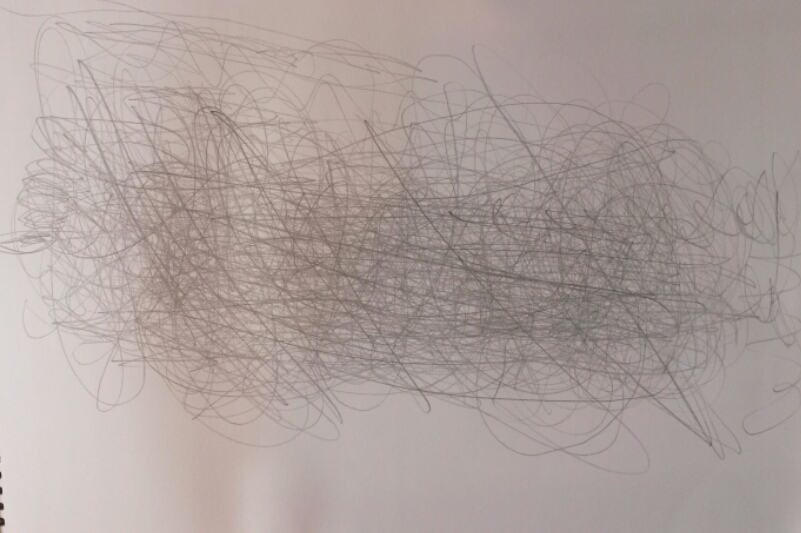
A3 sketchbook
It’s not much to look at but the exercise was worthwhile, as I felt I was really ‘tuning in’ and responding to the music.
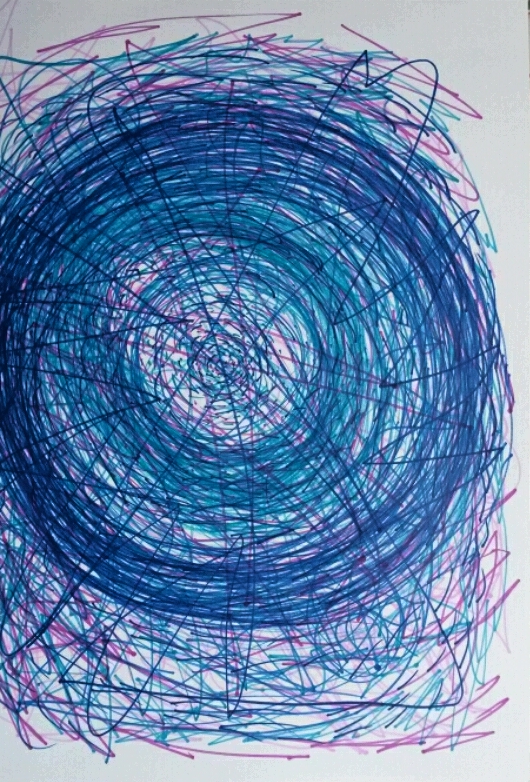
A3 marks with felt tip pen
Then I tried felt tip pens. Perhaps the ‘drawing machine’s’ work was too fresh in my mind, as it was mostly circles that I produced. I was feeling very frustrated at this time because I couldn’t picture anything when listening to the music. I enjoyed listening to it and felt emotion but didn’t know how to translate this into a drawing. The contrast between black and white has worked well for me so far in this course, so I decided to play about with some black ink. The fluidity would respond better than a pen. I also thought about the video I had watched of Jackson Pollock painting and I thought about the rhythm and flow in his gestures and movements.
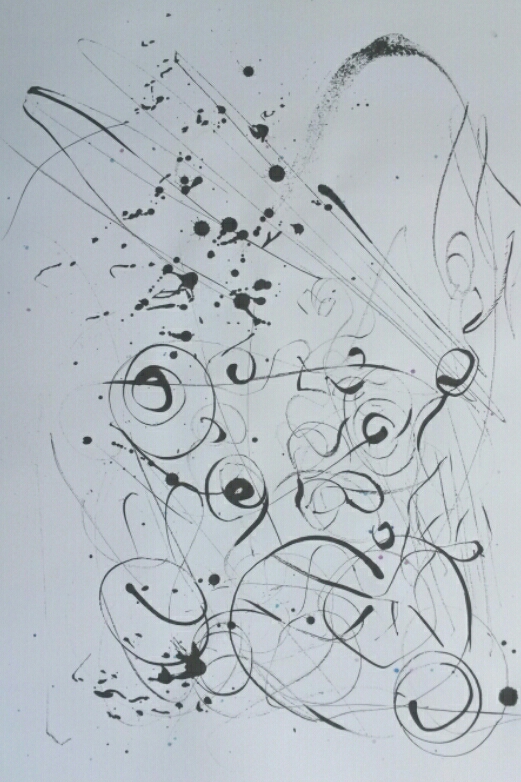
A3 black ink drawn with paintbrush handle
This was made by splashing black ink on the paper, then rendering marks with the wooden handle of a paint brush. I felt I was getting somewhere.
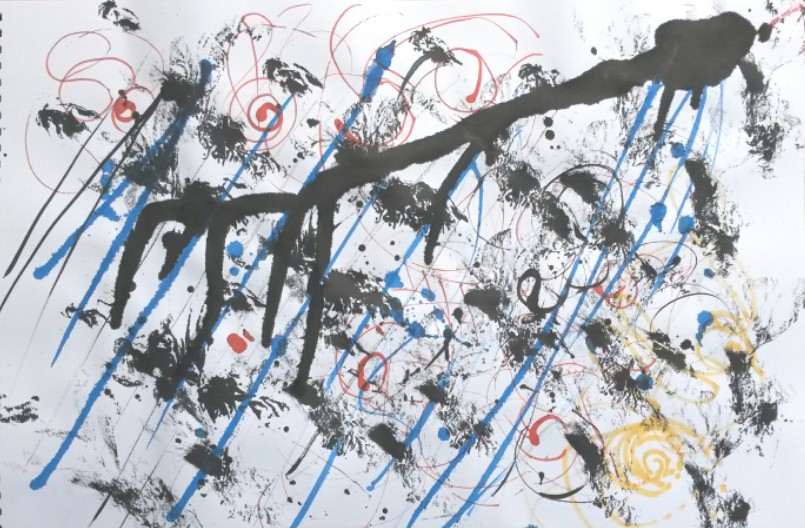
A3 black, blue, red and yellow ink
This one was created accidentally. I had everything ready and set out when I accidentally knocked the bottle of black ink over and it ran all over the page. This was quite exciting to watch and I decided to use this in the drawing. The repeated black marks are the tissue I soaked the ink up with, being daubed onto the paper in time to the music.
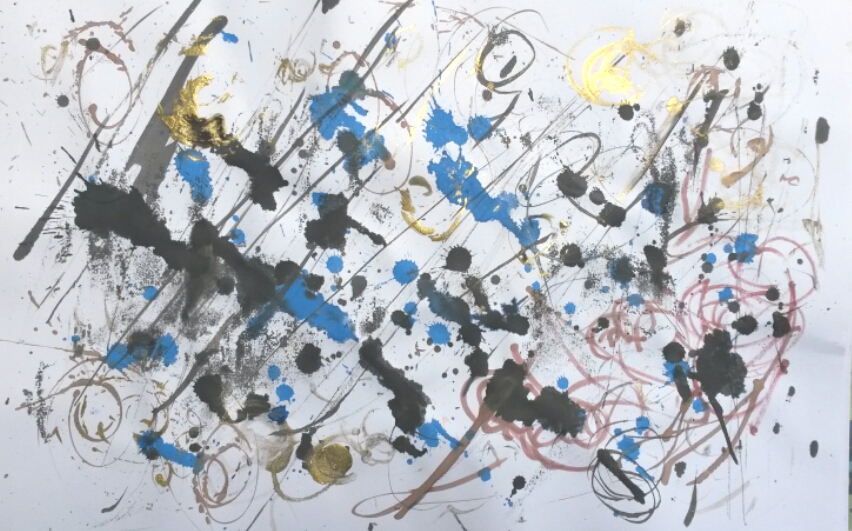
A3 black, blue, brown and gold ink
I used a similar process for this one, adding more colours to make it more interesting; sepia, blue, gold and pink. The process reminded me of the work of Jackson Pollock.
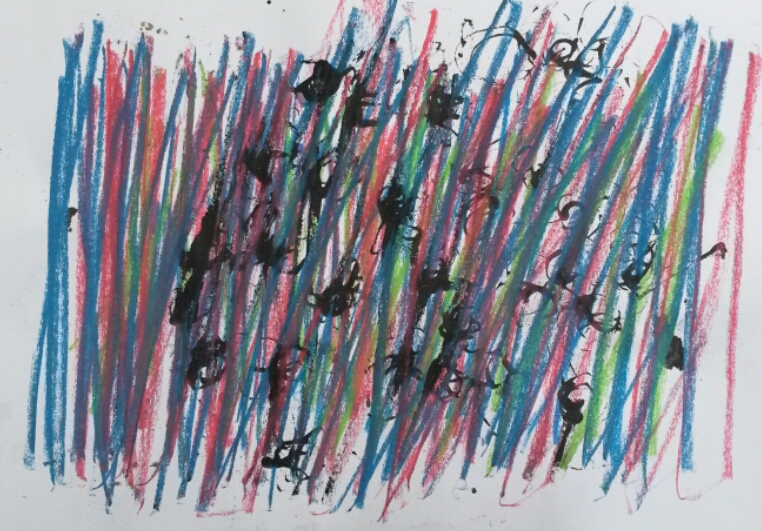
A3 coloured pastel and black ink
This was done by grabbing a fist of different coloured pastels and responding to the rhythm of the music. Then I splattered some black ink on and drew into this with the handle of a paint brush.
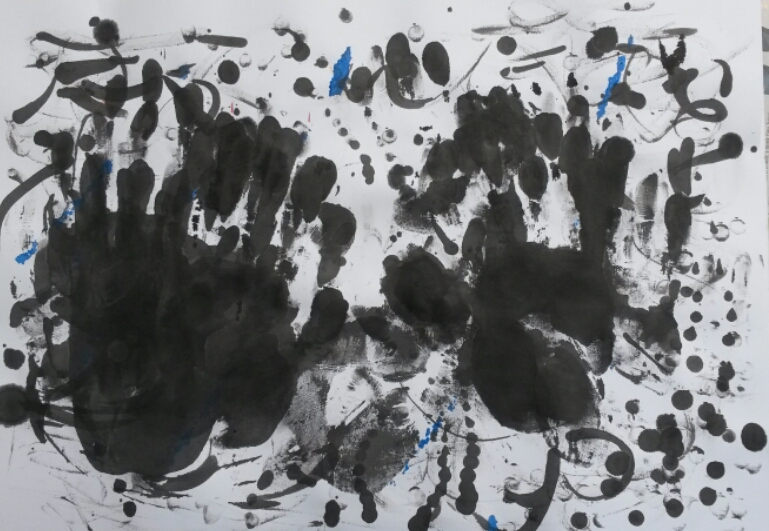
A3 black and blue ink
The music has a slow beat to it which reminds me of slow foot steps, but I didn’t like the thought of drawing with my feet, so dipped my hands in the ink instead and pressed down on the paper in time to the music.
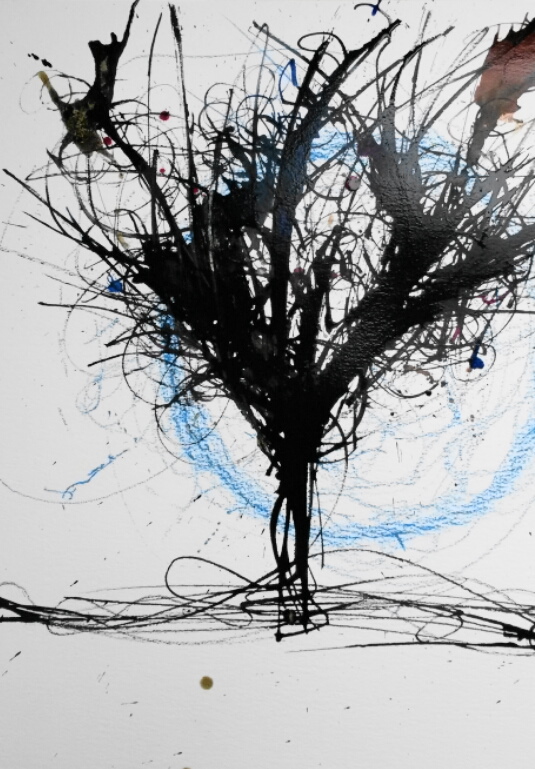
When ‘exploring the interplay between gesture and representation’, I decided to experiment with the idea of drawing a tree. I could imagine something organic growing, thrusting forth in time to the music.
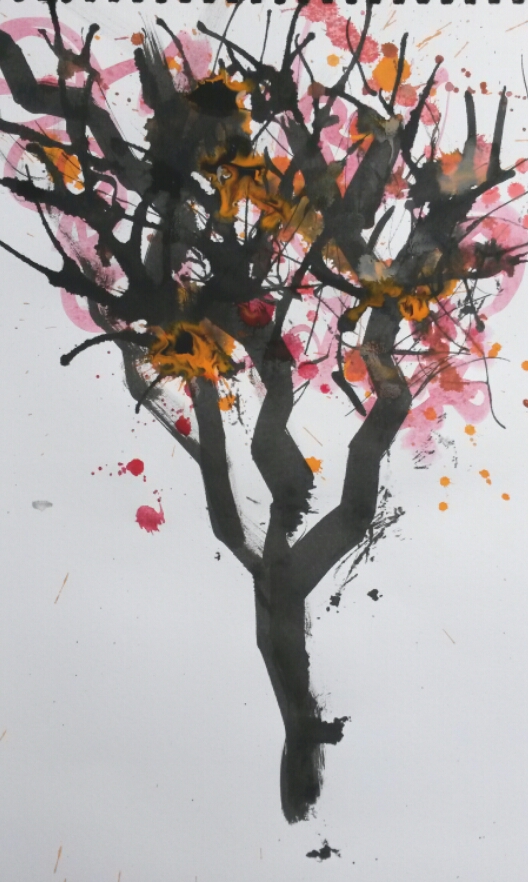
A3 black ink with watercolour
I made up little washes of watercolour and threw them on in time to the music. I chose the colours with Autumn in mind, but on reflection I decided I didn’t want natural colours; it wasn’t a natural, realistic result I was aiming for, I think the process merits more mysterious, magical colours, such as blue and gold. I also thought the colour in the watercolour washes wasn’t strong enough to compete with the black ink, so decided to use coloured inks in the next ones.
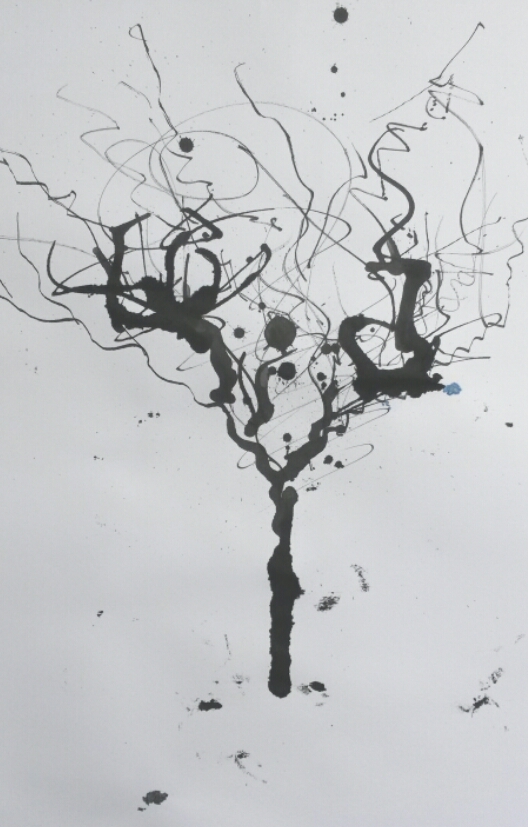
A3 black ink
This was done only with black ink again, but with more concentration given to the rhythm of the music. It is a lively sketch and has energy.
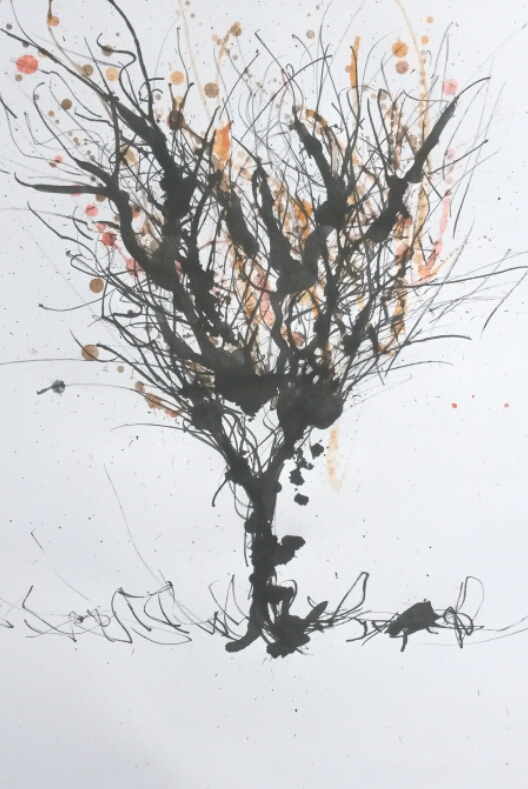
A3 black ink and watercolour
This is a combination of the sketchy drawing of the previous attempt, with a little colour added to make it more interesting.
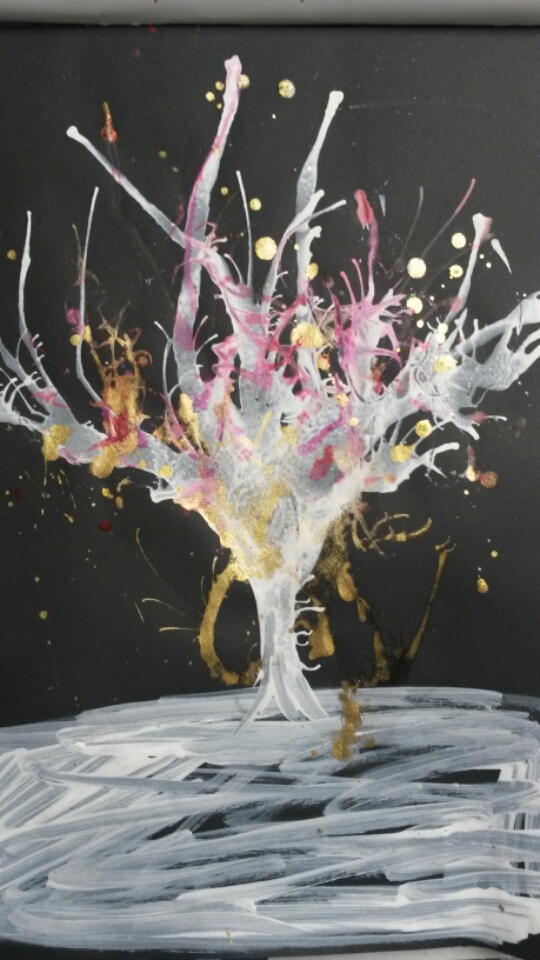
A4 white, red and gold ink
I tried out a smaller sketch on black paper using white, pink and gold ink, but I much prefer the contrast of the black ink against the white paper.
The tree reminded me of a watercolour painting I had done previously. I hadn’t consciously set out to do this.
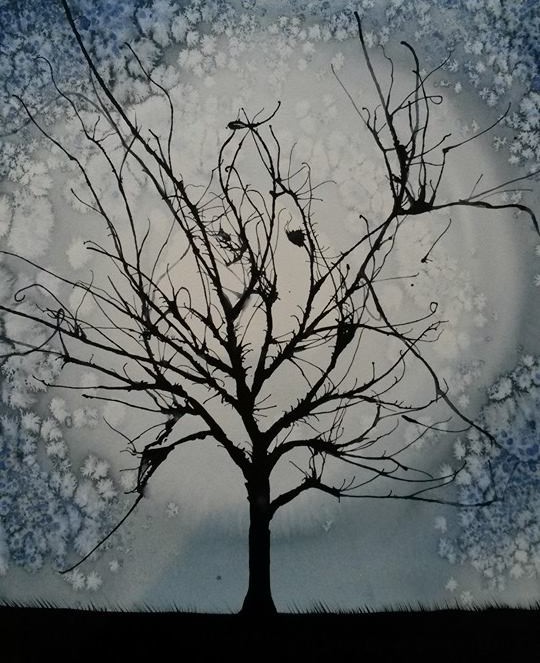
Watercolour and salt, paint blown with a straw
The circle of the moon in the painting reminded me of the circle of the drawing machine, so I decided it would be fitting to let my machine contribute to the final assignment piece. I used a large piece of rough watercolour paper (Saunders Waterford I think), and gave my machine some pale blue soft pastel. It obliged by drawing me a lovely blue edged moon. I set everything up in preparation; I had my inks ready, my straw (I used a straw in the watercolour painting to blow the paint to draw the branches, and decided to try this again) and I gathered some twigs from the willow tree in my garden to use instead of the paint brush handles. I had arranged for my 10-year-old daughter to record me on my phone. It began well, but as the drawing progressed and the twigs snapped as I was drawing with them and as I threw the inks at the paper my daughter’s nerves got the better of her and she kept giggling.
50cm x 66cm black, blue, pink and gold ink with blue pastel
This was my first attempt at the final assignment piece. I was reasonably pleased with it, but frustrated that I would need to do it all again in order to record it.
For the second attempt I got my husband to record it on a camcorder. I got my machine to draw my moon again, and this time I got it also to draw on the ground at the bottom.
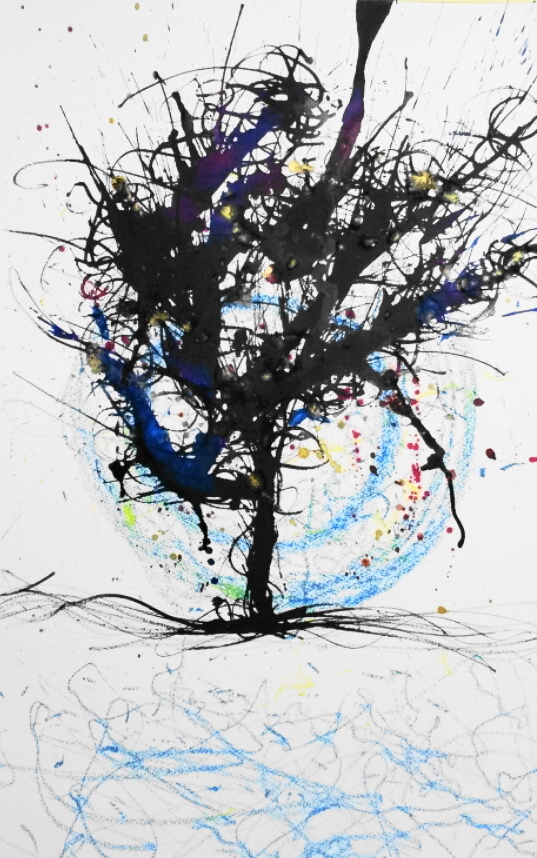
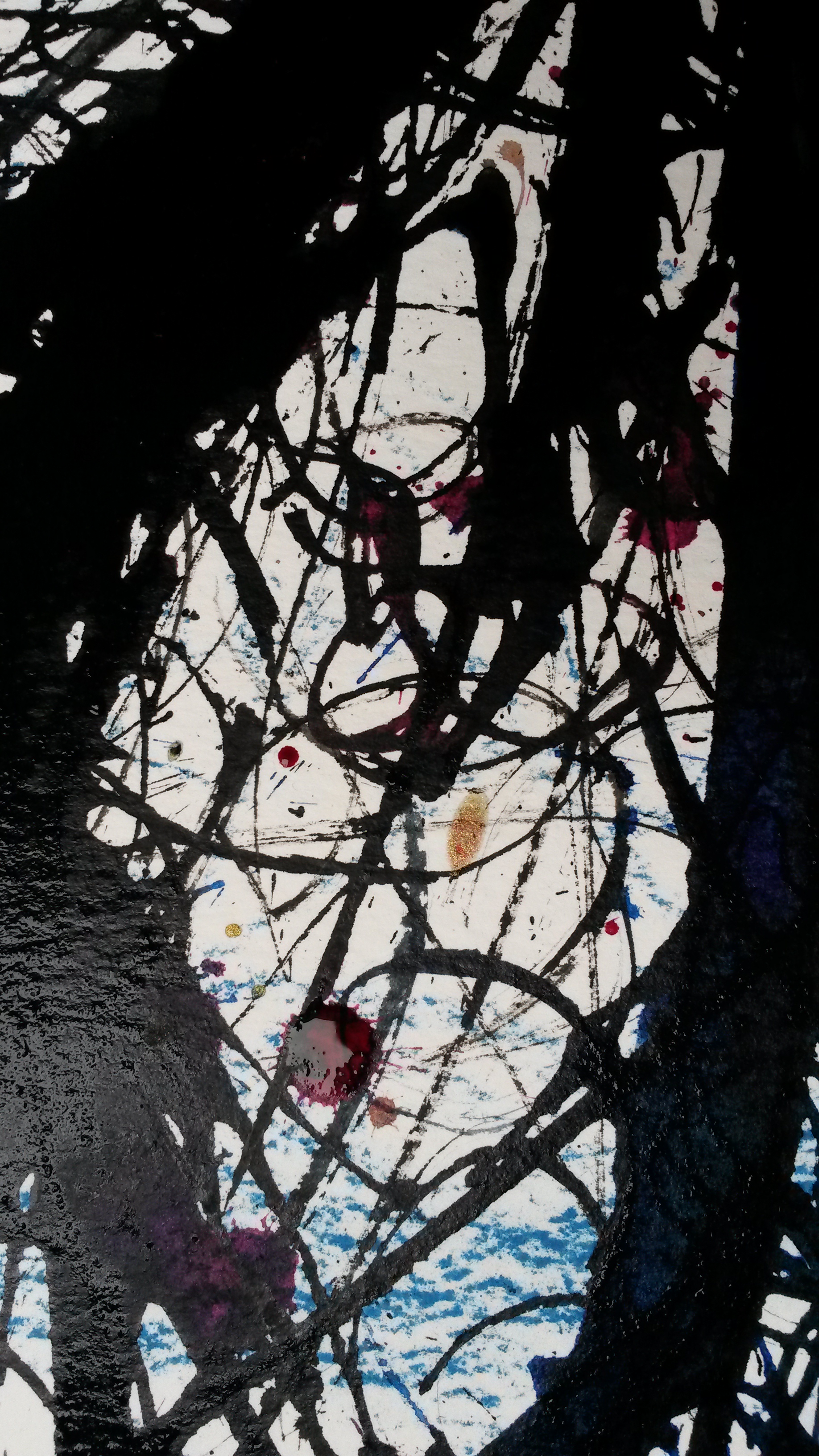
50cm x 66cm black, blue, pink and gold ink with blue pastel
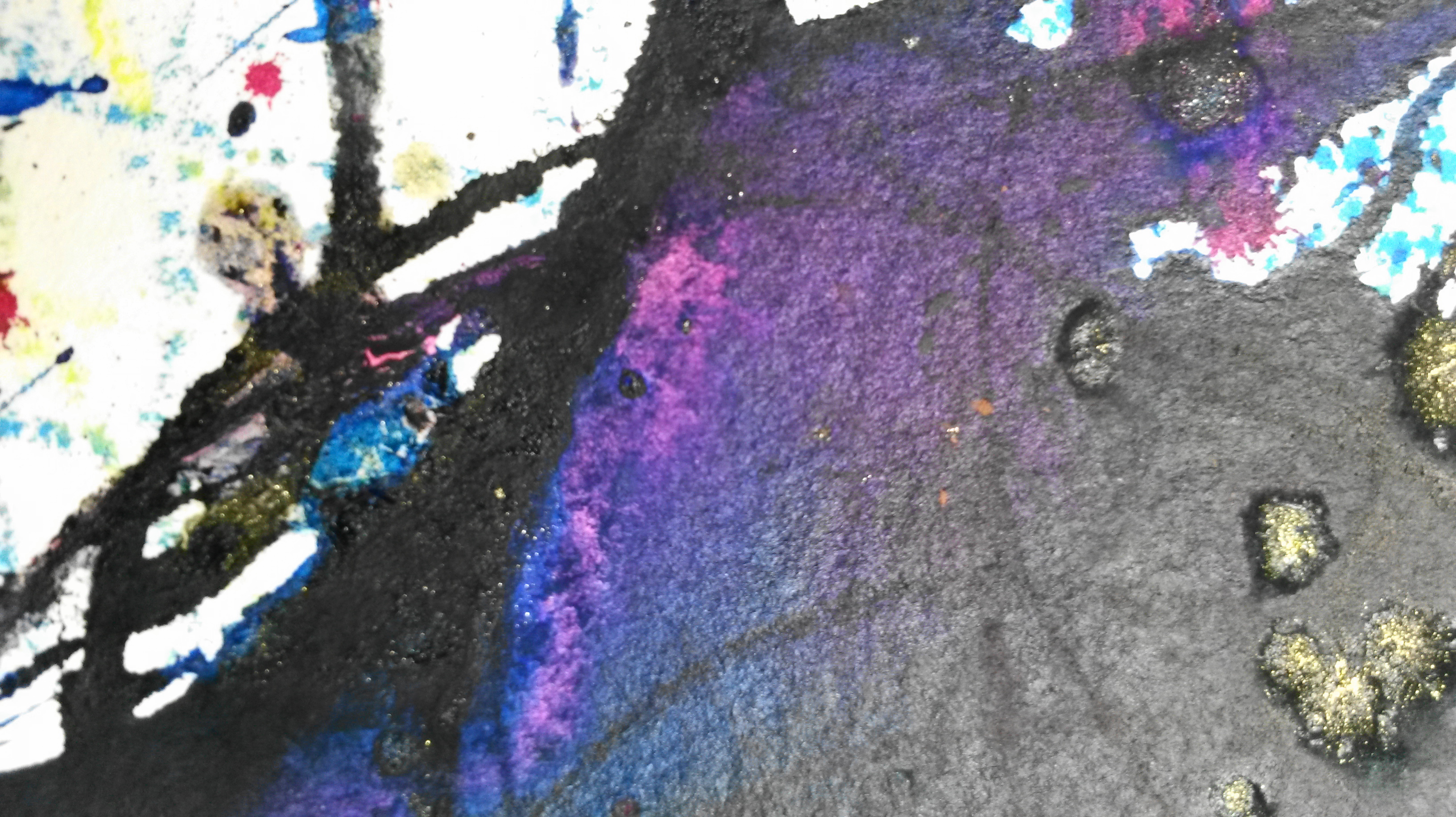
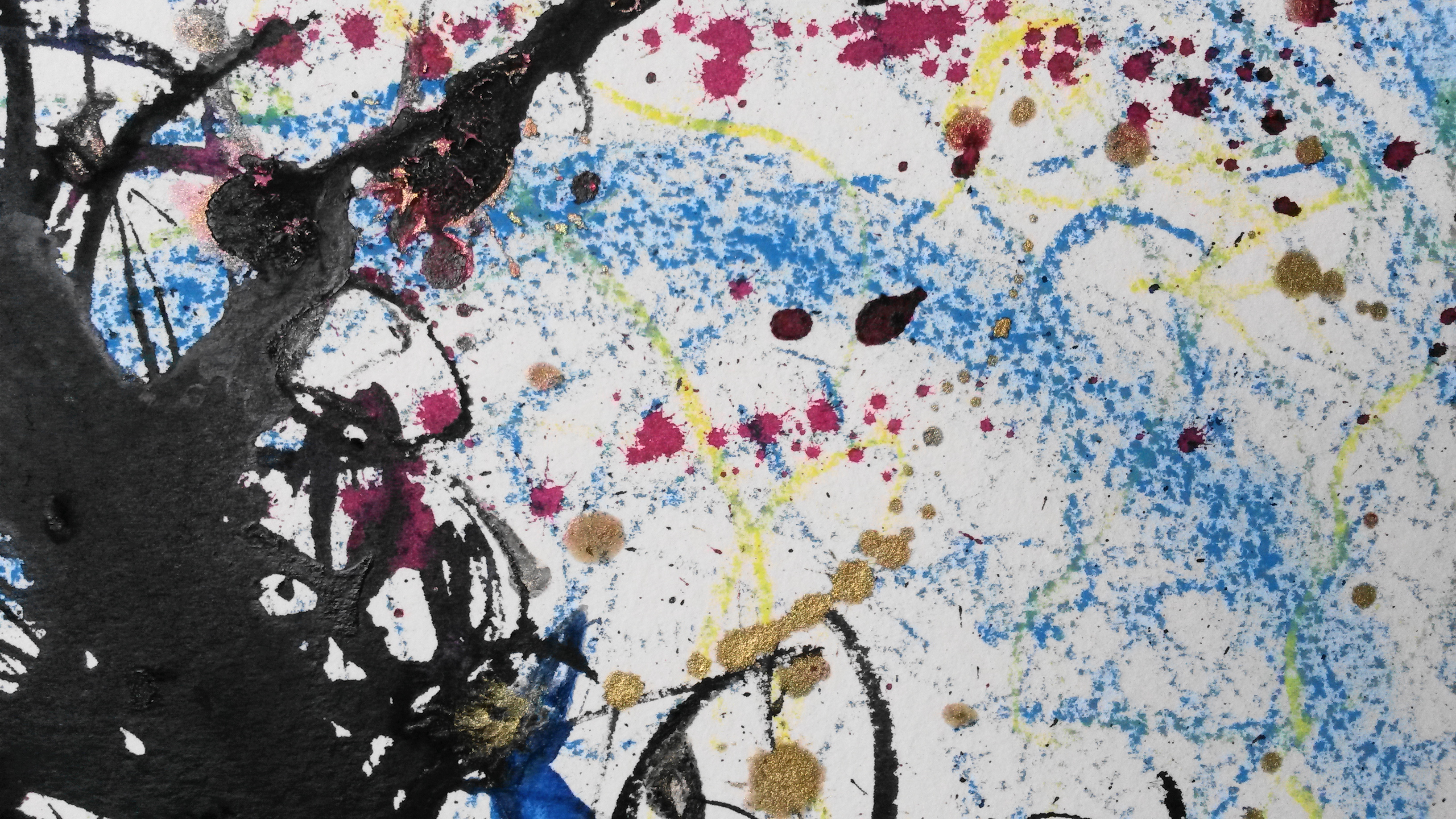
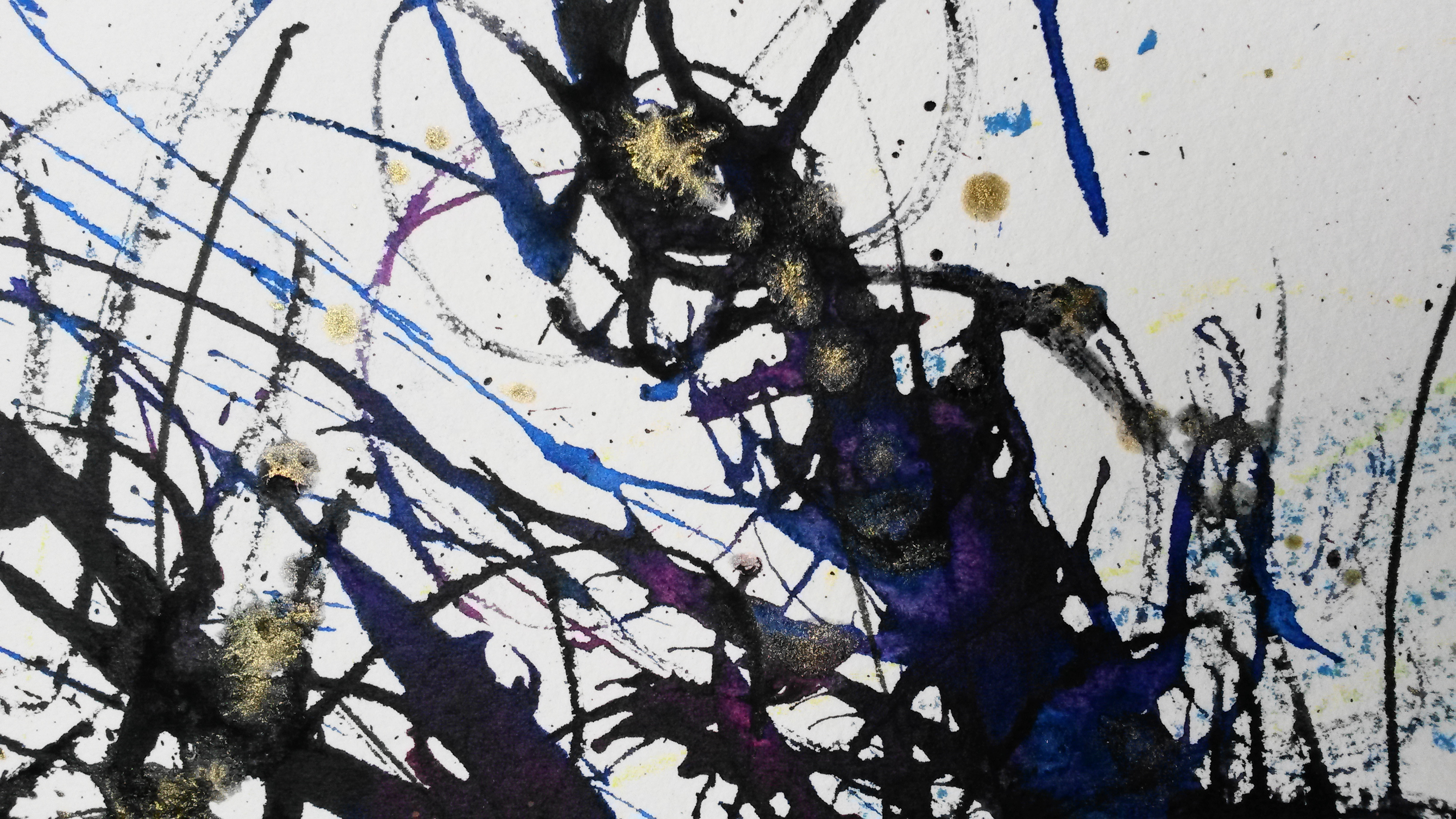
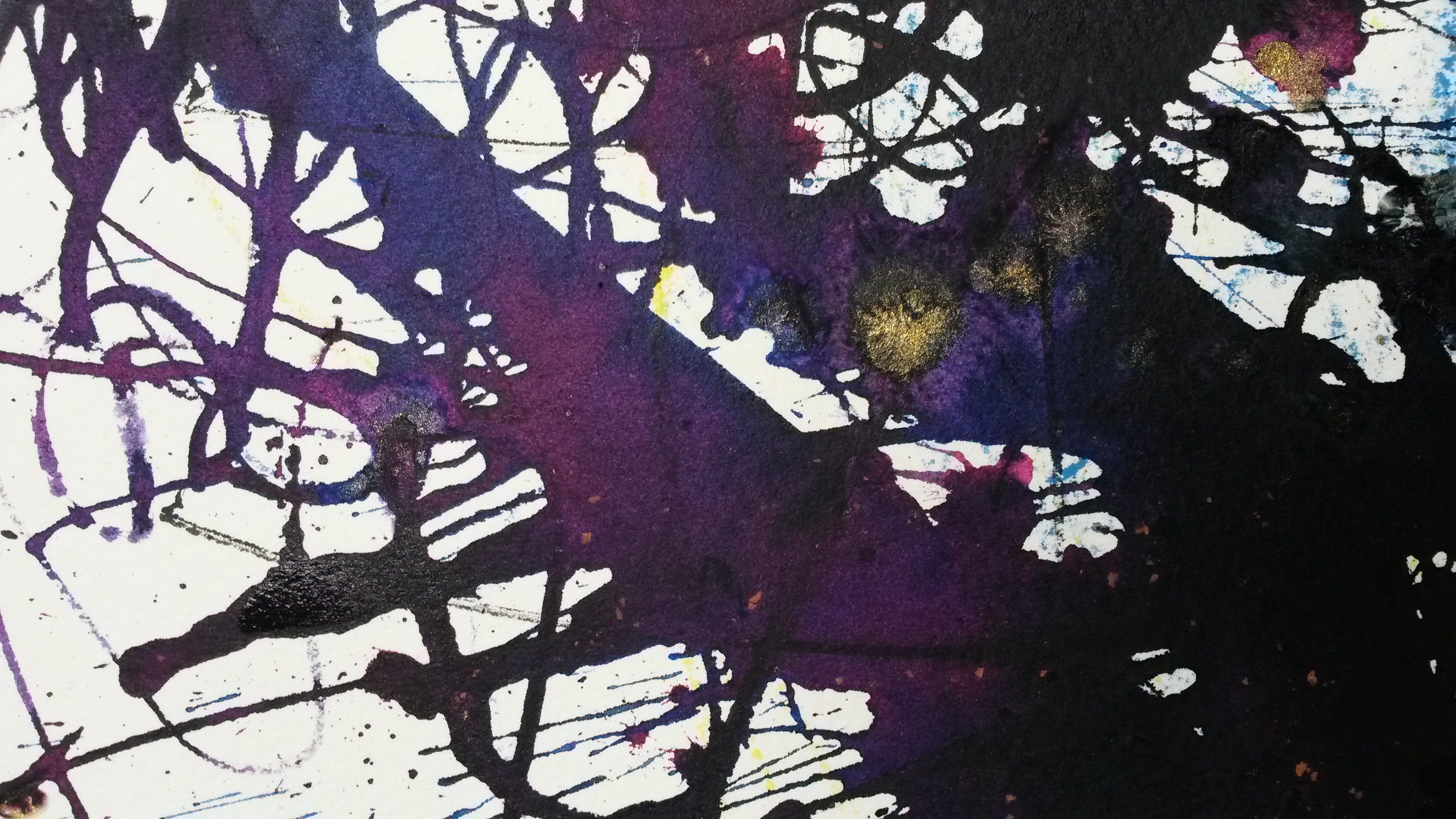
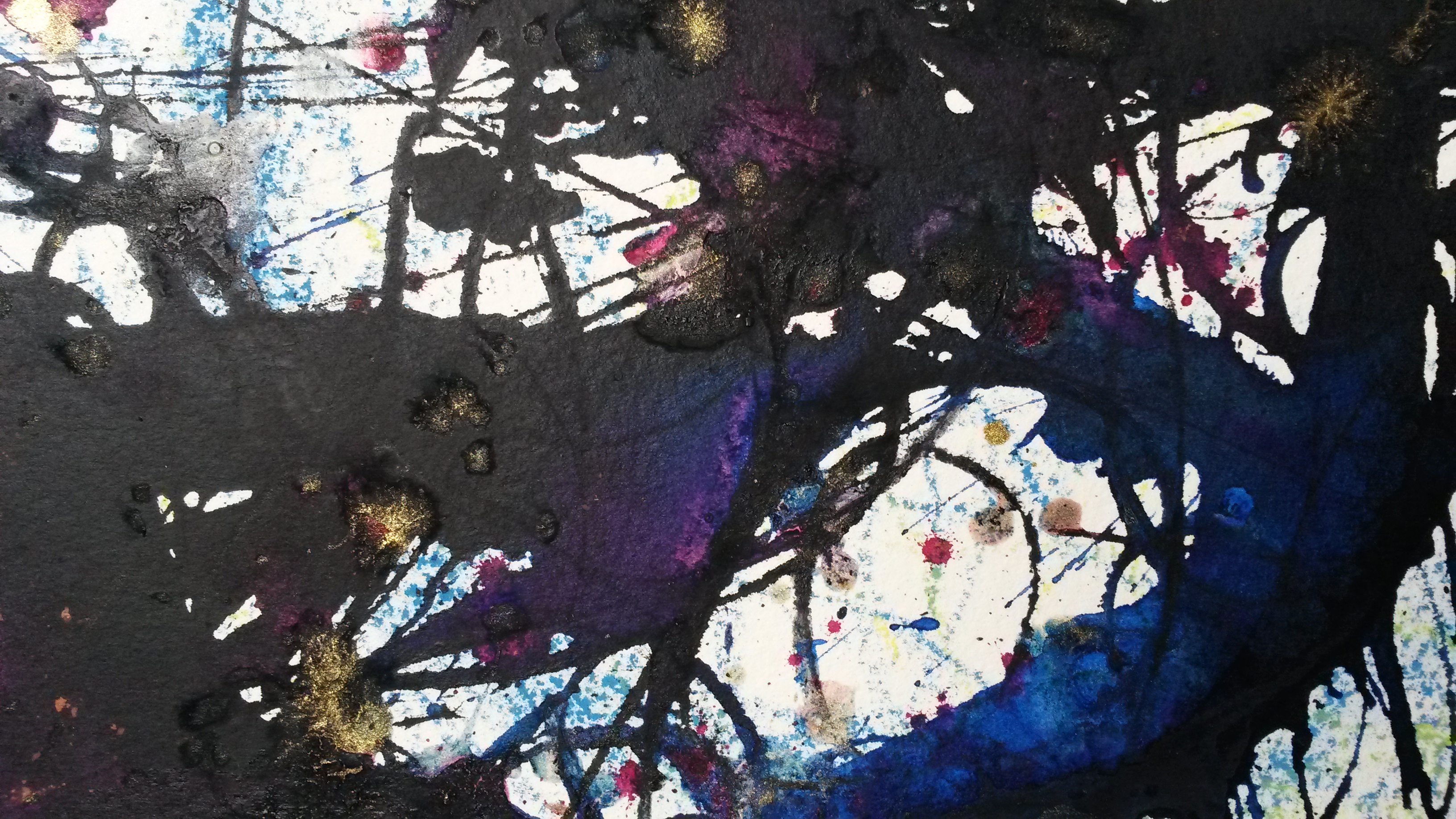
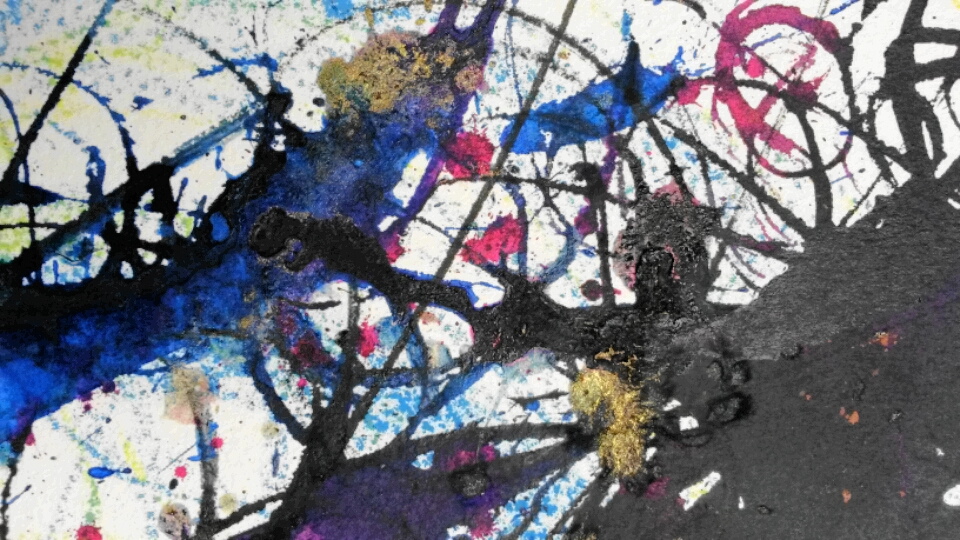
The photograph doesn’t do the colours in the finished piece justice so I took some zoomed in images, originally to show the colours better, however some of these work well in their own right and could be a series of abstract works on their own, without the original finished piece. It is not even necessary to know it is a tree.
The video of the making of the drawing can be viewed here; https://www.youtube.com/watch?v=UXmDTSkZ75A

 My drawing2 blog