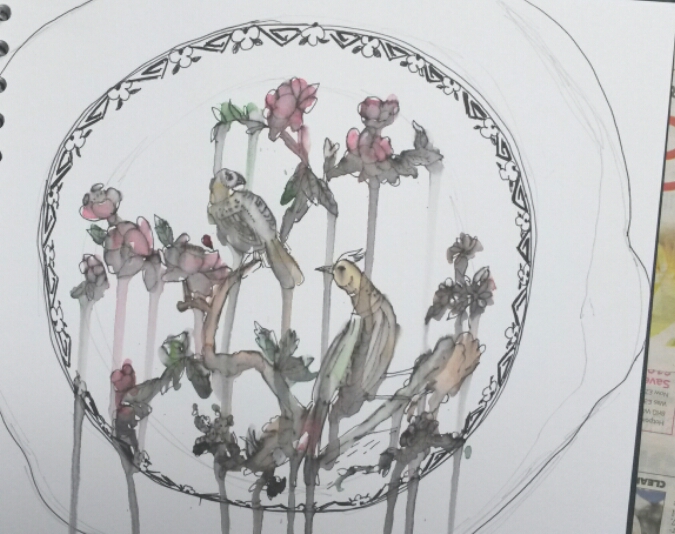
Over the next few weeks you’ll experiment extensively to build up your sensitivity to the properties of materials. Use your sketchbook and supplementary sheets to collect information about materials and what you can use to draw with. Push forward your experiments by using the new methods you discover to make fuller drawings. Use a new technique randomly scribbling a square, for example can help you see it’s potential, but using it to complete a task pushes you to learn more actively by solving any problems you encounter along the way.
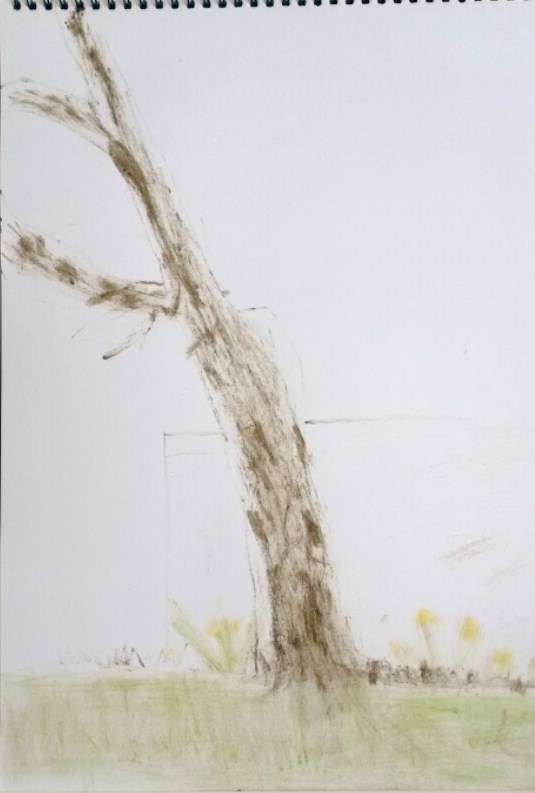
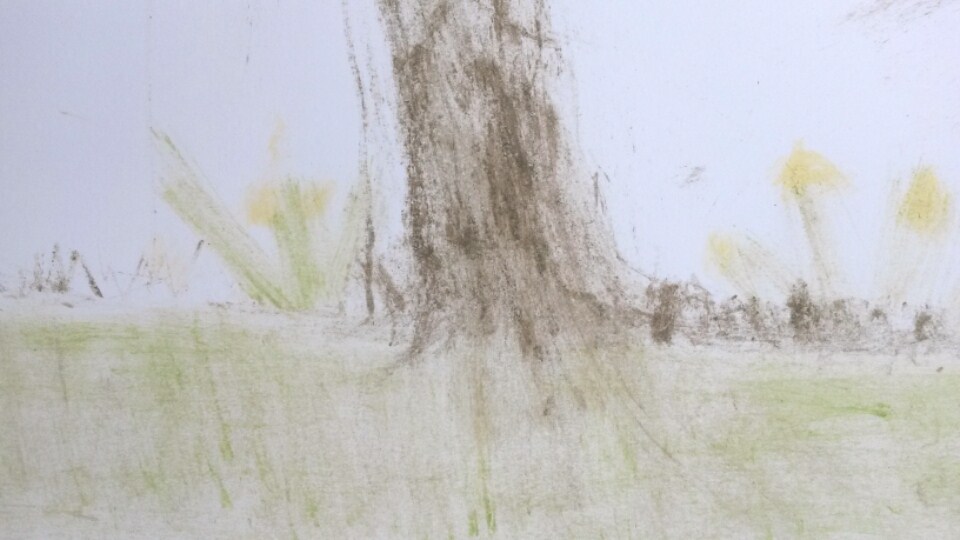
These drawings were done using a stick with mud for the tree, rubbing daffodil petals on the paper for the flowers and rubbing blades of grass onto the paper for, well, the grass. It was a lot of effort for very little result (as well as a lot of strange looks in the park).
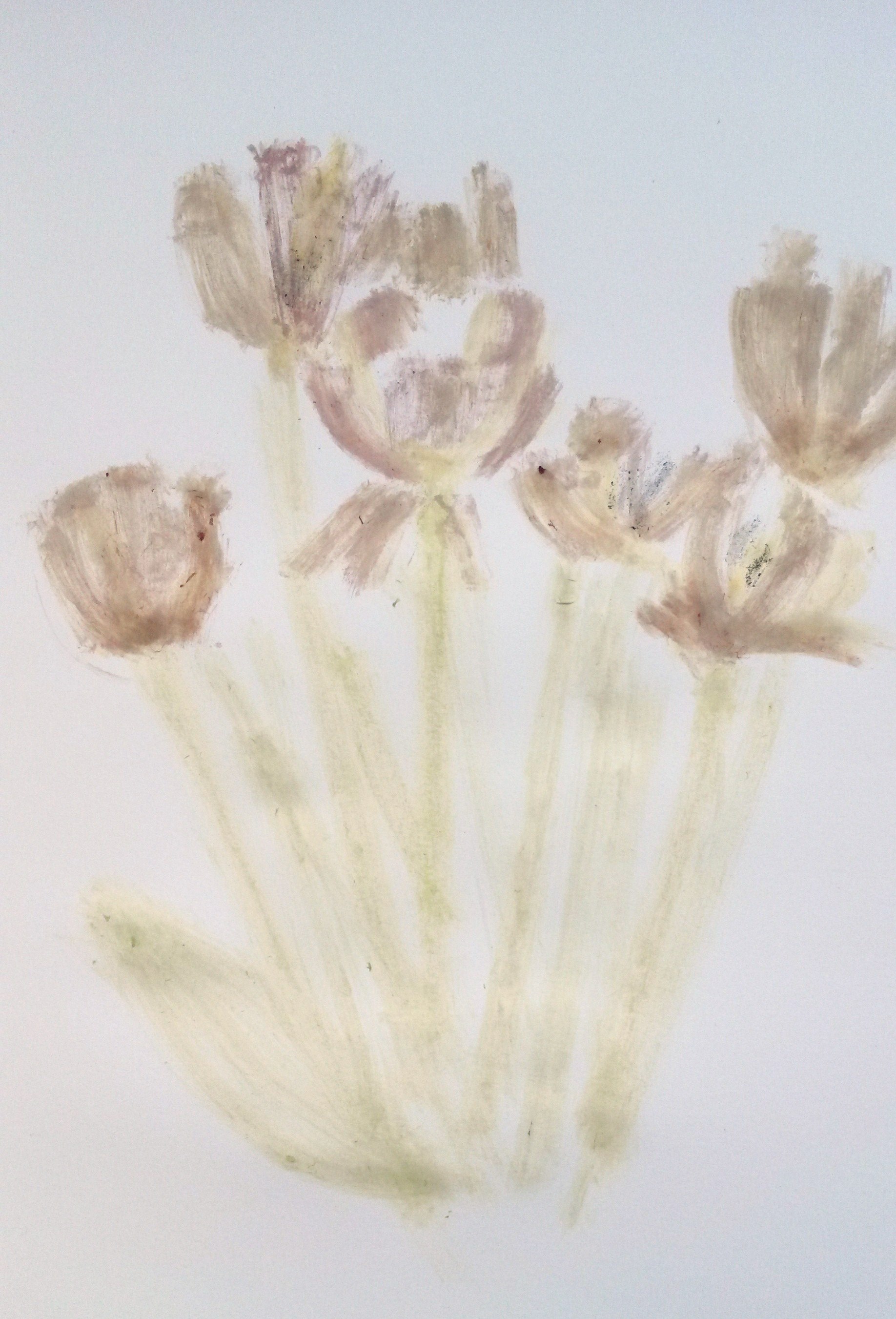
This was done in a similar way with tulip petals and leaves, with a similar, disappointing result.
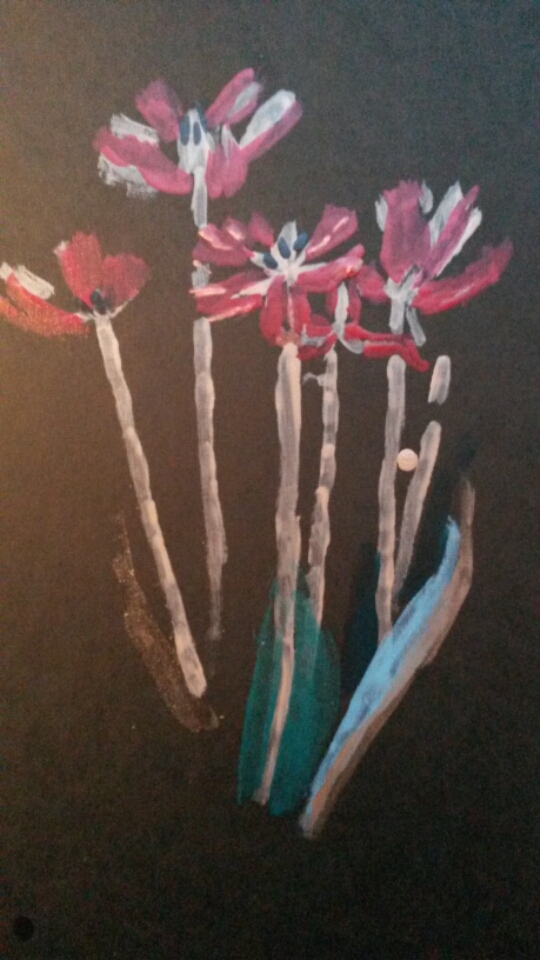
This was done using different coloured mail varnishes on black paper. Quite a nice result and one I may try again.
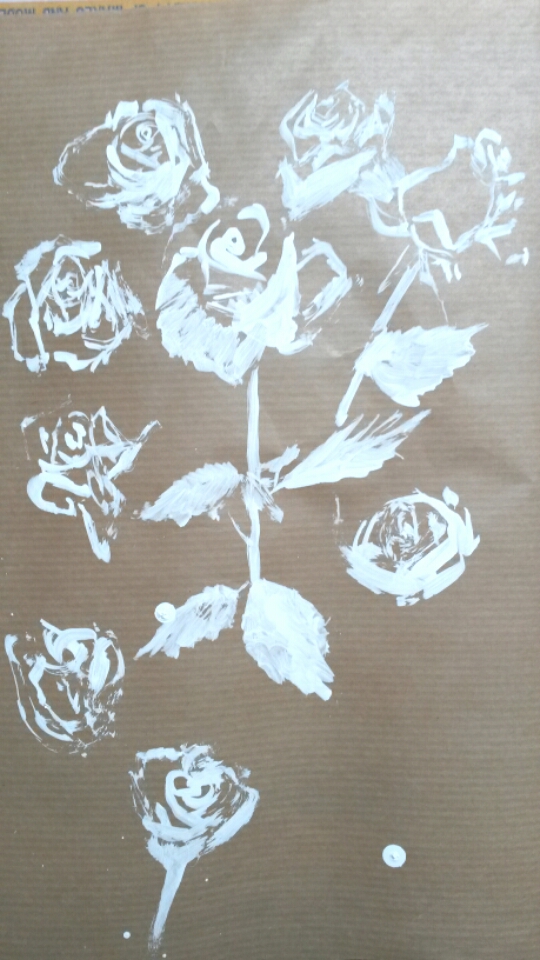
This was done with Typex correction fluid on brown parcel paper.
Aim: When you think of drawing, what’s the first thing that comes into your mind? We might initially think of pencils and maybe a Renaissance masterpiece. In fact pencils are quite a modern invention and most Renaissance drawings were done with a stick of silver and a pot of ink. Your sketchbook should be filling up with drawings in a variety of media by now, but for this project you’ll extend that exploration even further.
.



 My drawing2 blog