Category Archives: Part 3

Project 4: An emotional response

Take 10 pieces of card and give them to friends.  Ask them to write down a characteristic of someone in a novel or newspaper article in the first person.  Ask them to choose something that might engender an emotional or physical response….As they read the statement out, try to change the way you use your materials to respond to the statement.  Make angry, scared, joyful marks as prompted.

I decided to do a self-portrait for this exercise, mostly for convenience, but also because I was thinking about the research I’ve done on John Bellany and the self portraits he did in hospital following his liver transplant.  These are very emotionally charged and he conveys the emotion he was feeling because he had survived the operation, when he had been convinced that he wouldn’t.

I am a little rusty at life drawing so decided to have a practice first.
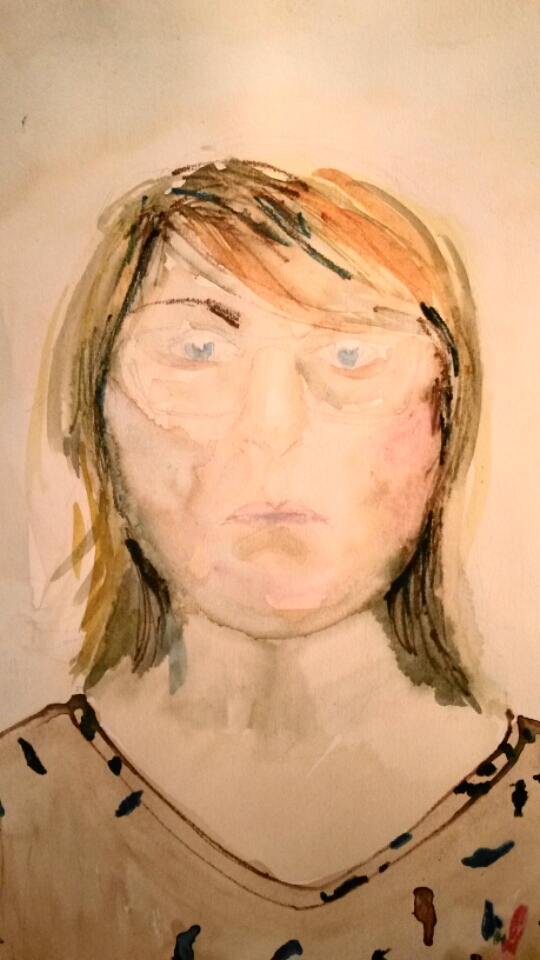
2015-09-25 23.40.44

This was my first attempt, drawn with watercolour and watercolour pencil and using an easel.  When I took it down from the easel I realised the proportions were way out.  So I had another attempt.
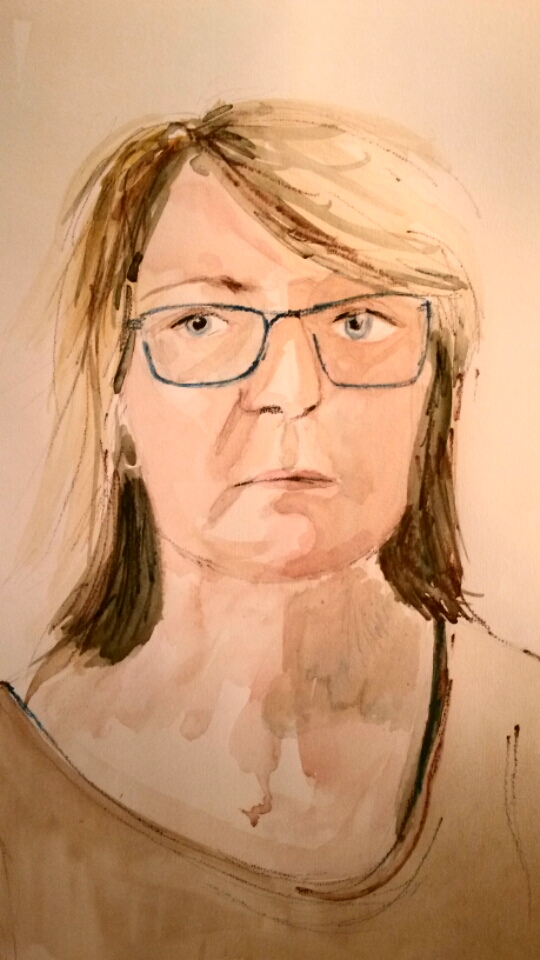
2015-09-25 23.40.04

This was a little better, but I decided to try working from a photograph, so that I could concentrate on the mark making and not on the accuracy of the drawing.
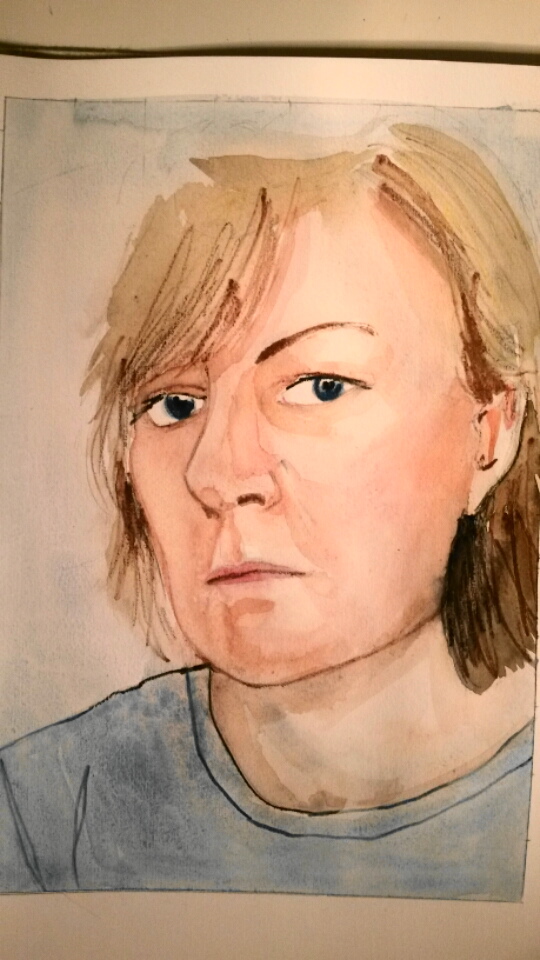
2015-09-25 13.51.50

A3 sketchbook with watercolour and watercolour pencil

I thought this was a better starting point.

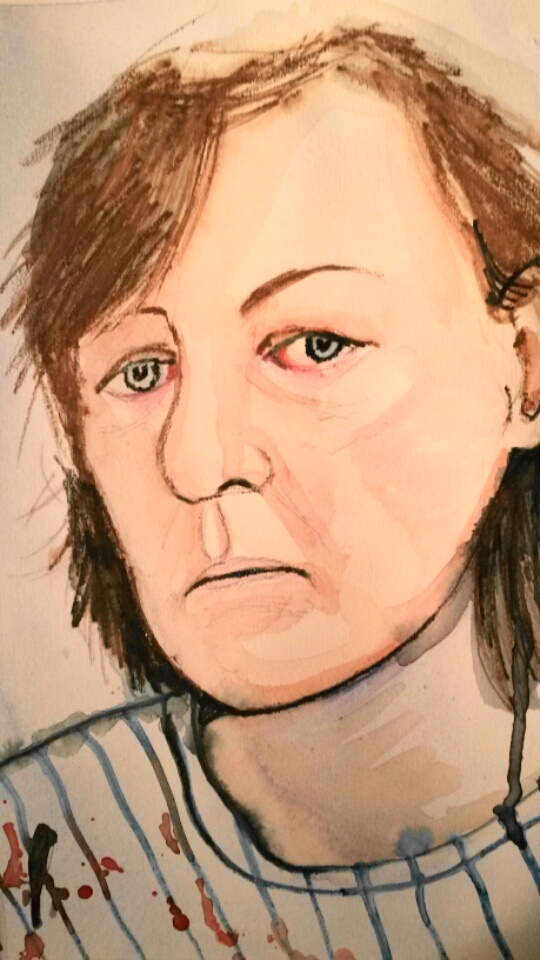
I had asked friends to email their little statements to my husband’s email address.  He then printed them without showing me.  I had them folded up and I began to draw another self-portrait using the photograph as before.  Once I had pencilled in the basic drawing I looked at one of the statements.  The first one read; ‘I am drunk and disorderly and I cannot take any more riddles.  I killed someone today, I can kill you too.’
2015-09-25 13.51.31

A3 sketchbook with watercolour and watercolour pencils

I used a lot of black in this drawing.  I tried to made the gestures scribbly and loose.  The striped t-shirt with blood spots was in homage to John Bellany.  On reflection I think it has an air of despair, not madness to it.

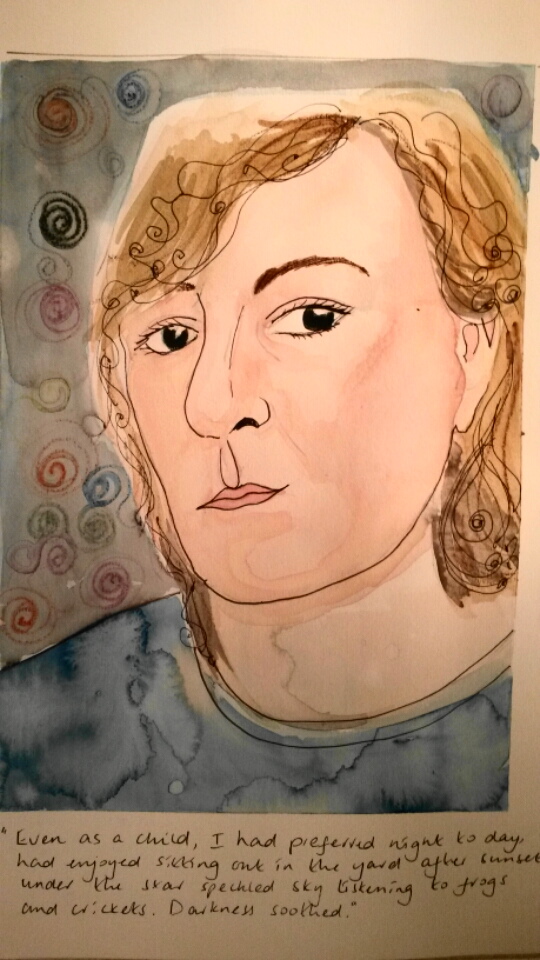
The next statement was; ‘Even as a child, I had preferred night to day, had enjoyed sitting out in the yard after sunset, under the star-speckled sky listening to frogs and crickets.  Darkness soothed.’
2015-09-25 13.51.13

A3 sketchbook with watercolour and watercolour pencil

I tried to use scribbly curls and swirls when doing this drawing.  I made the eyes very dark.  I was aiming for an air of mystery.

When I began to reflect on the work I had made I felt the drawings were more an illustration of the statement.  There wasn’t much physical response in the mark making.  I felt I had become distracted by the concerns I had about life drawing.  If time allows, I would like to re-visit this exercise and explore an emotional response further.
Project 3: Drawing ‘machines’

Find something which moves and attach a drawing medium to it so that it creates a drawing by itself…..Develop these automatic drawings using source material from your sketchbook or simply by responding to what you find as you experiment.  Note carefully what happens when you shift the drawing from automatically produced marks to considered ones.

I didn’t have a clue where to start with this one.  I began by twisting an elastic band round two pieces of charcoal until the tension was such that when I let it go, the charcoal twists round at speed, but the results were disappointing.

Next I tried attaching charcoal to the blades of a hand blender but when I switched it on the charcoal came flying off at high-speed and I was in danger of losing a finger.

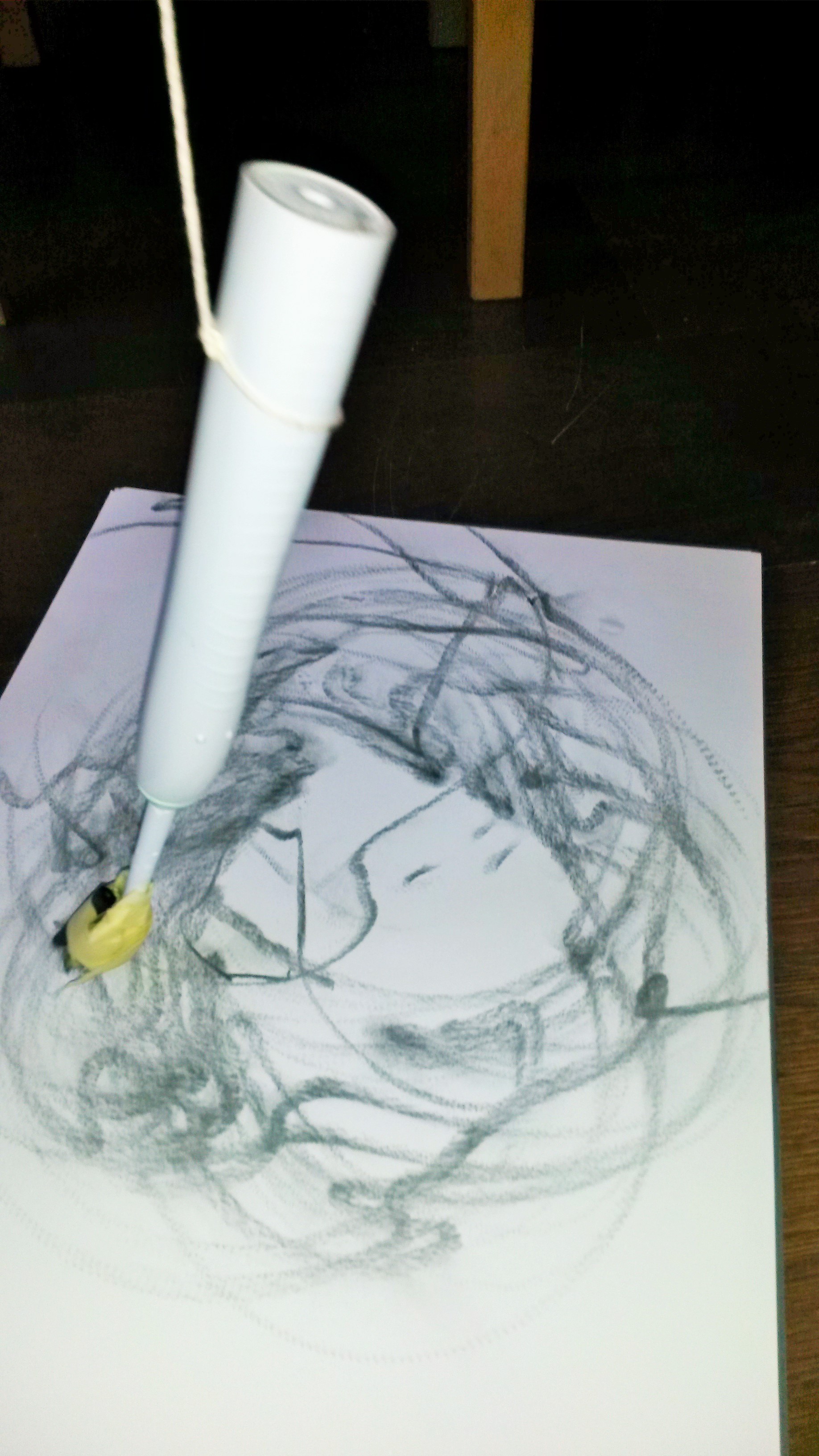
I then tried attaching charcoal to my electric toothbrush, suspending it from a table over paper and the results were much better.  I also found it helped to let it sway a little, like a pendulum. The vibration caused it to rotate in a circular motion, without any interference from me, so it kept moving round the paper for the two minutes until it switched itself off.


20150814_135104

I was pleased with the result.

20150814_142313 (2)

Charcoal on A3 paper

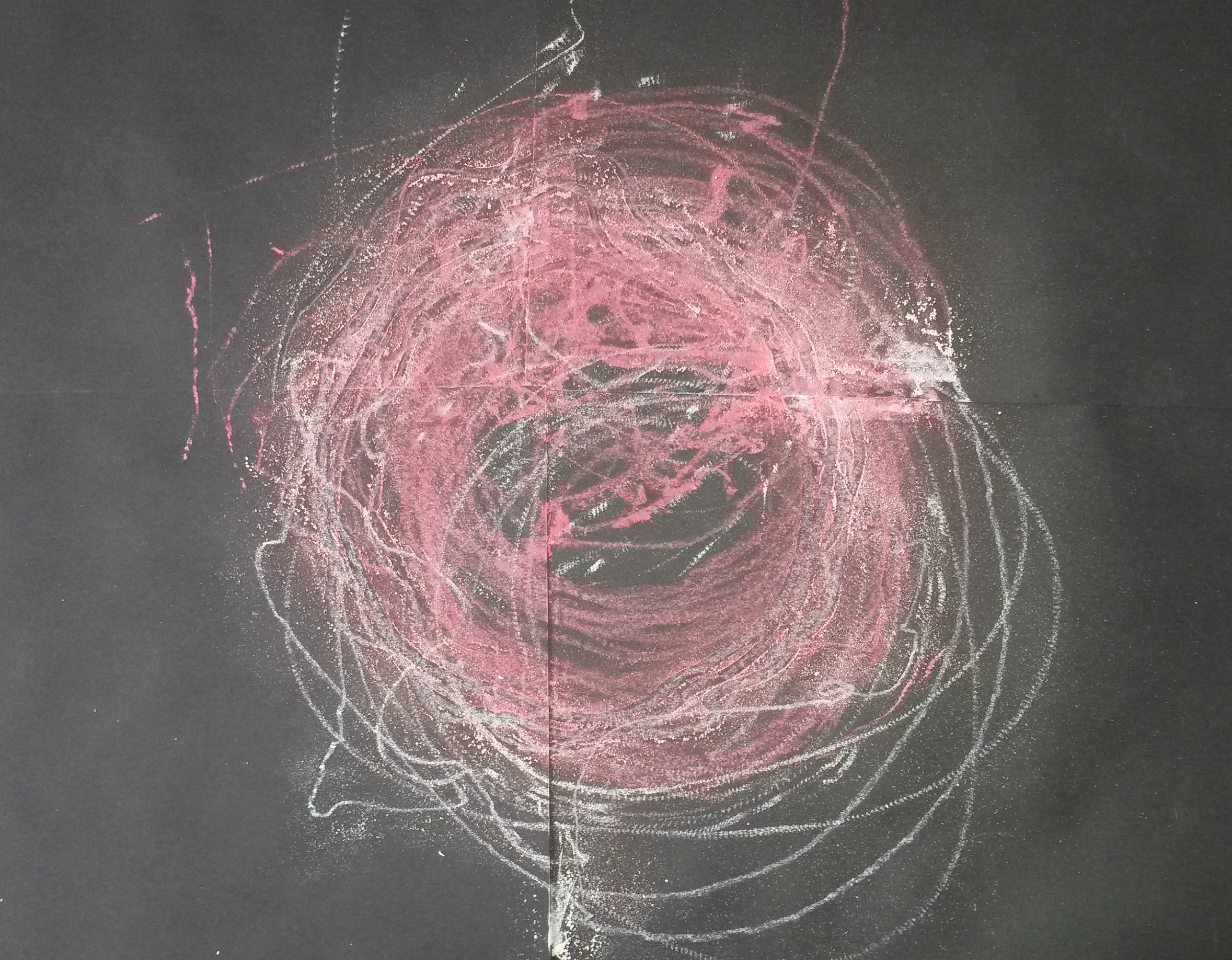
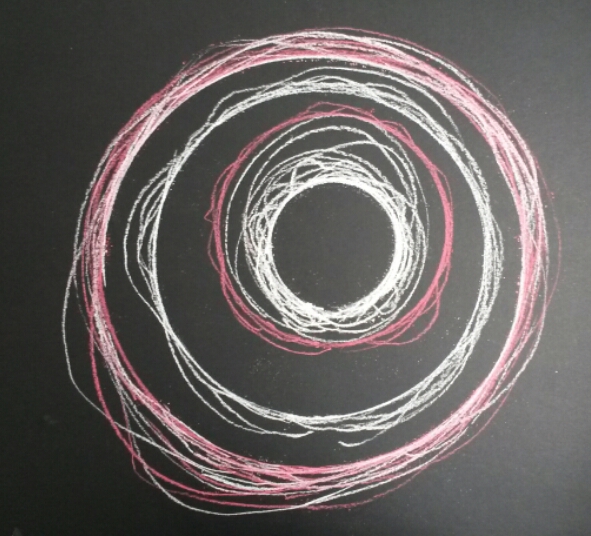
I tried the same process, this time using red and white pastel on black paper.

20150814_142124 (2)

4 x A4 sheets of black paper with pastel

I like the outcome.  I like the marks the circular motion has made, and the squiggles where it has gone its own way.

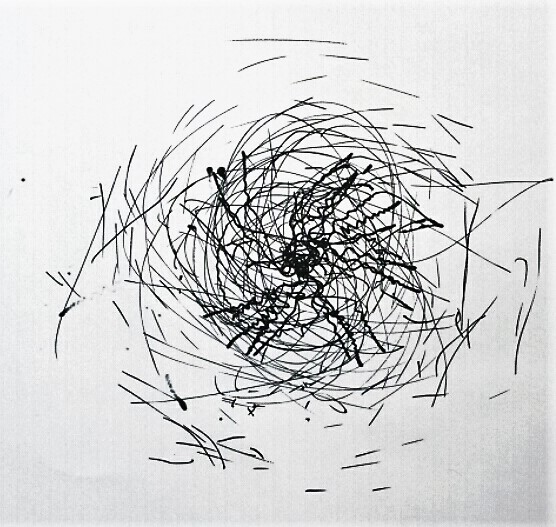
I tried using a black marker pen and the results were different, but equally as interesting.  The weight of the marker as opposed to the light pastel, gave it more resistance and made the movements jerkier.

2015-08-21 22.54.21


When making further attempts, my son came in and on observing the jerky movements as the pastel came into contact with the paper and the vibrations became louder, he observed “Oh it’s angry”.  This made me smile as I thought of Rebecca Horn and her assertions; ‘My machines are not washing machines or cars.  They have a human quality and they must change.  They get nervous and must stop sometimes.  If a machine stops, it doesn’t mean it’s broken.  It’s just tired.’ (The Bastille Interviews 11:Paris 1993).

20150831_163238

I found it interesting that, despite using the same ‘machine’, with the same method, i.e. the media attached to the machine, which is tied with string and attached to a table top, the results were often very different, and I found it hard to replicate a previous result.  I think it depended on a number of things; how close the media was to the paper, i.e. whether it was resting lightly on it, or leaning heavily on it, whether there was any momentum making it go round, what resistance the media gave, e.g. the pastel was very responsive, leaving delicate marks, whereas the pen was quite clumsy and heavy in comparison.

As a contrast, I tried to replicate the machine drawings by drawing them myself.

Because of the circular elements, I used a large plate, medium plate, bowl and cup as ‘templates’, as I knew I wouldn’t be able to draw circles freehand accurately.  I used a charcoal stick and drew round each object, trying to vary the pressure and allowing my hand to slip and go wider than the plate etc.  I found it extremely difficult to intentionally draw ‘accidently’.  The result was interesting, but I much preferred the ‘machine’ drawing.

User comments

I had a go at a coloured pastel drawing too.

Project 2: Experiments with mark making

Set up a reasonably large still life, for example two or three chairs piled together.  Make yourself some drawing tools by attaching pencils or pieces of charcoal to the ends of bamboo canes or similar.  Place a large sheet of paper on the floor and try to draw your subject using these super-elongated pencils.  You’ll have less control but you may find that little movements you make have big results as they are magnified by the canes.  This will lead to a very sensitive responsive mark. 

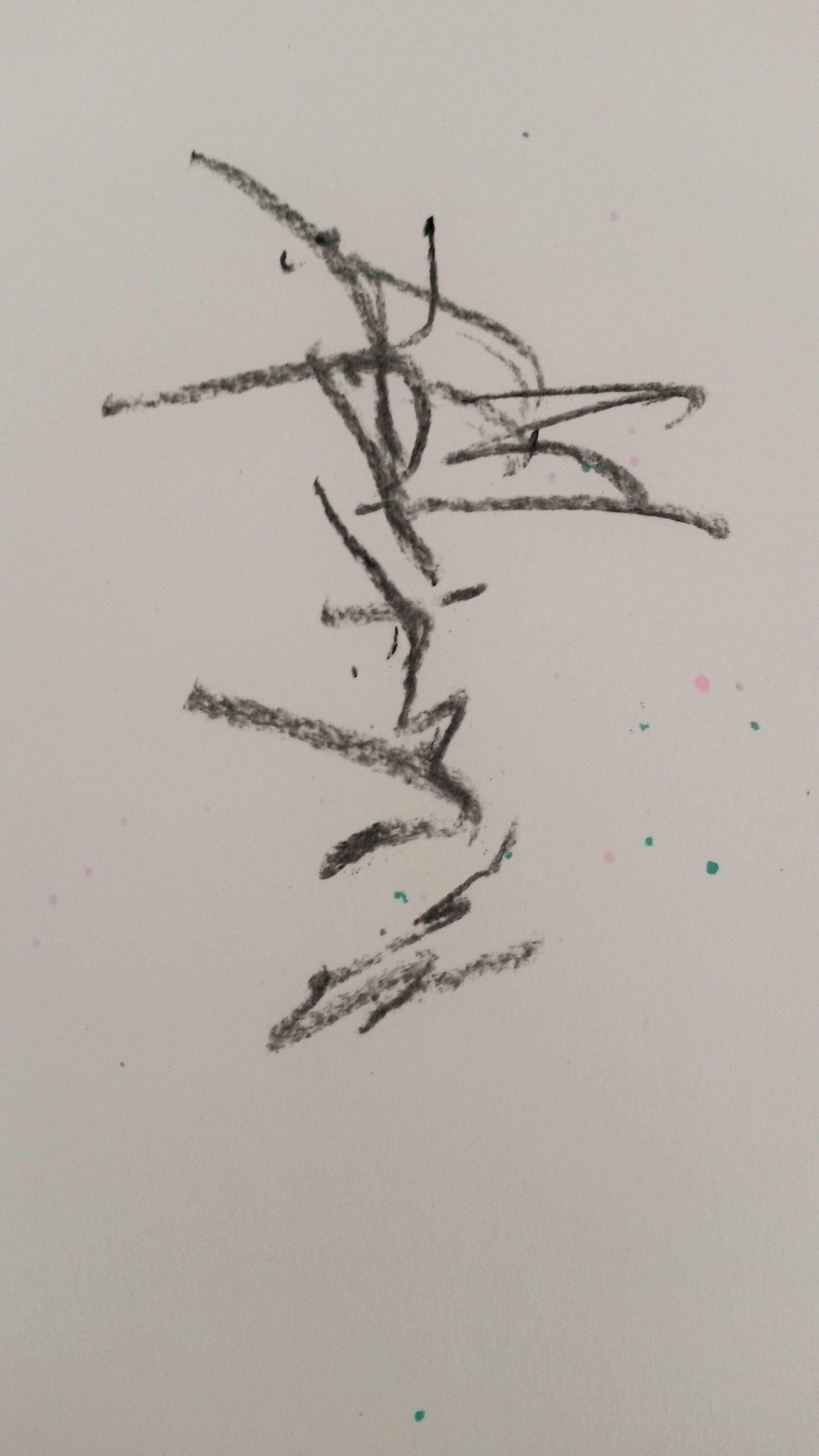
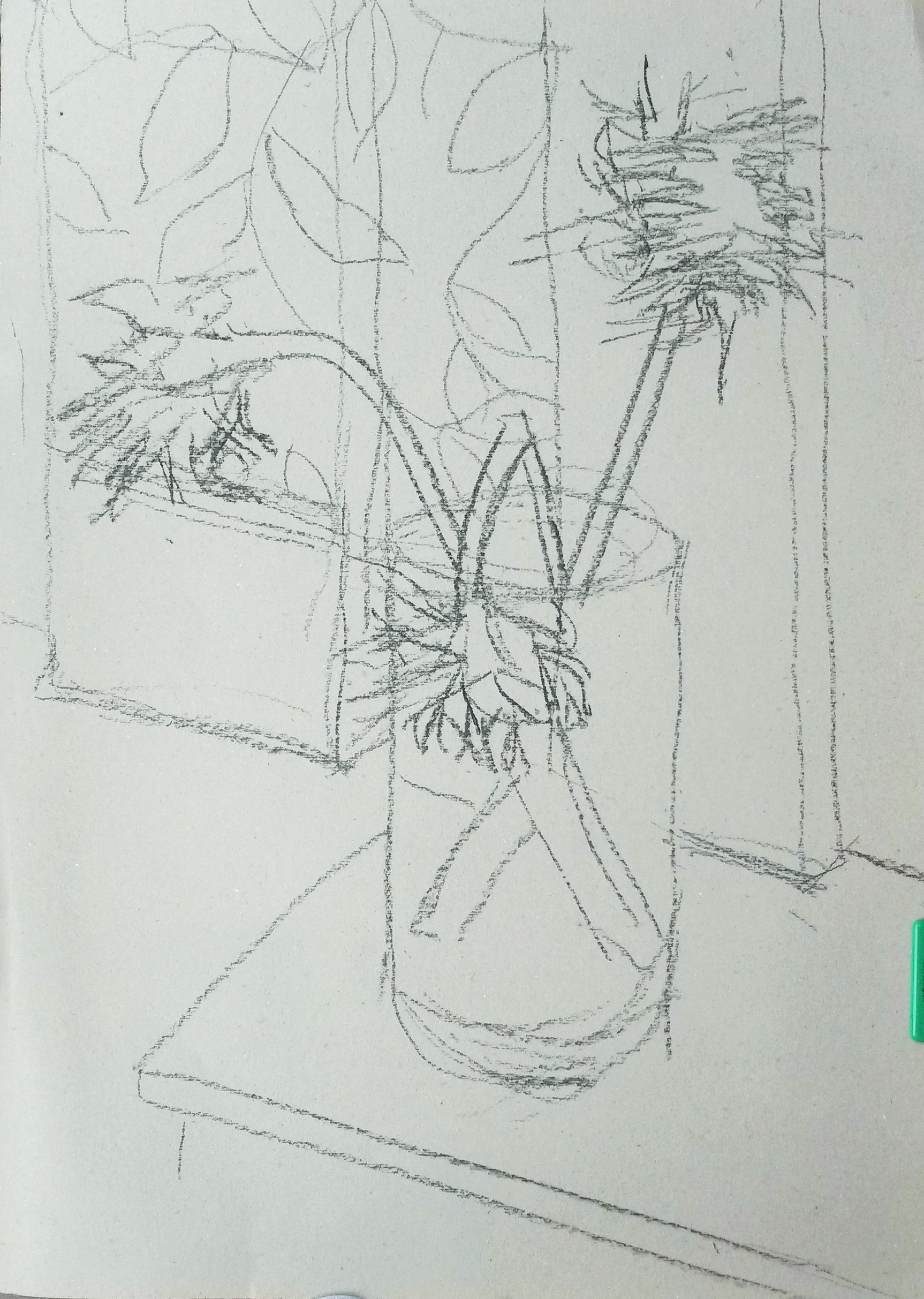
With my tutors words still in my ear from Assignment 2; ‘Look around you and find things to draw instead of setting up a still life’, I looked around and saw a large vase with drooping sun flowers.  I attached a piece of charcoal to the bamboo cane, which was 125cm long and had a wee try out on a piece of white paper.

I only made a few marks and the charcoal was difficult to control, but the marks were interesting; a bit like calligraphy or Japanese symbols.

20150814_131720 (3)

I knew I needed a large piece of paper to draw on and found a large sheet of cardboard.  I didn’t move the vase but left it where it was.  I drew the vase and the wall in the background.  I found it difficult to draw the straight lines of the vase and get the angles of the skirting board right, because your focus is on trying to control the charcoal.  I enjoyed doing the scribbly marks for the withering sunflower petals.  The result was okay.  I liked the strong confident lines of the stems of the flowers.

20150814_114148

Charcoal on grey cardboard 45cm x 60cm

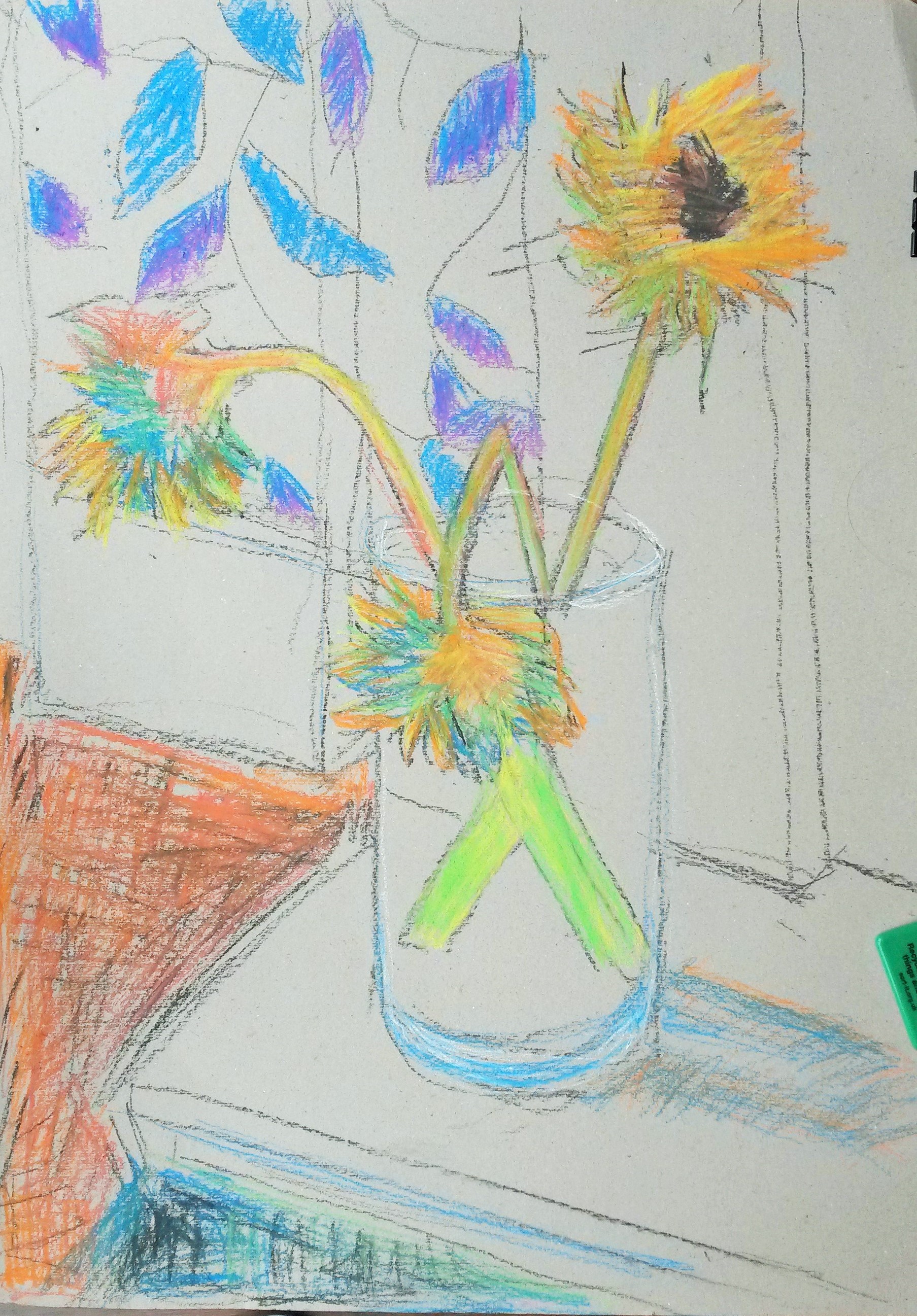
As a second stage, if you like to add colour, grab a handful of wax crayons, pastels or pens for each colour.  Hold them with your fist and draw with them all at the same time. 

I used soft pastels.  I don’t have a huge amount of colours, so used 3 for each colour, trying to be as loose as possible, and leaving the grey of the card board for the lighter tones.

20150814_120336

Charcoal & pastel 45cm x 60cm grey cardboard

I made another attempt using an old paper sack to draw on.  I used the same method with charcoal.

20150831_153851

Charcoal on brown paper 40cm x 80cm

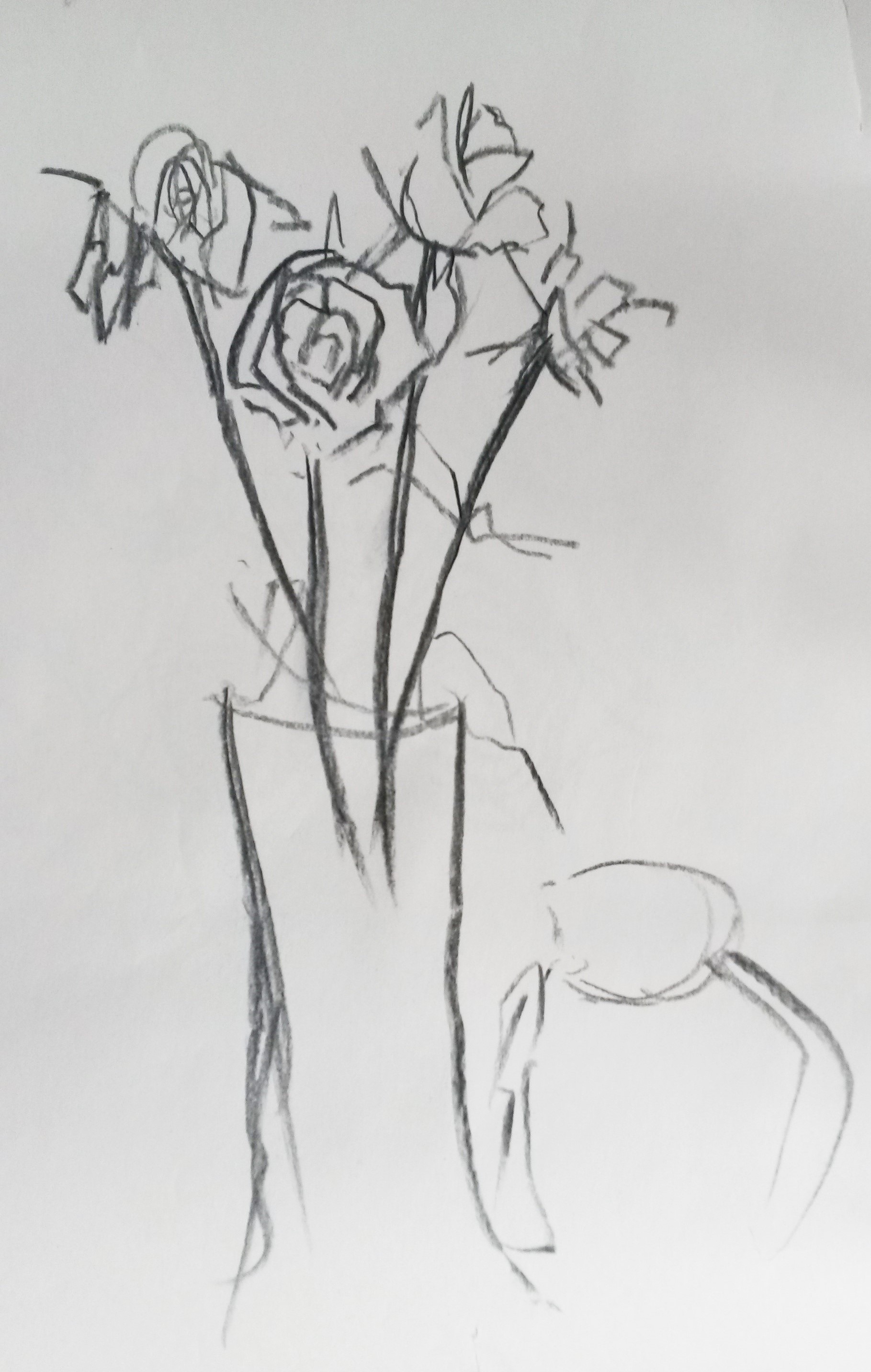
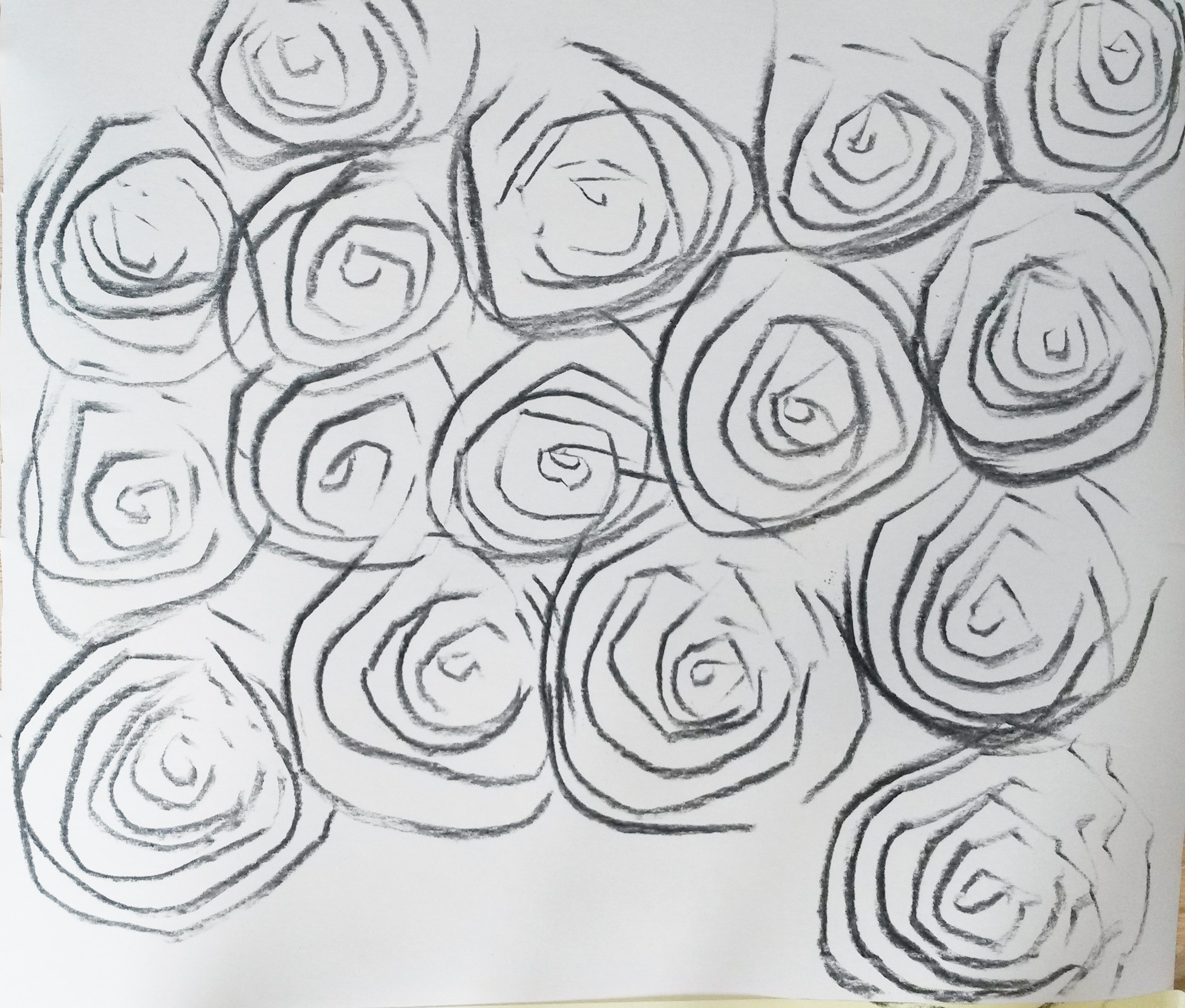
It occurred to me that I should experiment with the length of the stick, so I chopped it in half (about 65cm).  Using the roses from the previous assignment as a reference I did the following;

20150904_16374520150904_163718

20150904_164407

Charcoal on lining paper 45cm x 60cm

I stood to do these with the paper on the floor.  The lack of control meant that some of the lines were bold and sweeping, whilst others were faint and barely there.  I still managed to make strong, bold strokes.

20150904_170743

Charcoal on lining paper 45cm x 60cm

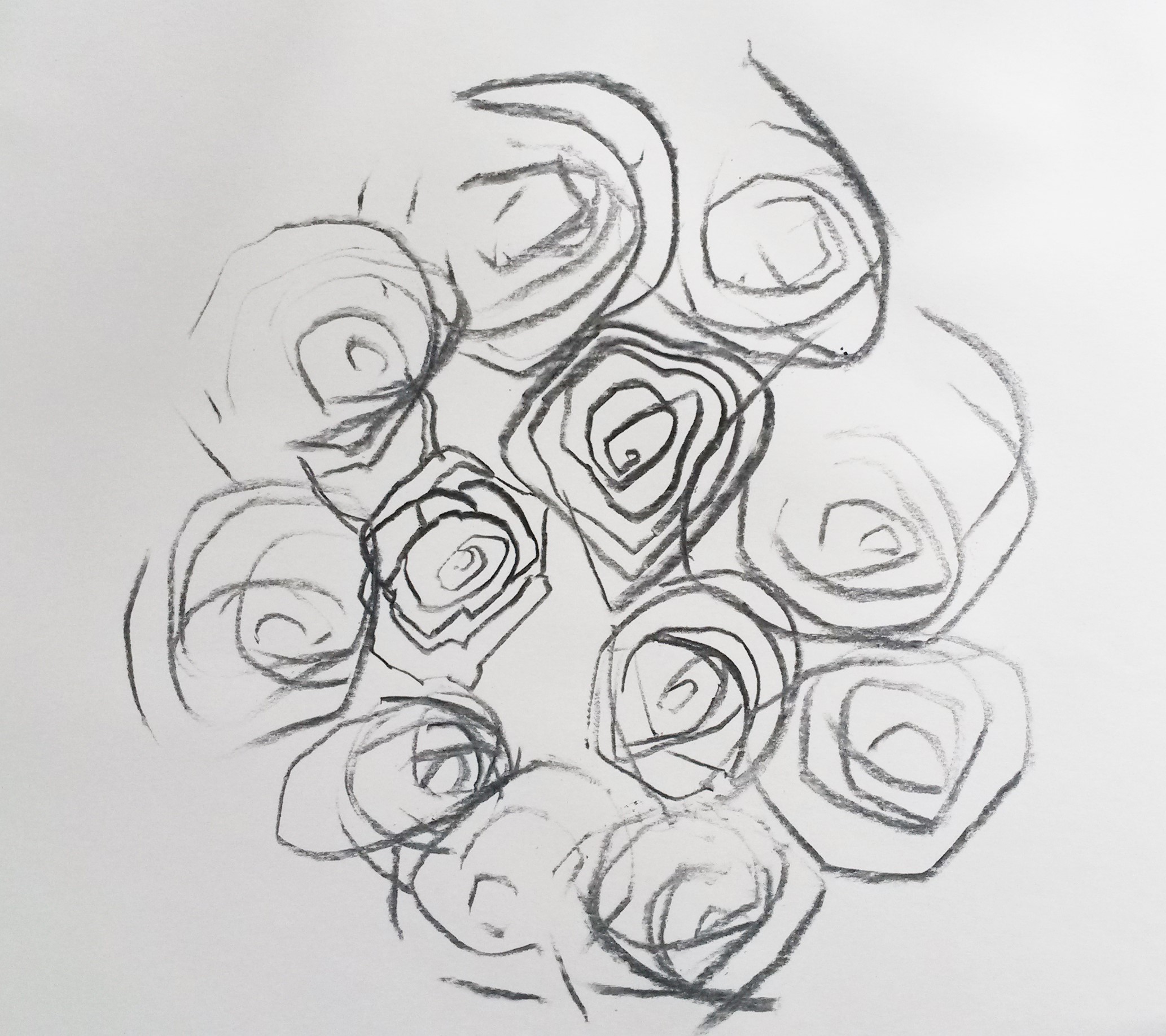
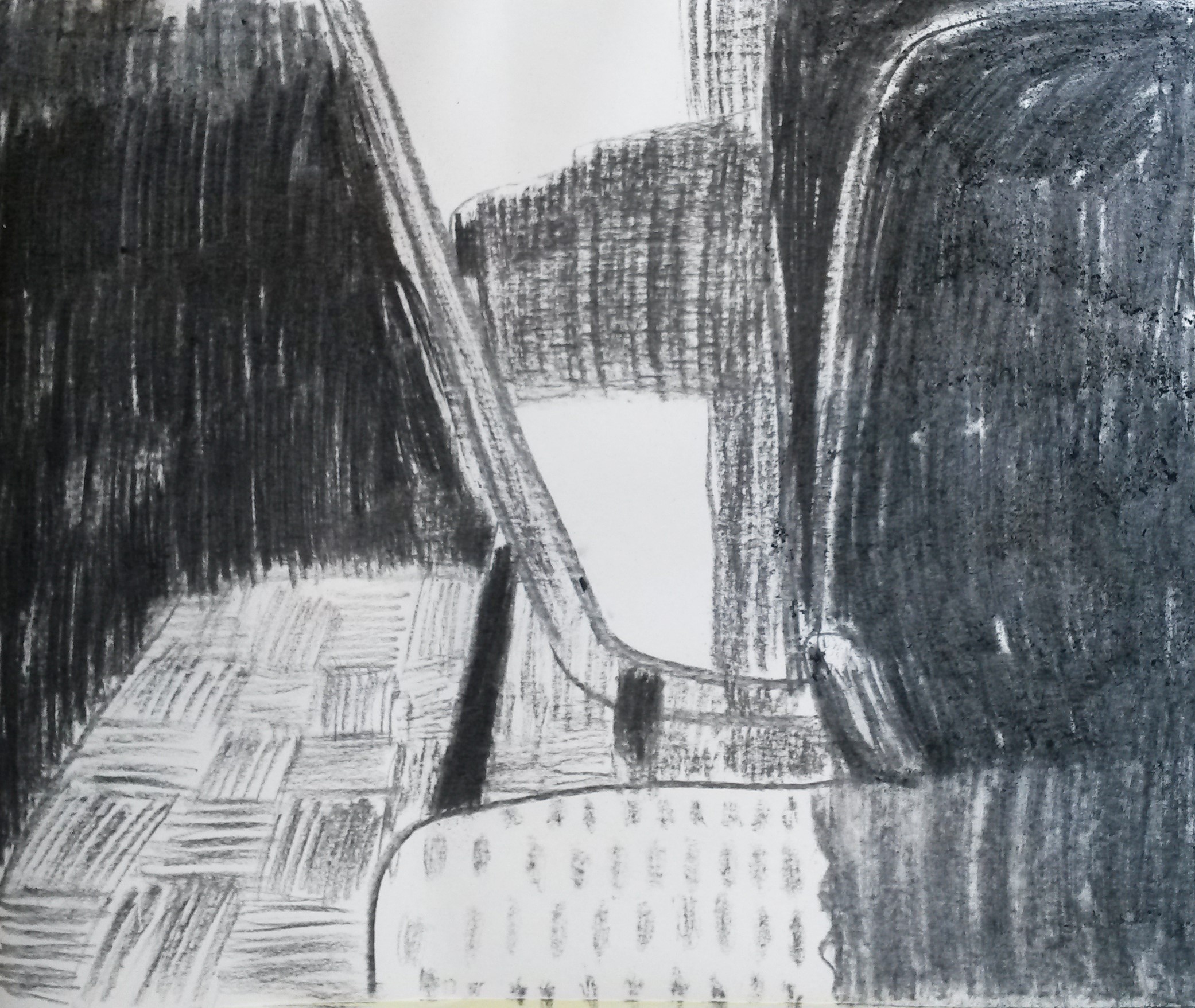
Again, following my tutor’s advice; ‘Try as much as possible, to link the exercises to the Parallel Project’, I did a further two drawings.  I worked from photographs, cropped to make the compositions more interesting.  I was attracted by the patterns, tones and shadows.  The lack of control when using the charcoal on the cane, left no room for fussiness or precision but forced me to be decisive, resulting in some strong mark making, particularly in the dark shadows.  I am pleased with the end result.  It has a confidence to it, lacking in my previous work.  It has an abstract feel and the use of the cane I feel, adds something.  It is an interesting composition, which focusses on line, pattern and tone and is unconcerned with subject.

2015-09-11 21.36.22

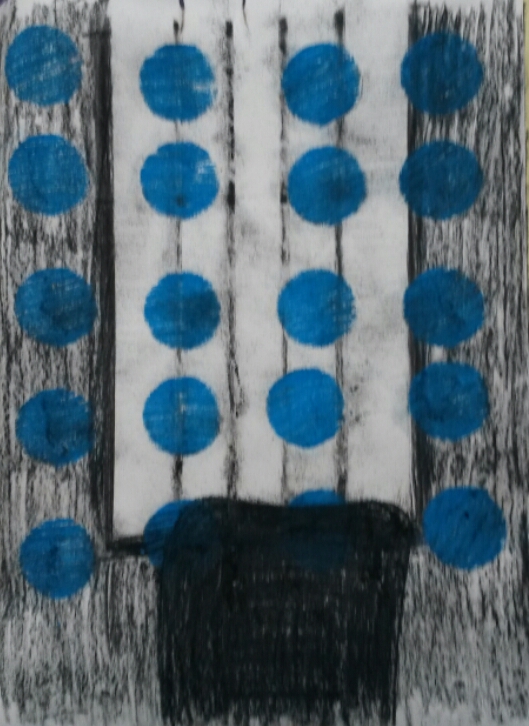
I began this drawing with the charcoal attached to the bamboo cane again, however I had no thick pieces of charcoal left, so taped several thin sticks together.  I used thick pieces of masking tape for the vertical lines.  I then drew with the charcoal.  The thin pieces taped together gave a scribbly effect.  Once I had removed the masking tape I made a circular template with card board and used blue pastel with this, trying to keep it slightly loose and imperfect.  Changing the direction of the hatching kept it from looking too tidy.  I then went over the chair shape in the foreground with black charcoal.  I was pleased with elements from the finished piece; I really like the blue circles and straight vertical lines of the blinds, but I feel the composition needs more work and can be developed further.
Reflection: What happens when you break the relationship between your brain and the marks you make in this way?  Are these simply bad drawings – or do they point the way to a kind of responsiveness within the act of mark-making which enables a more sensitive and ultimately more informative line?  This is a loaded question, but respond with your own views and reflections based on what you’ve learned so far.

Placing a length of cane between the charcoal and your hand results in a loss of control and you automatically over compensate by using more force.  Rather than be a hindrance, it brought a looseness to my drawings and gave them more of a ‘sketchy’ feel.  I once saw the paint brushes of James McNeill Whistler at the Hunterian Art Gallery and these had exceptionally long handles, useful I would imagine, for the huge canvases he worked on, but in addition would add a looseness in the application of paint.  The first drawing I did of the sunflowers, before I added colour, was more sensitively drawn because of the cane.  It was more expressive and impressionistic.  Using more force than you would usually exaggerates the line and in the page with the roses above I was able to get into a rhythm almost, when rendering the concentric circles.


Project 1: Drawing blind

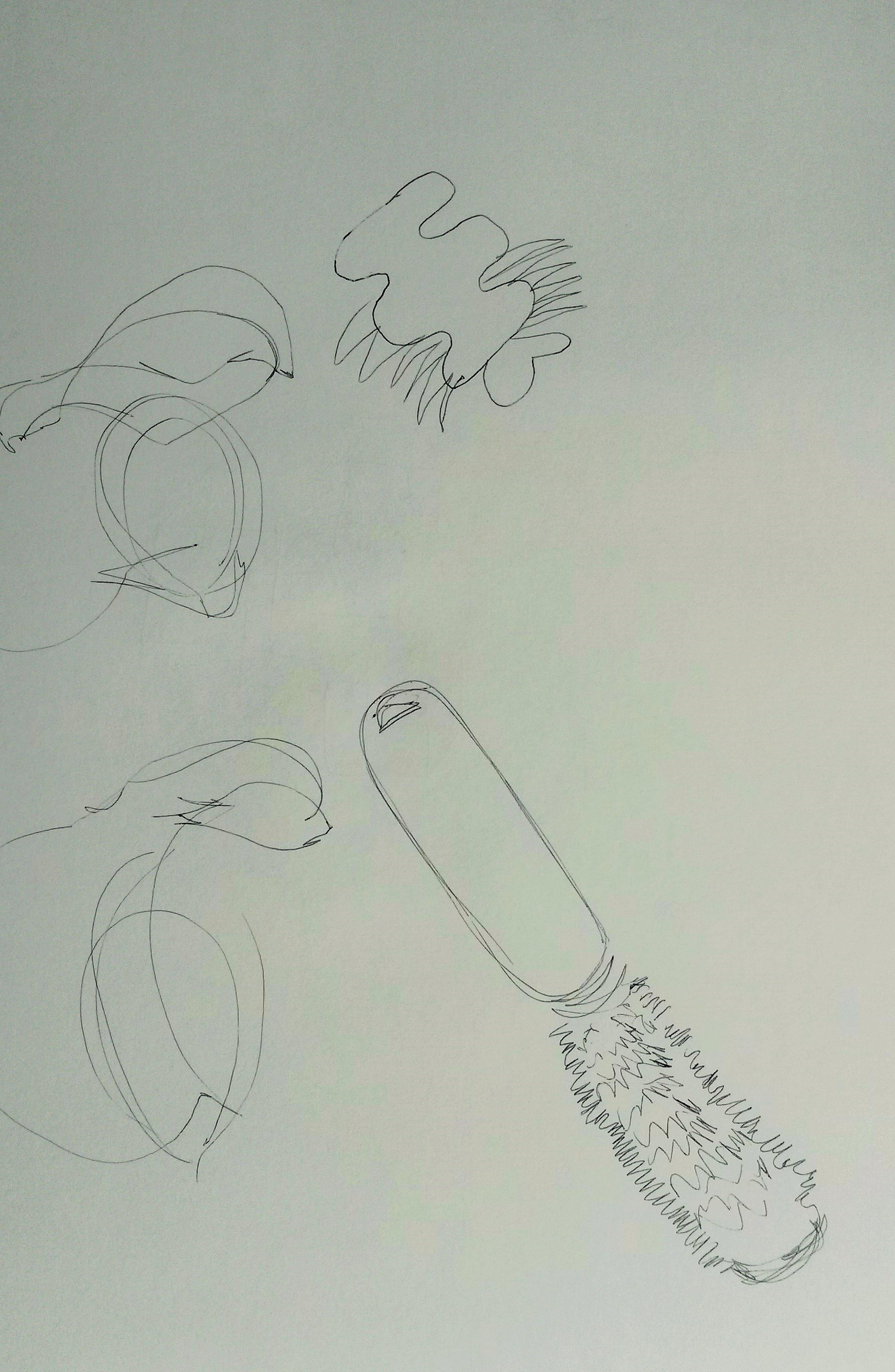
Choose a smallish object you know well, preferably something with a fairly distinctive shape….Reach out for your object and feel it; as you do this, make a record of what you feel on your sketch pad with your pencil….Make several studies until you feel that you’ve arrived at something interesting.

I had a look around the room and decided to try drawing a hair brush and hair clip.  The results were disappointing, I think because the shape is so familiar, I don’t think I was drawing what I felt, but what I knew a brush looked like.

20150805_121604

Pencil in A3 sketchbook

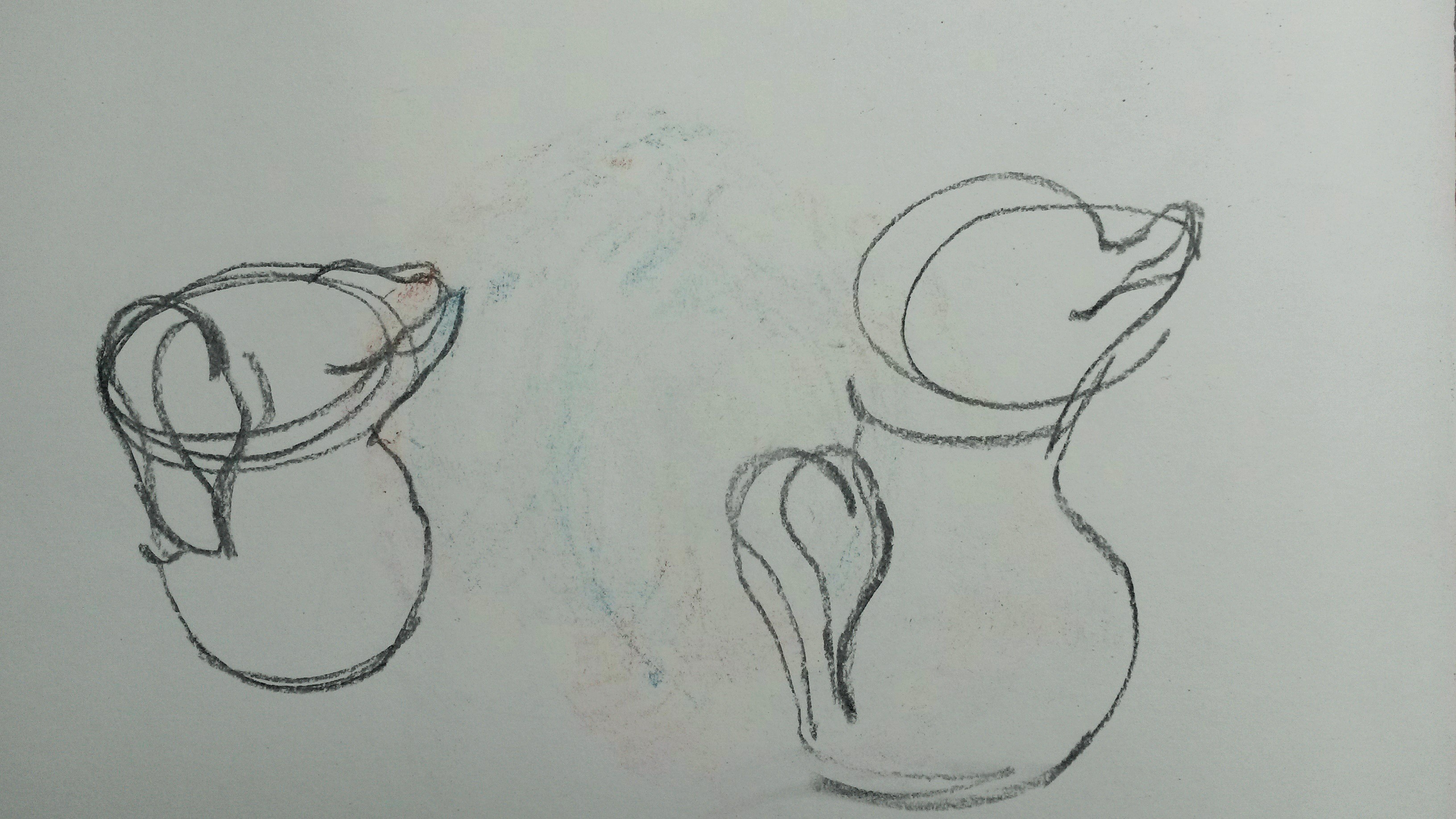
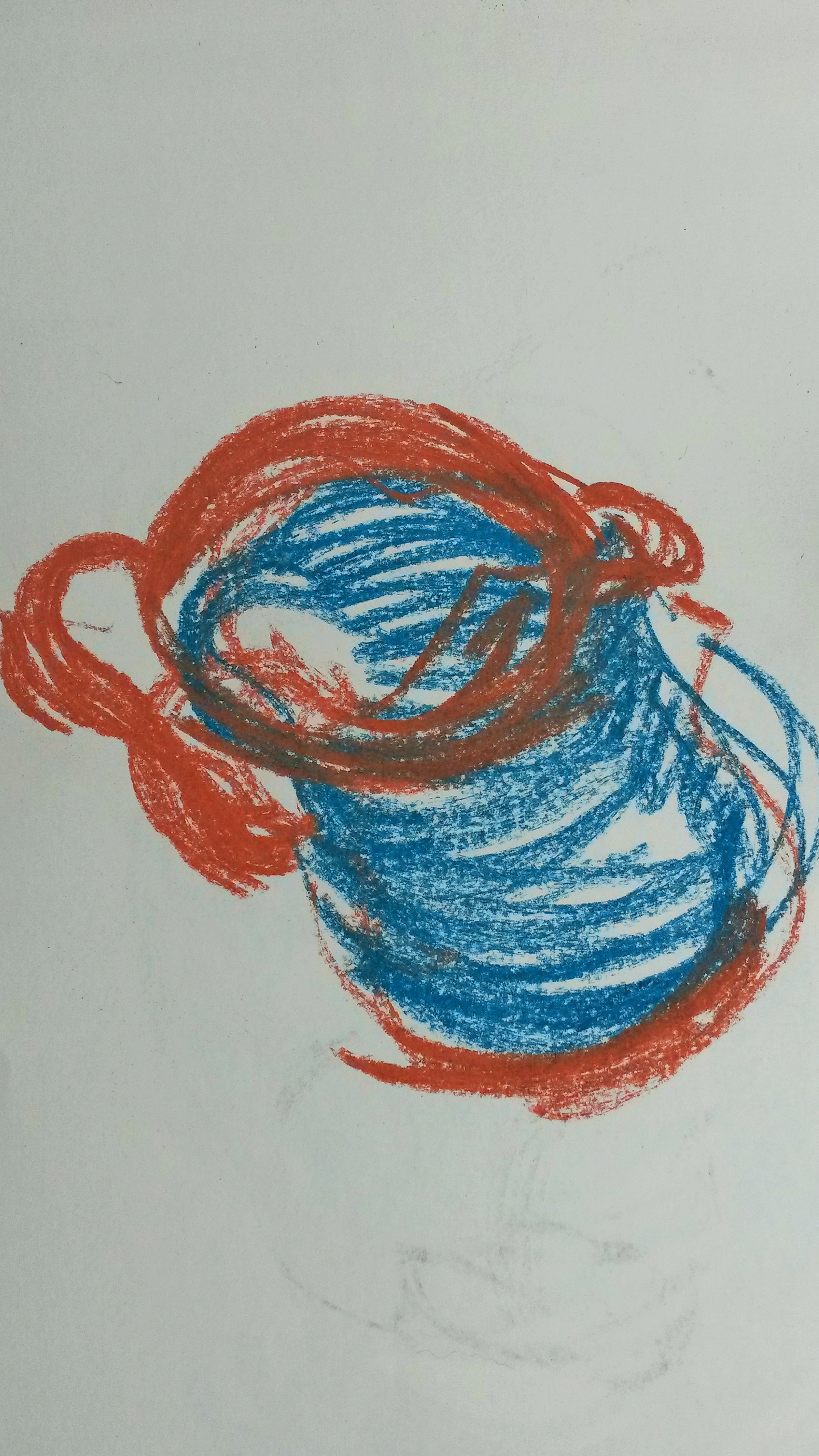
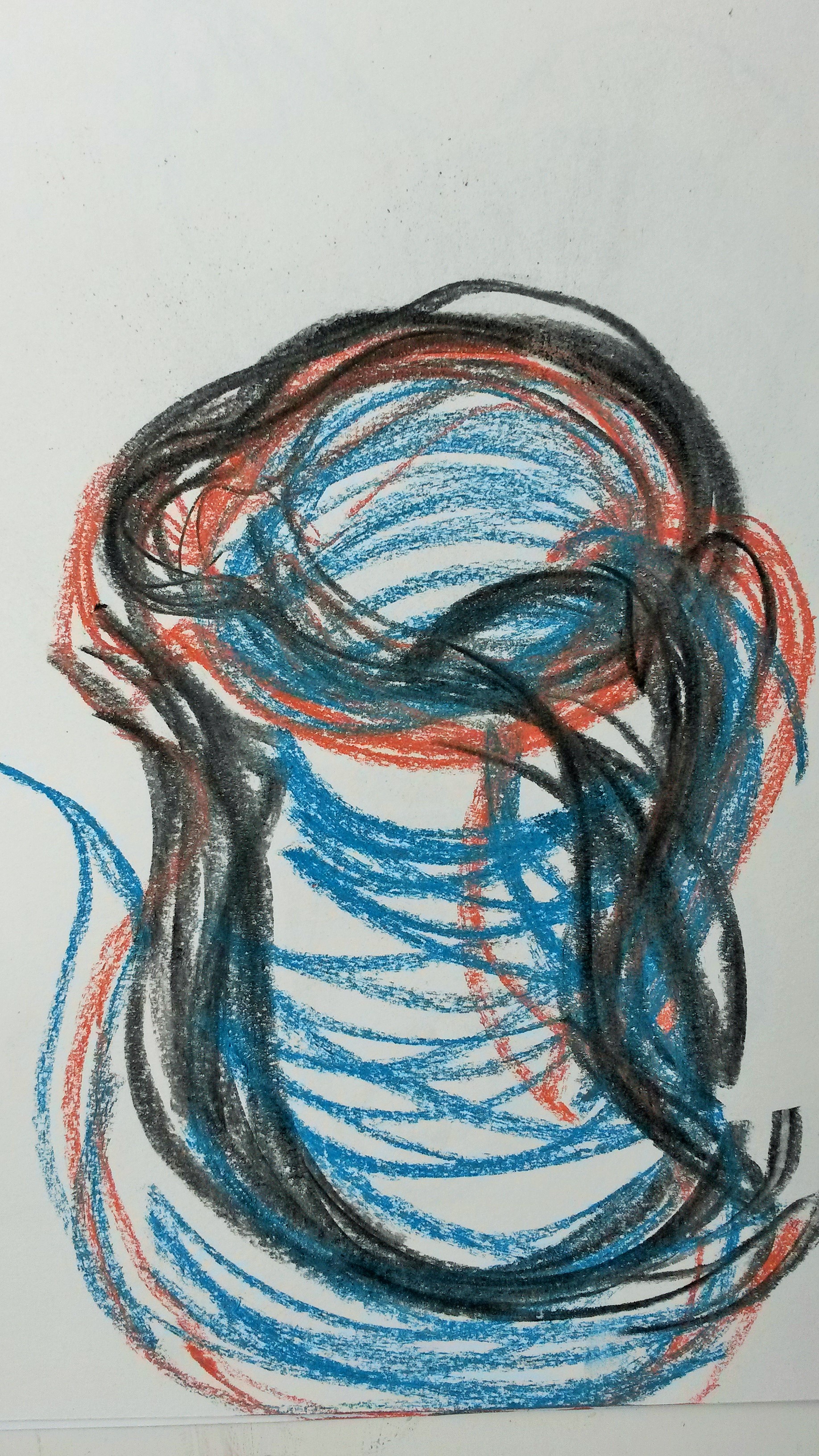
Next I tried a small jug.  First I tried using pencil as the brief suggested.   The results were better I think, because I was trying to record the shape I felt, rather than how I knew the jug looked.

20150805_121557

Pencil in A3 sketchbook

20150805_121549

Charcoal in A3 sketchbook

20150805_12154420150805_121519

20150805_121535

Soft pastels in A3 sketchbook

On looking at these, I could see that I was still drawing the vase from memory, and not from touch.  So I sat with it in my hands for a good 15, 20 minutes, just running my hands over the surface and feeling the curves of the handle, neck and base and the smooth cold surface of the ceramic. Once I had examined it thoroughly by touch I then tried drawing it again in pencil.

20150805_121441

Pencil in A3 sketchbook

I was more pleased with this result; it seemed to be a more honest rendition.  My pencil lines were more assured.  Working from two planes, i.e. drawing the circle of the neck from above and the profile from the side describes the jug more honestly than my previous attempts.

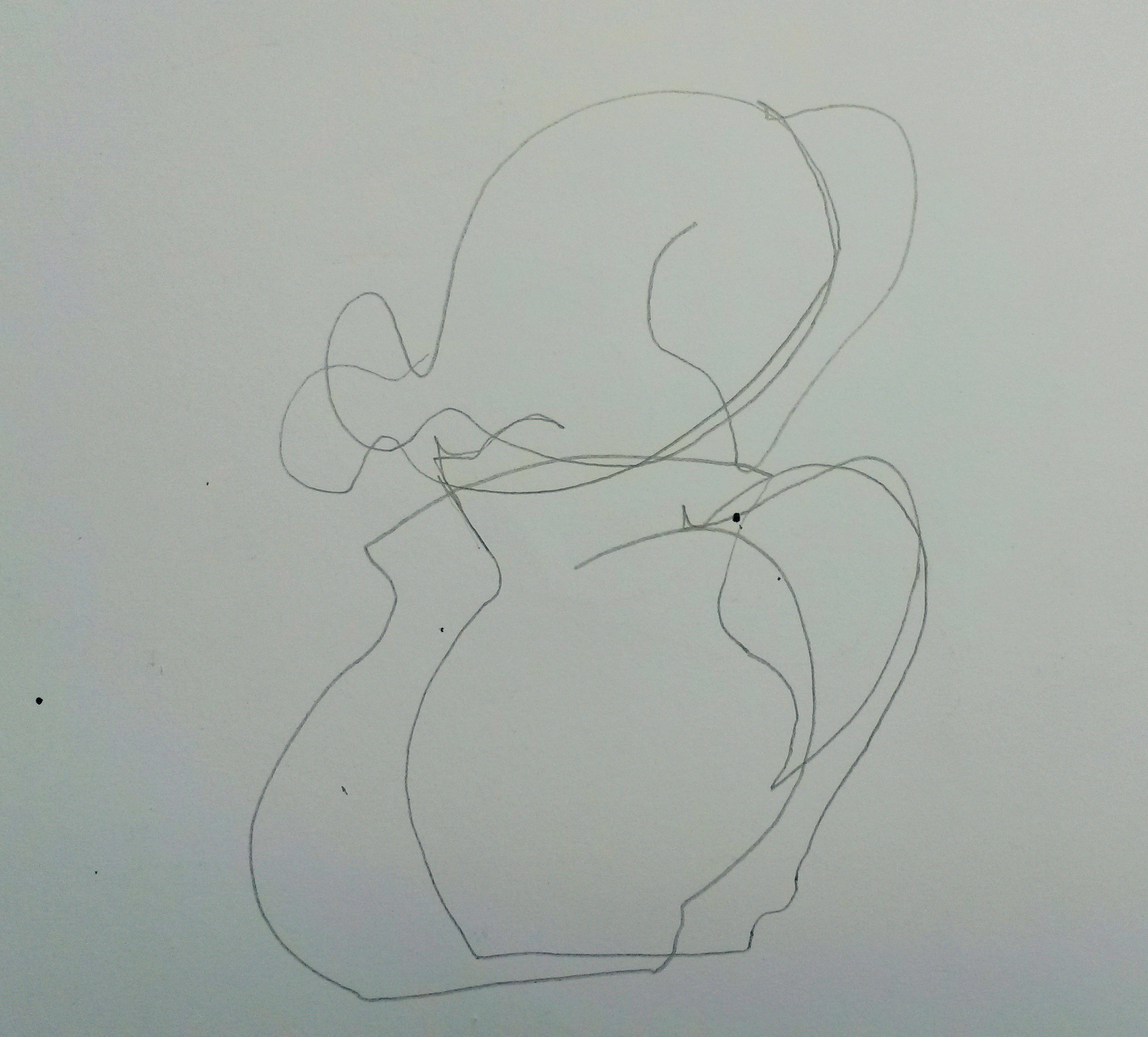
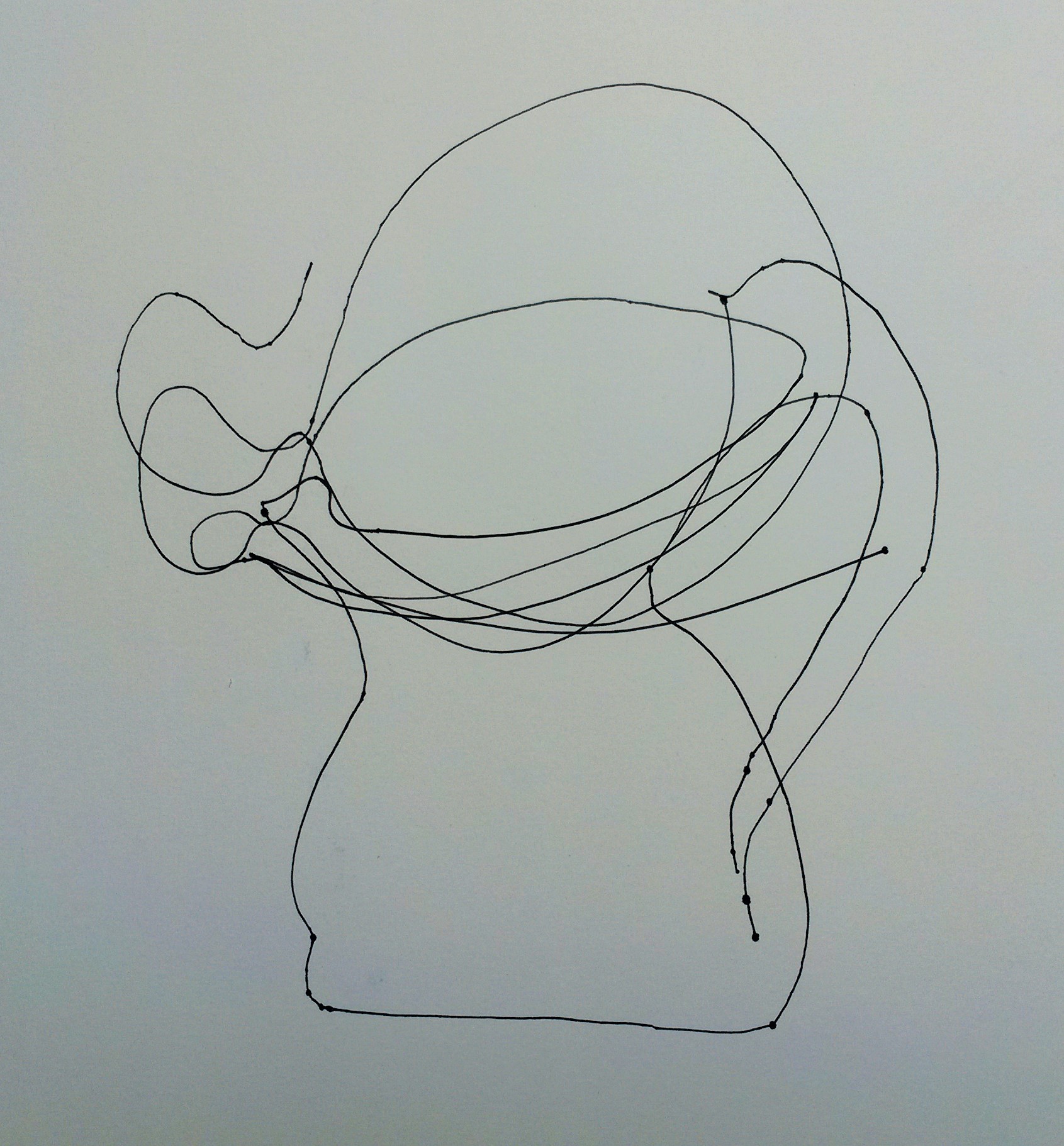
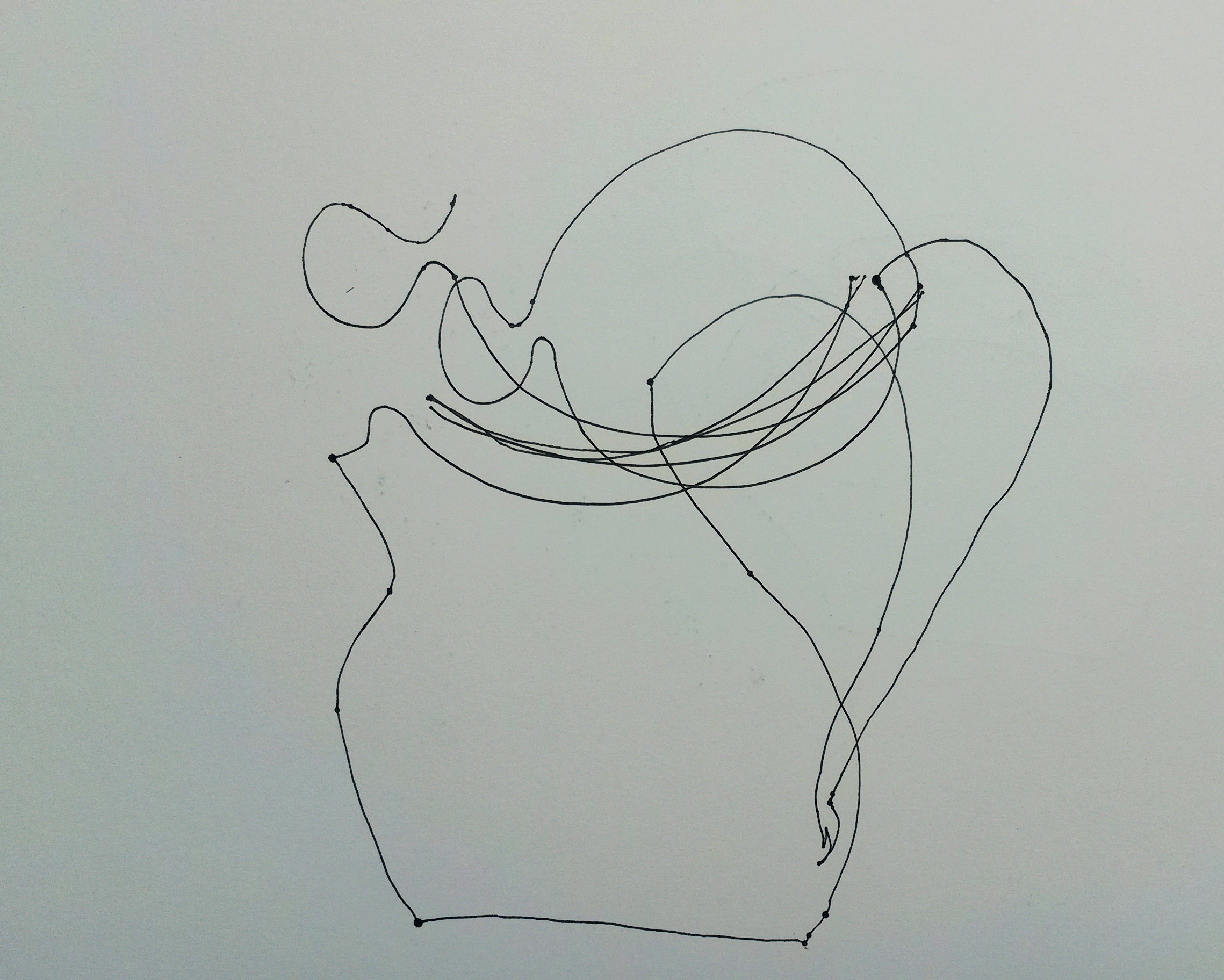
Next I tried using black drawing pen as it gives a stronger, confident and more defined line with less room for hesitancy.

20150805_121424

20150805_121433

Black Pitt pen in A3 sketchbook

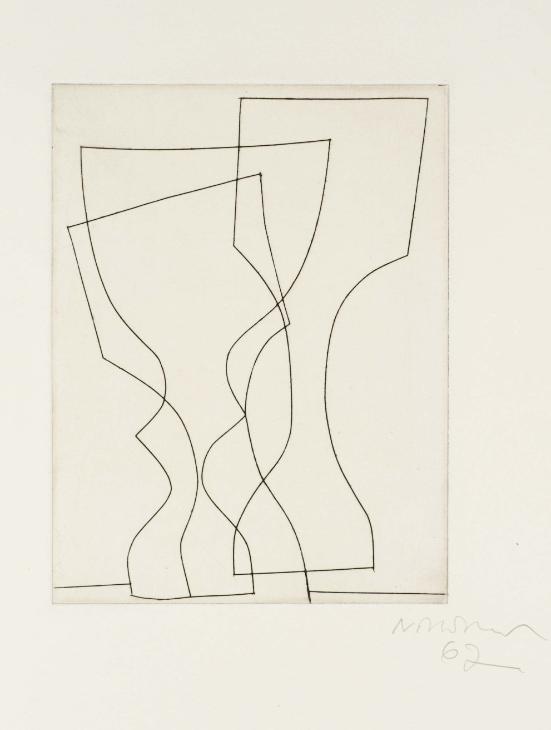
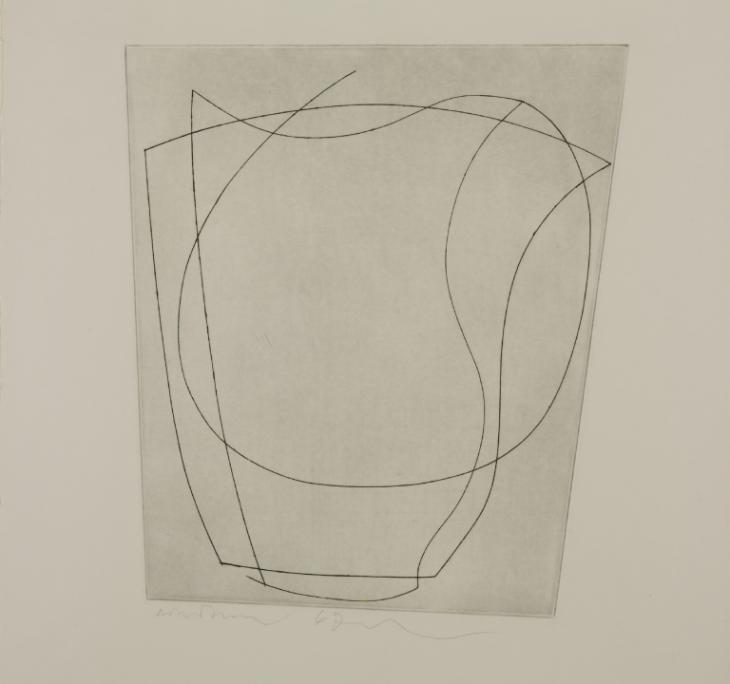
To a certain extent, these remind me of the Cubists, or Ben Nicholson’s etchings.


three goblets 1967 Ben Nicholson OM 1894-1982 Purchased 1976 http://www.tate.org.uk/art/work/P07204

three goblets 1967 Ben Nicholson

Rafael 1967 Ben Nicholson OM 1894-1982 Presented by the artist 1968 http://www.tate.org.uk/art/work/P02015

Rafael 1967 Ben Nicholson


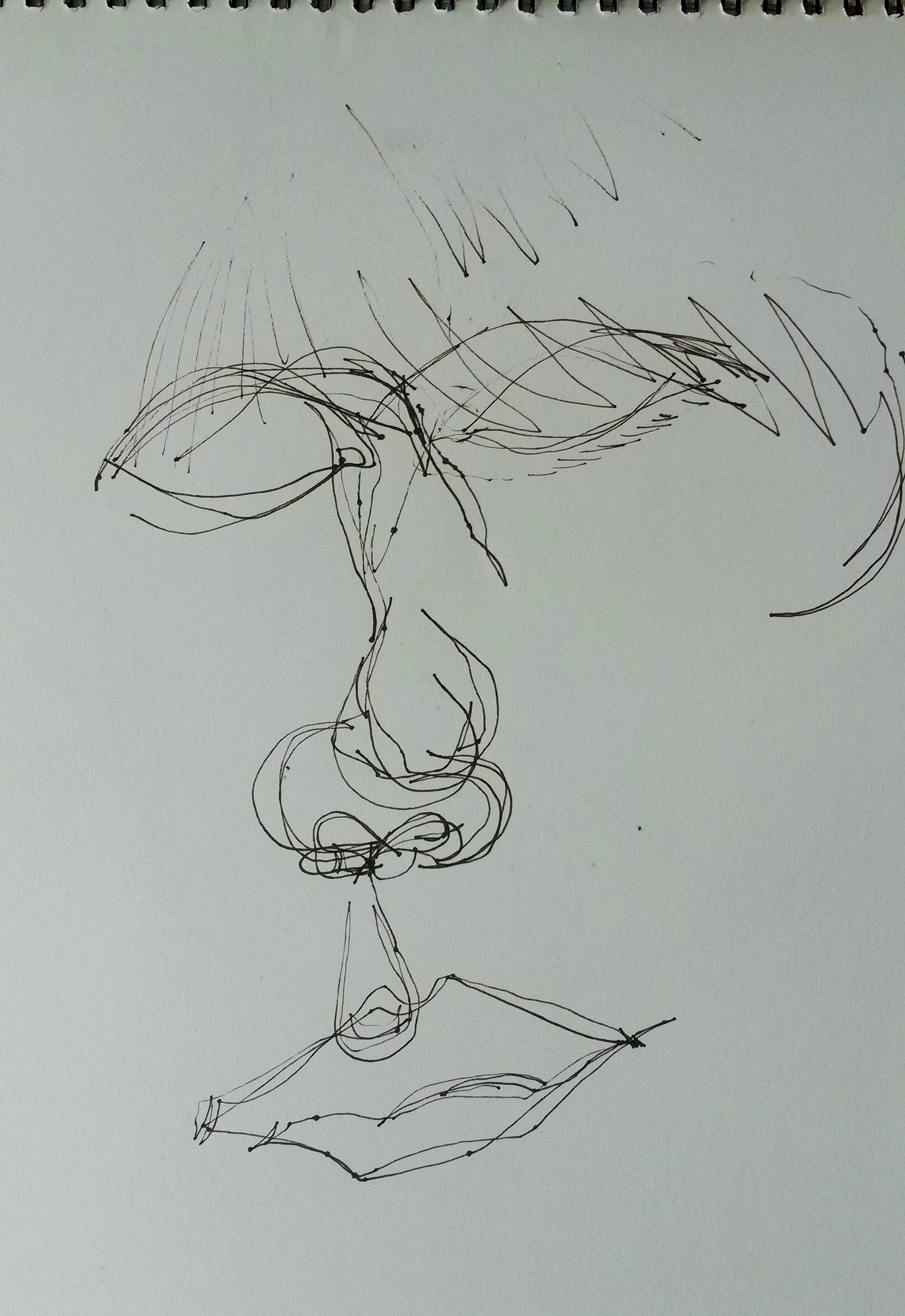
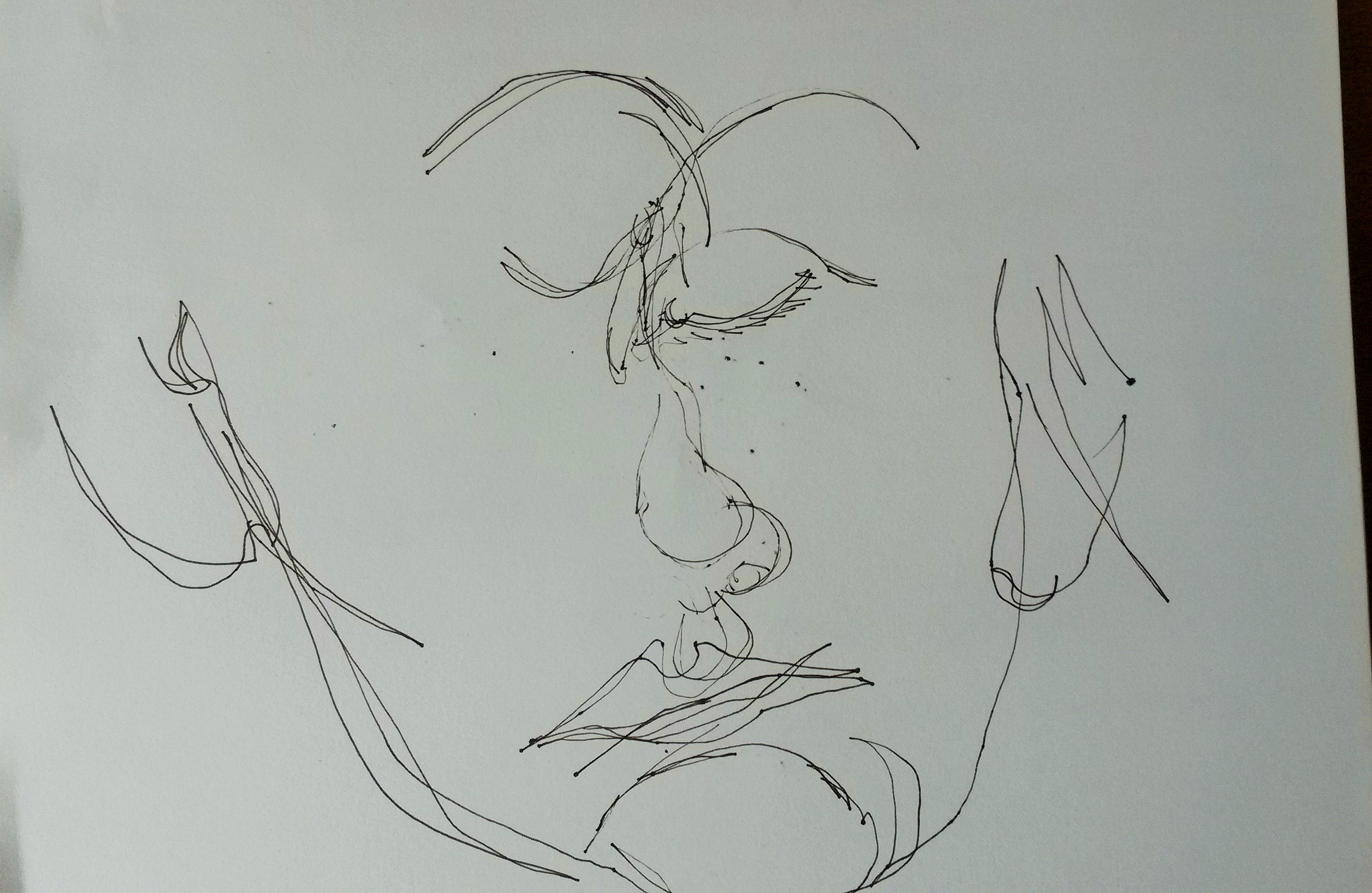
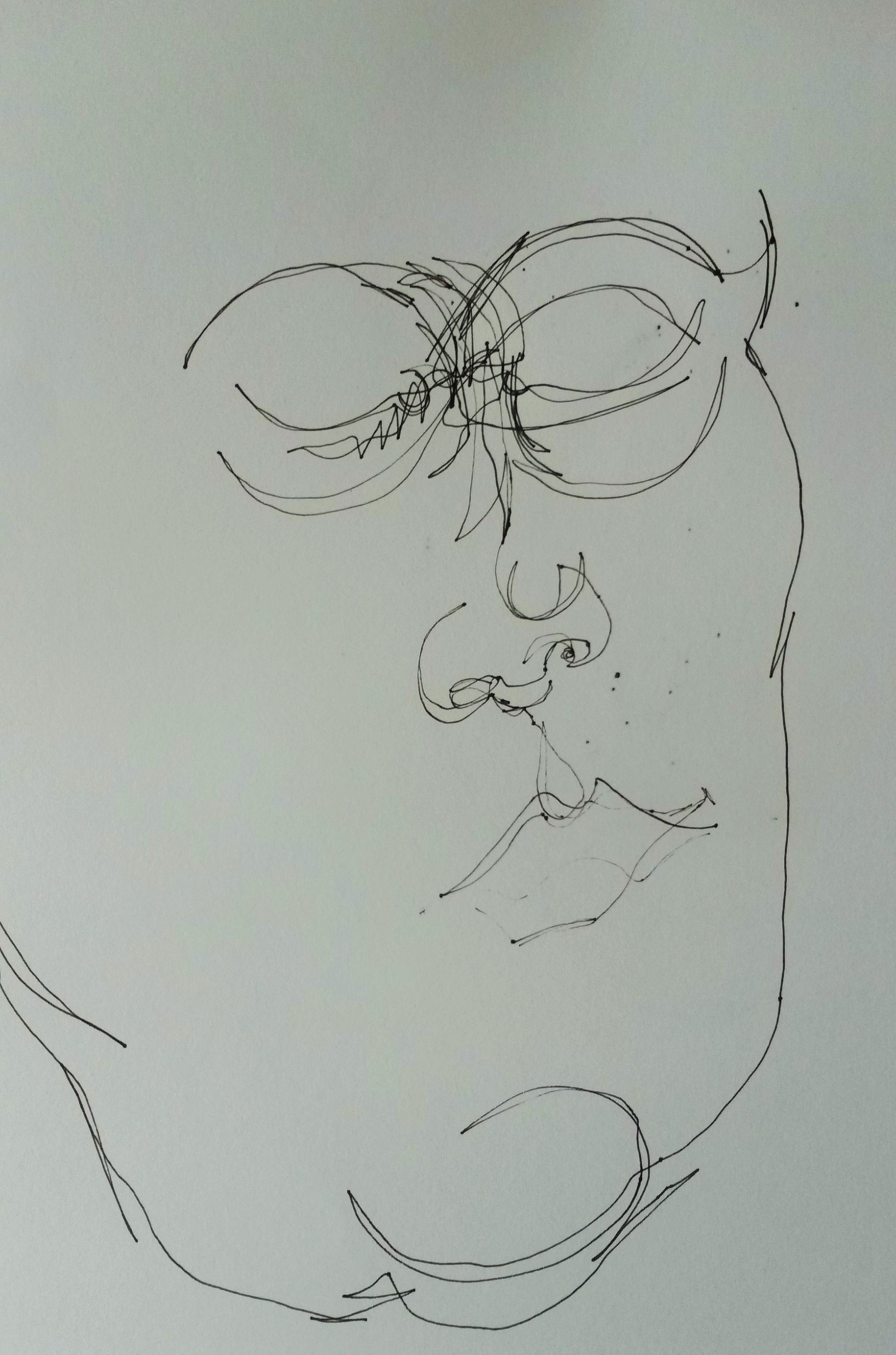
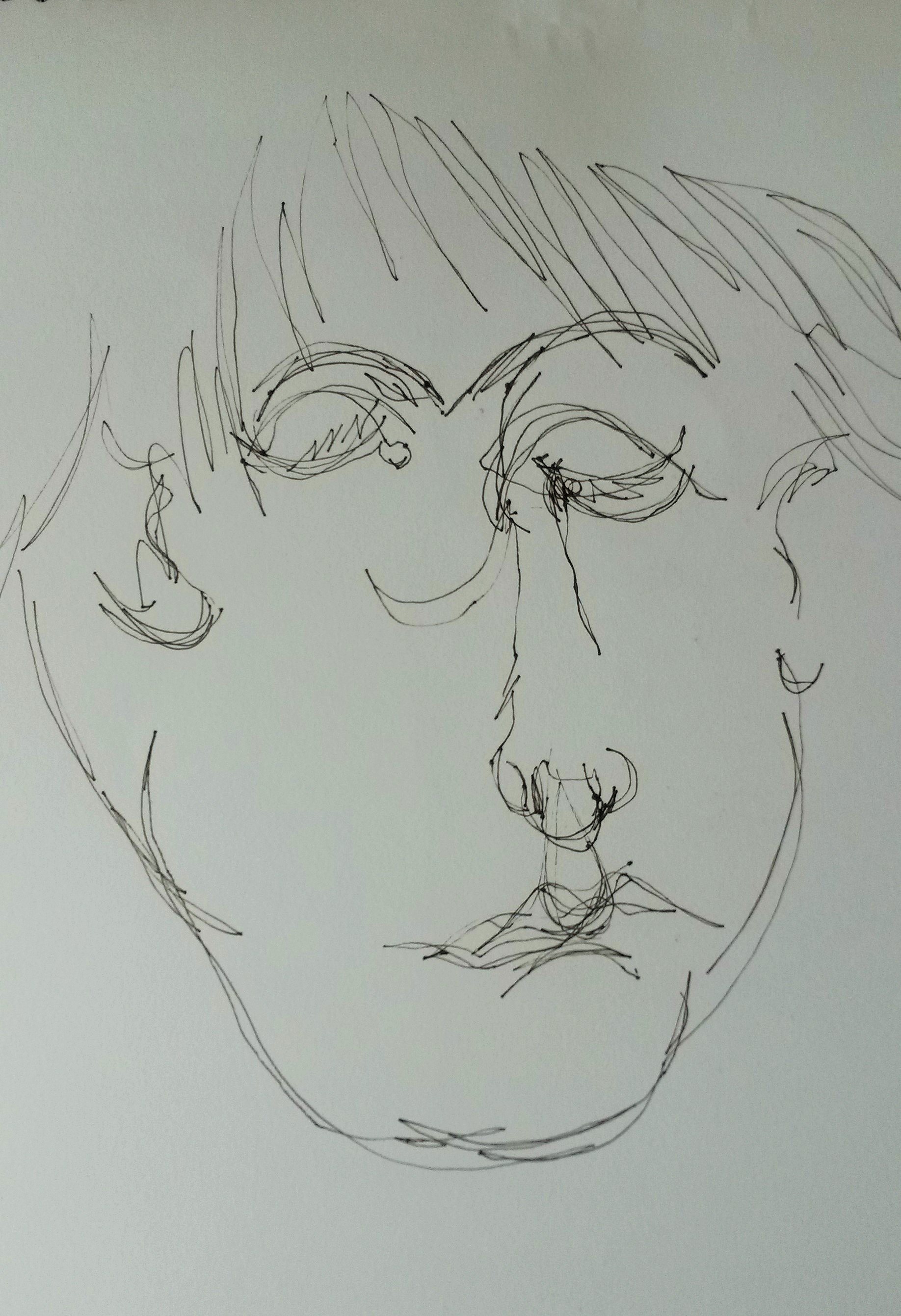
Following the suggestion of ‘Drawing Projects’ I decided to try a self-portrait by touch only and the results were interesting.

“Your drawing should show a sensitive response to touch and contain a range of interesting felt marks.  What is important in this drawing is the synchronised route of communication being made between the two hands, and the transfer and coding of one sort of information (touch), into another (visible marks).” (Maslen and Southern, 2014:88)

20150814_142837

20150814_142826

20150814_142719

20150814_142729

Black Pitt pen in A3 sketchbook 

20150814_142423

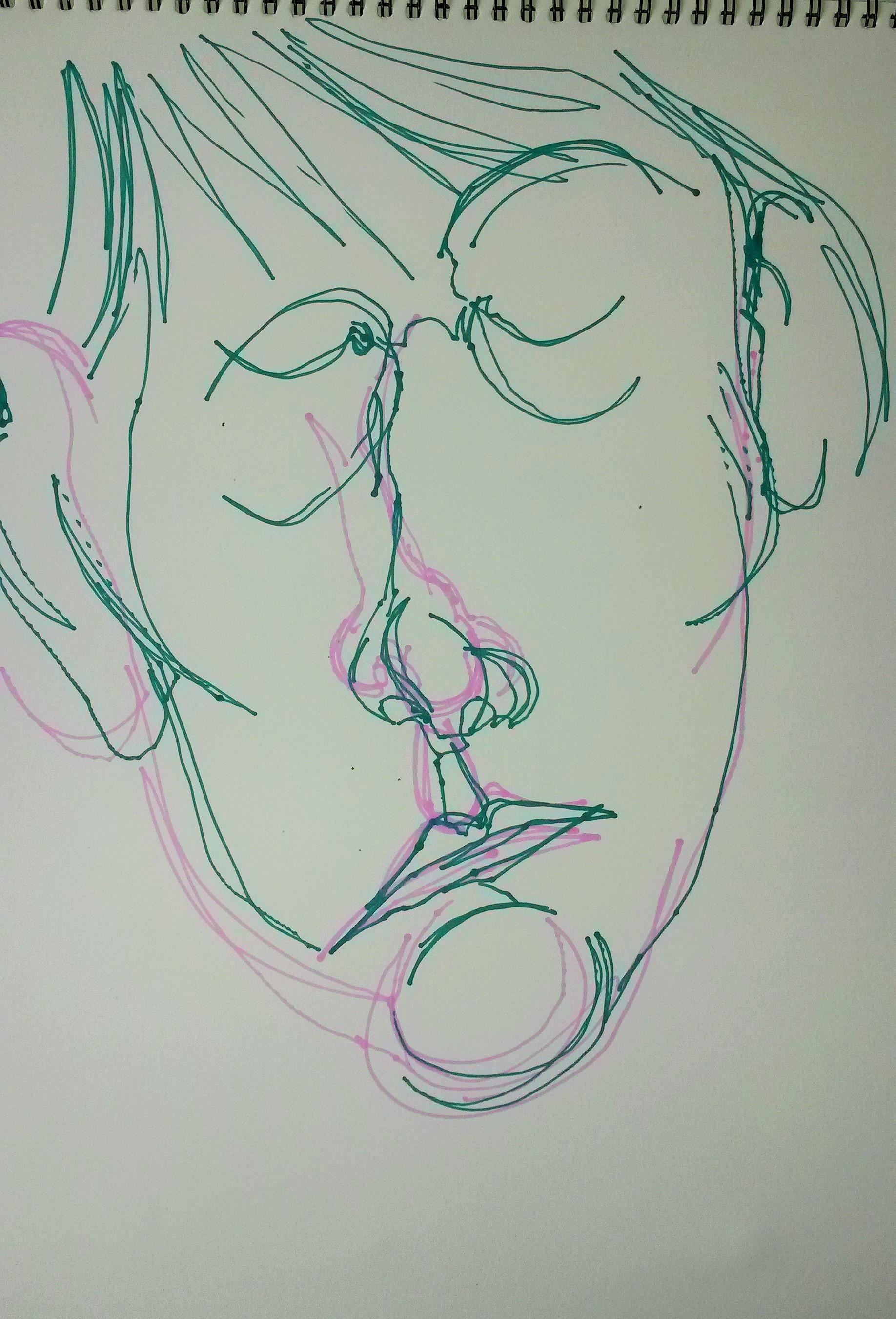
The attempt above was done using two colours of felt pen and was interesting because I did it first in green then picked up the pink, looked at the paper and positioned the pen on the nose where I’d started with the green, then closed my eyes.  The pink lines are in the same position as the green, despite having my eyes shut.

Reflection: How far were you recording the sensation and the act of touching, and how far were you trying to use touch as a replacement for sight? 

It was initially very difficult for me to draw from the sensation of touch only.  I automatically reverted to drawing from memory.  Touch can give an idea of shape and form, but your finger tips can only touch one area of an object at a time, and it is difficult to gauge where one part is in relation to another.  You also have no idea of colour or tone.  One advantage however, is that to compensate for the lack of information, the hand that is holding the media to record the sensations of the other, becomes very sensitive in its endeavour to form an image with very little information.  The results can be economic, but effective.  The resulting drawing is almost a distilled image, where a rendition of the shape and form are explained satisfactorily, without the unnecessary details such as colour.