Make a drawing that relates to its environment in a way that creates an interesting dynamic between the artwork and the space around it. Think about ways that drawings could take part in a kind of dialogue with the space they inhabit. Text may be one way, or a drawn object in partnership with its real world equivalent.
Research for Project 3
I began by looking at the contemporary drawing exhibition held in Edinburgh On Line. I looked at Robert Rauschenberg’s Automobile Tire Print. 1. ‘Rauschenberg instructed fellow artist John Cage, an avant-garde composer, to drive his Model A Ford in a straight line through a pool of black house paint and down a long strip of paper. The result is a print in which tire tracks form a direct record of the car’s movement down the street. This work pioneered a new form of art-making, blending elements of performance with the tradition of the ready-made (artworks made of largely unmodified mass-manufactured objects) initiated by Marcel Duchamp in the 1910s.’
Next I looked at Edward Krasinski. 2. ‘Krasiński was a leading Polish Conceptual artist, known for his extensive use of blue lines of tape, cable, and other materials. This installation re-creates Krasiński’s contribution to the 1970 Tokyo Biennale. The works, as seen here, were exhibited for only the last three days of the month-long event, as they had been misdirected in their shipment from Poland and arrived late. The artist supplied a substitute work in the interim, transmitting the word blue five thousand times via telex (a precursor to the fax machine) and instructing the Biennale’s curators to display the telex tape on a pedestal. “My art just needed to get to Japan as quickly as possible,” he said. “Instead of the two-month sea voyage, it got there in seconds. It was delightful to think that when the telex in Warsaw was typing ‘BLUEBLUEBLUE’ the very same moment the tape appeared in Tokyo.”
These two artists have made the act of drawing, just as important, if not more important than the outcome. The making of the art has become a performance and demonstration of showmanship.
Malich’s wire works were conceived, he has said, as “the expression of a new space and the investigation of it. 3 ” Although he has never realized any of them on an architectural scale, that aim has been part of his project: at once cosmic and utilitarian, his sculptures of the 1960s were created as designs for utopian cities in some imaginary future. He continues to think of his later tied-wire constructions as models for large-scale outdoor projects shaped by forces of light, air, and water.
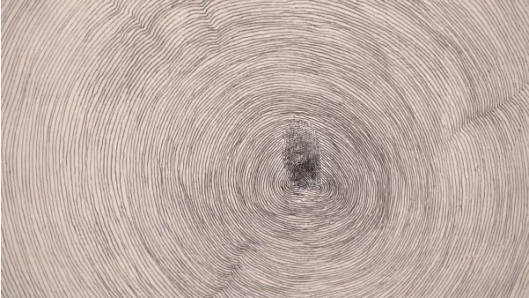
This drawing, which Penone made for On Line but conceived in 1995, began with the artist’s fingerprint on a sheet of paper. The pencil and ink lines, following those created by the inked ridges of skin, radiate outward, filling the paper then spilling over onto the walls of the gallery space, like the rings of a steadily growing tree. In an interview, of Propogazione, he said’ It is a piece that was born of the idea that fingertips have a design from deep within the universe on them. You can see it in the growth rings in trees…..I made a fingerprint using ink then I connected the lines in the fingerprint with a pencil, with graphite trying to continue the drawing….Drawing above all else is about line. The line is a mark, that is arranged on a surface. This makes it an intentional mark. Therefore, it becomes a human action. This is the most extraordinary thing about line, its such a simple gesture but its deliberate.’
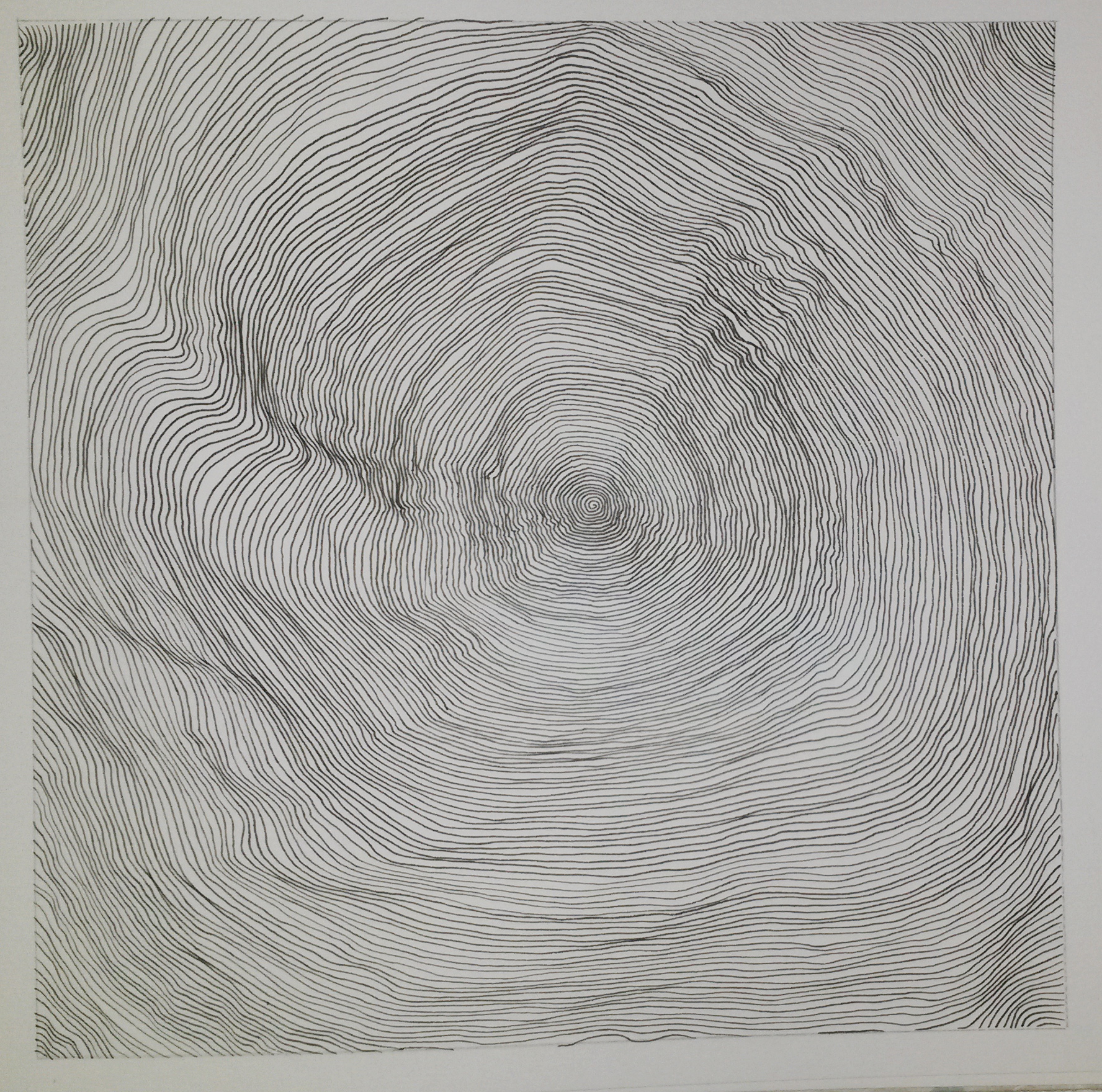
Interestingly, I hadn’t heard of this artist or seen this artwork when I drew my ‘tree ring’ drawing for Project2 below, although his is in a much grander scale.
Reflection: Use the links below to find out more about Pierrette Bloch. why is she described as using ‘poor materials’ and what do you think her materials lend to her subject matter?
4.’ Like Soulages, Bloch has only used black for many years, but unlike his predominantly oil on canvas works that often swell to the heroic scale of Abstract Expressionism, Bloch has shown a penchant for humble materials and more extrapolated formats.’
I think the word ‘humble’, rather than poor, describes the materials Pierrette Bloch used. Horsehair, found wrapping paper and ink markings on board are all humble materials; they are not traditional media for art work and most people would discard them. It is the way they are put together that count. She is very much in control of how the work is seen. 5. ‘Bloch has workspace in her studio apartment on an upper floor of an old building in Paris’ 15th arrondissement. All of her exhibitions are meticulously planned in advance. Bloch builds small models based on the proportions of the given environment, and using miniature replicas of all of her work, determines the placement.’
To what extent would you say that Spider by Louise Bourgeois is a drawing?
I was very fortunate to have seen this work on an OCA Study Visit last year. Here is a link to what I wrote at the time;
https://annemacleod2013.wordpress.com/2014/03/13/study-visit-to-louise-bourgeois-exhibition/
The obvious description of this piece would be sculpture, however I can see why it could be viewed as a drawing. There are the obvious linear qualities, emphasised by the strong use of black. The enormous structure fills the space in the room, but the black flattens the image and it could almost be flat on a plane. The image is not of a room with a spider, but of a spider inhabiting a room. Incidently, Louise Bourgeois used the spiral motif a lot in her work, however she never fully explained the significance of it (see my study visit notes).
Project 3
This is such a new area for me, I debated long and hard where to start. I wanted to relate it to my parallel project. Some of the ideas I had were; use fax, something sitting on the empty chair, draw a welcome mat, speech bubbles coming from the furniture.
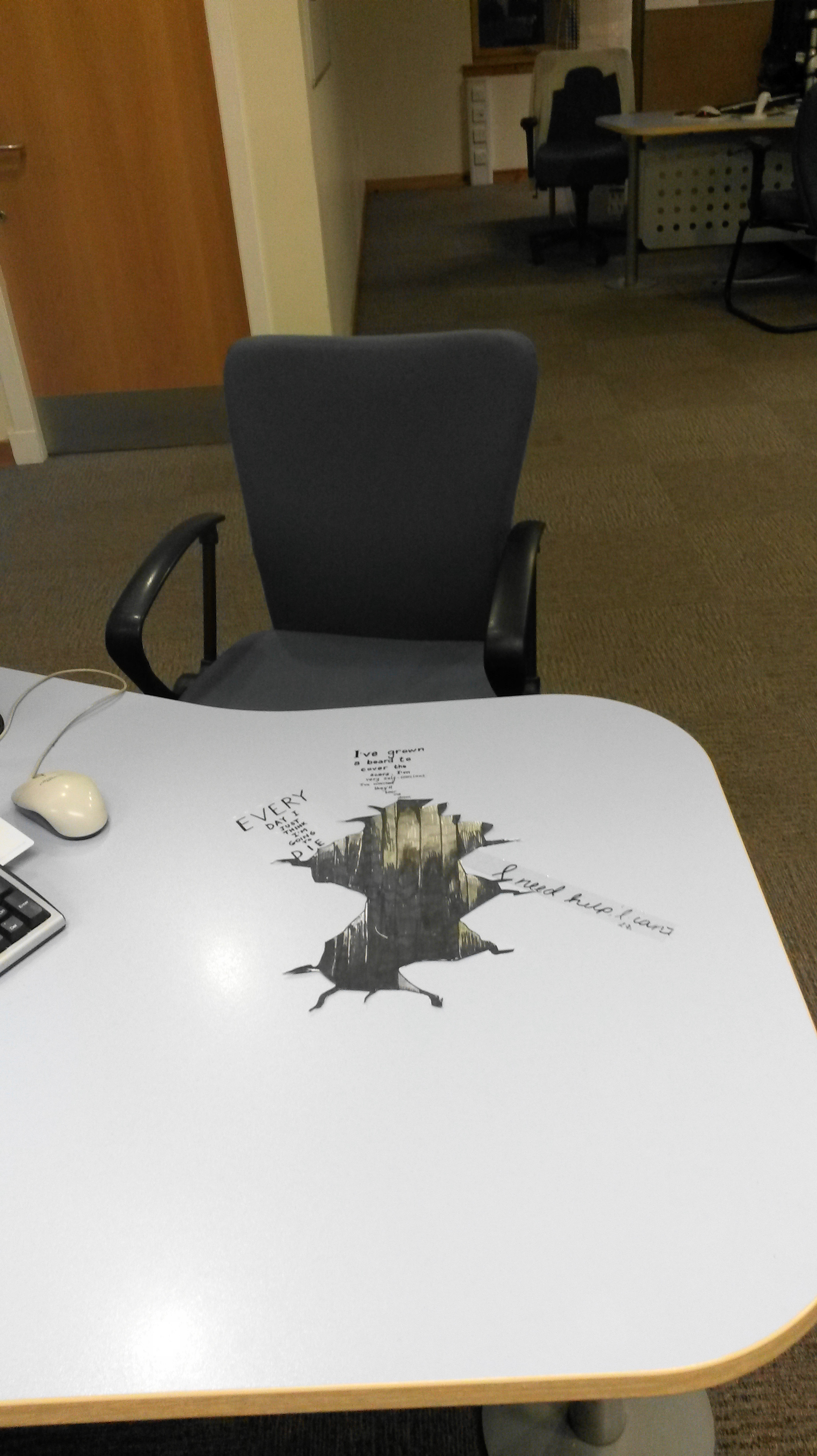
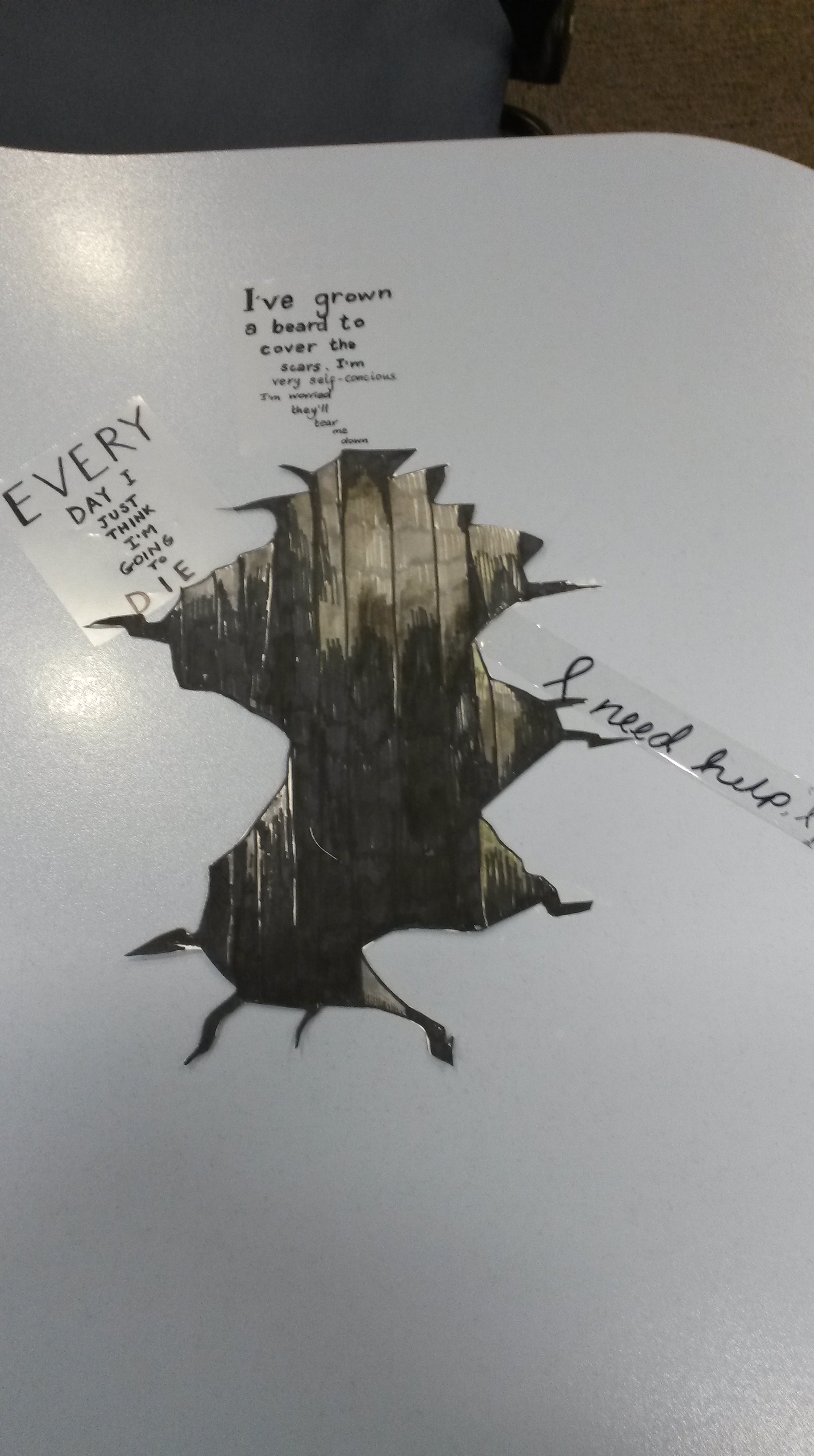
I looked at the artists suggested as reference, such as Kurt Wenner, and there was often an element of optical illusion , but which still incorporated the environment. Often these involved the viewer looking down. I tried to imagine how I could do this at work. The floor is carpeted and I couldn’t imagine being able to look down on the floor, and in addition it would need to be done on a large-scale on the floor, so I thought about how I could perhaps use my desk instead.
I had a look on YouTube, hoping to find a video which would show me how to do this and I found;
I gave it a go, but my first two attempts weren’t very successful. I was happier with my third attempt.
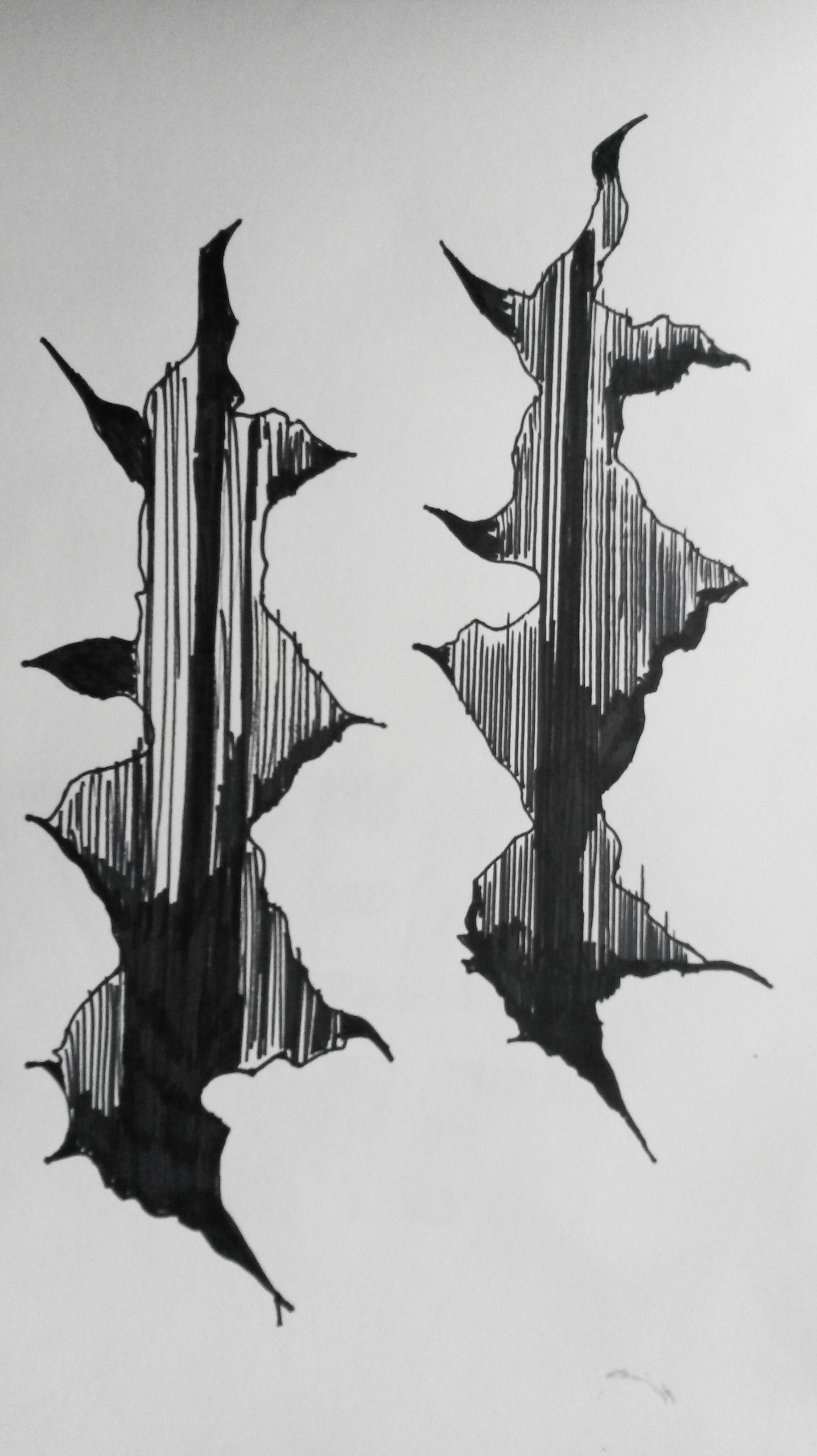
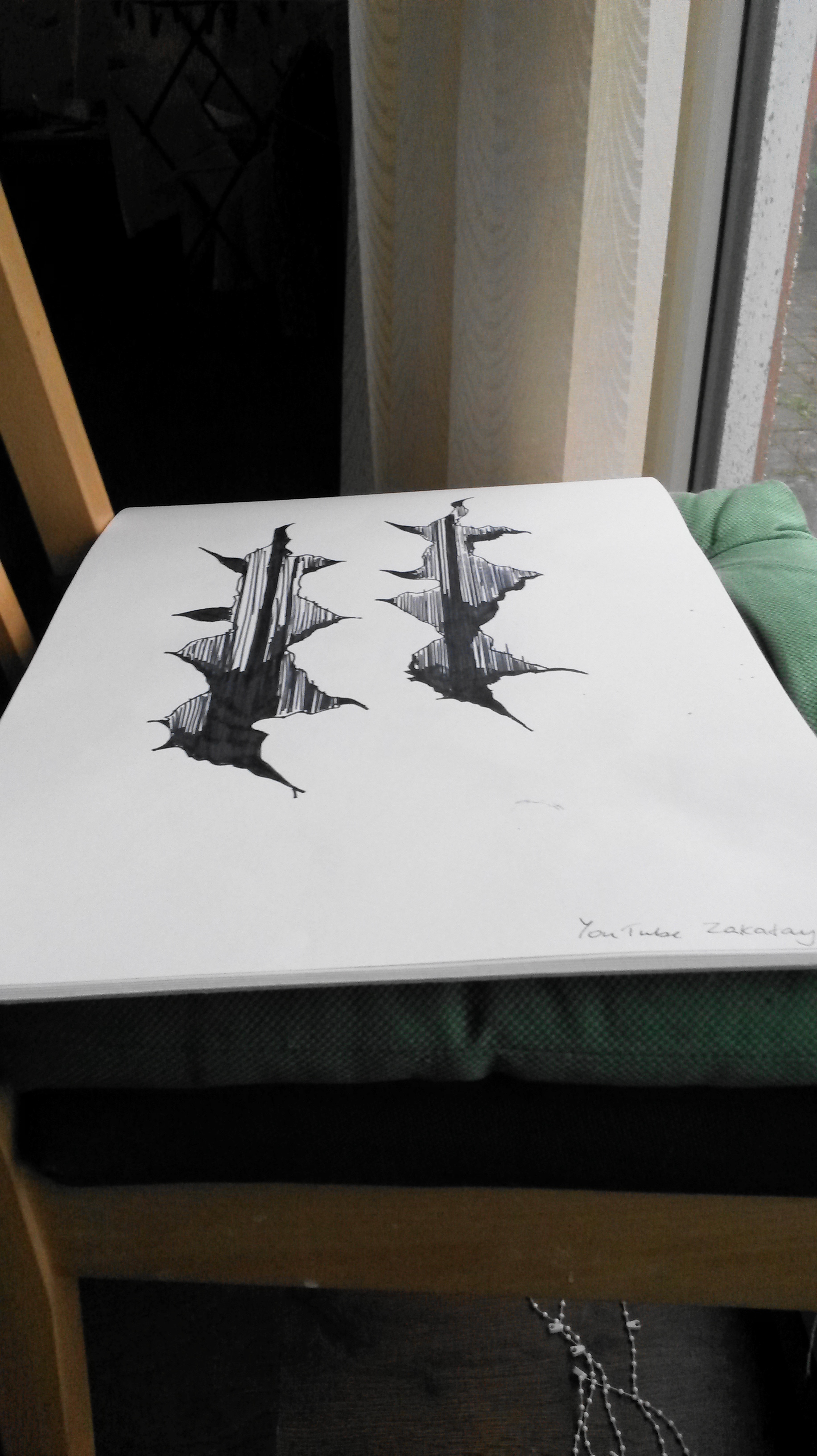
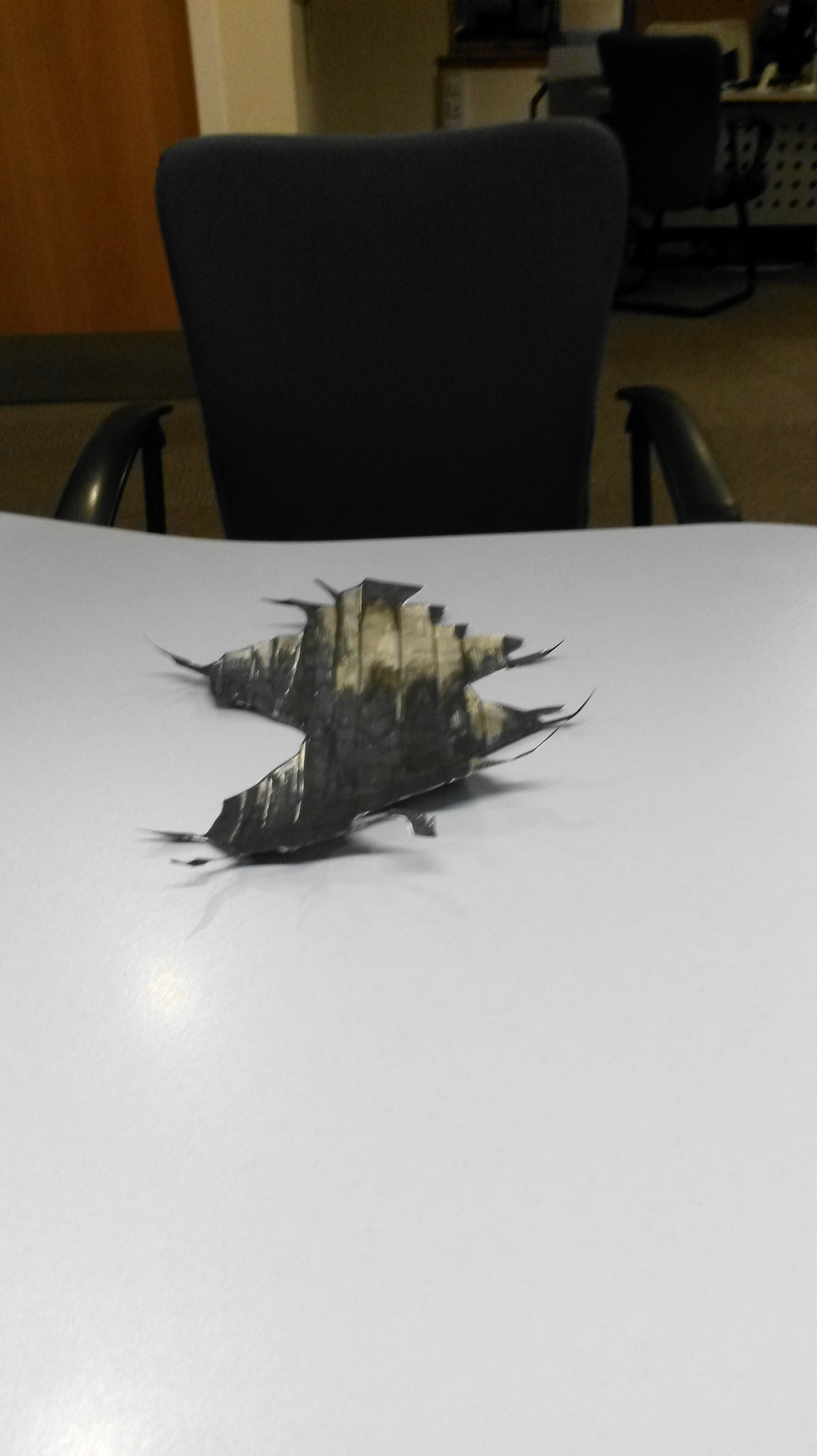
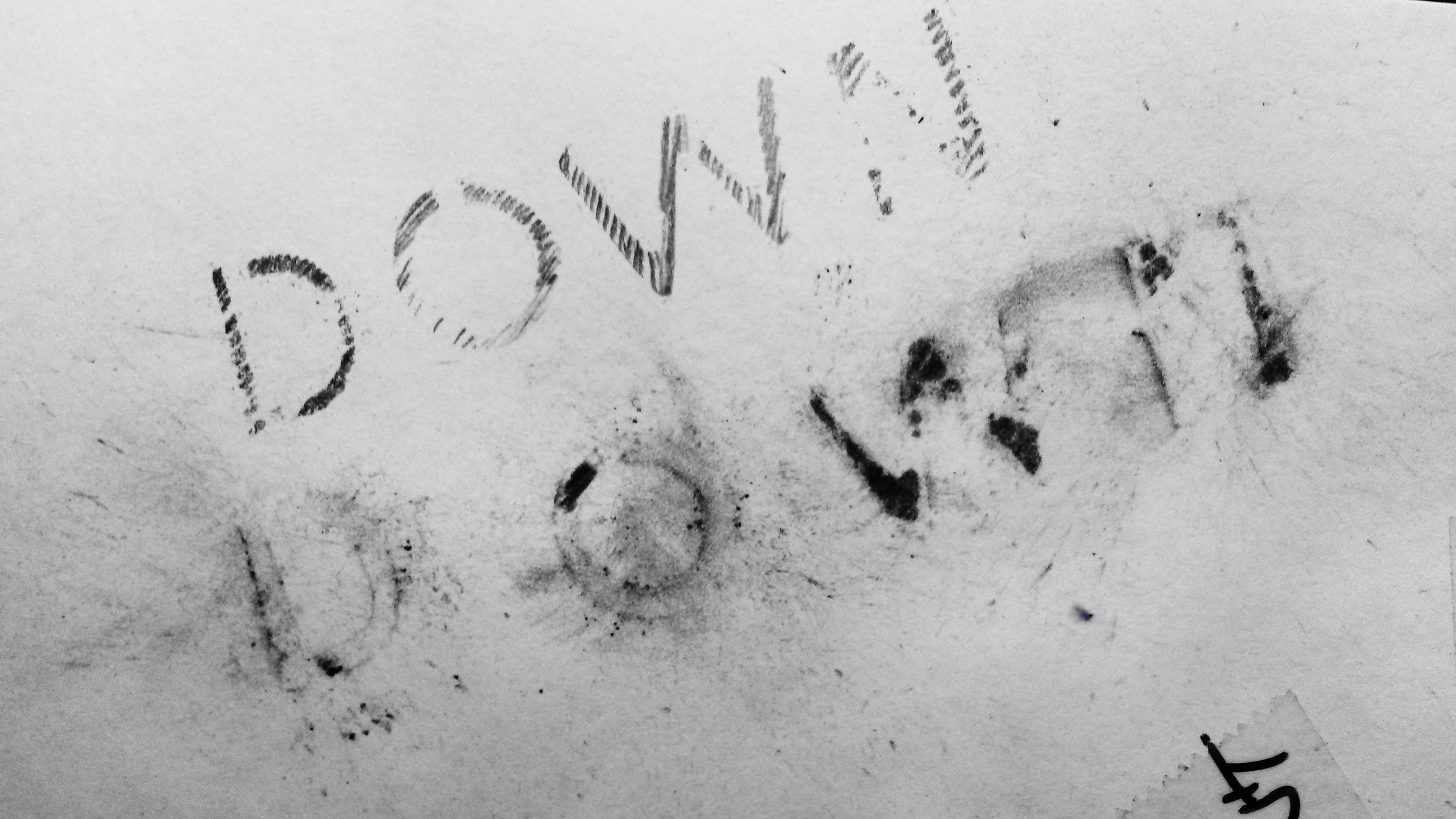
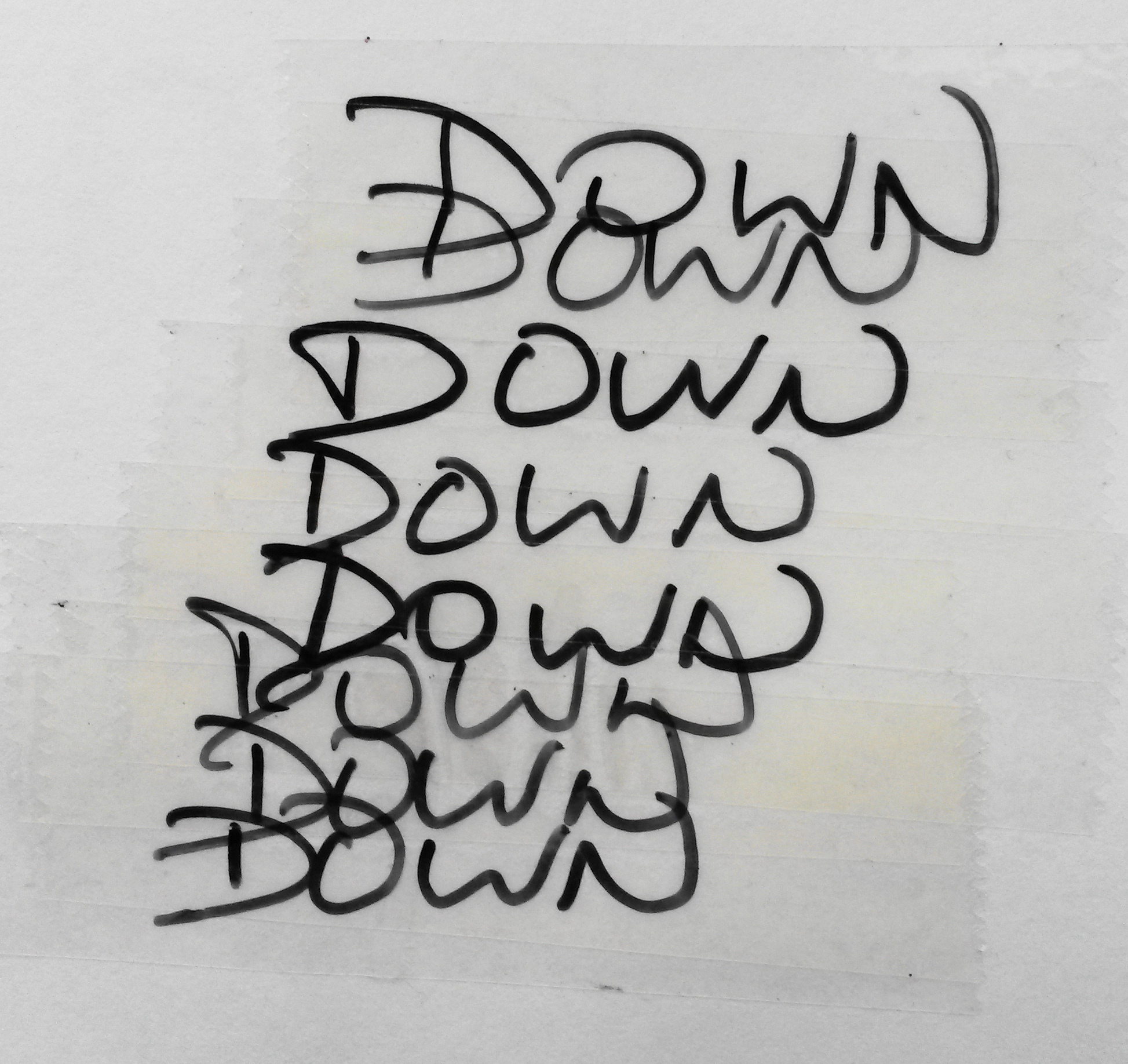
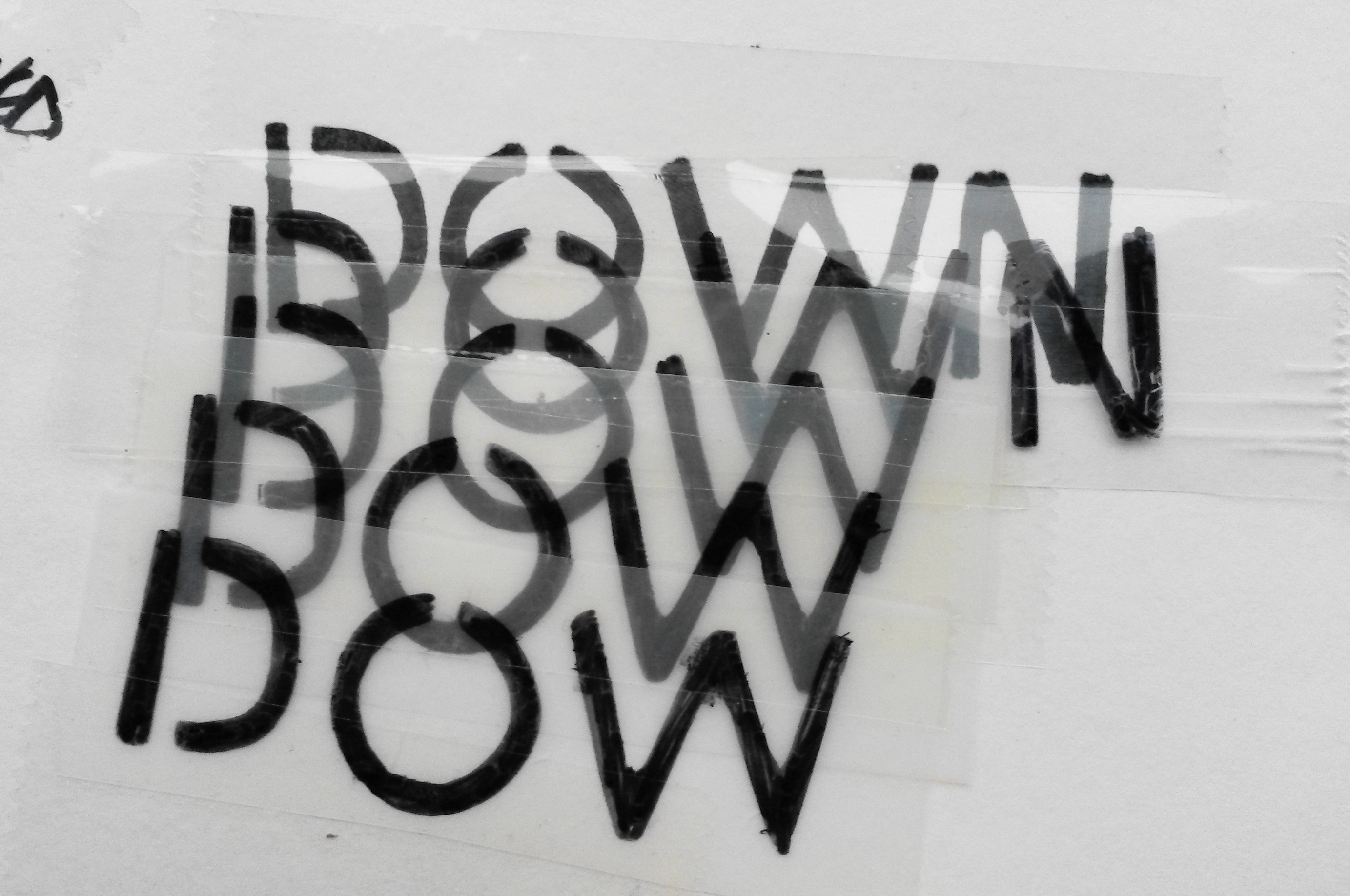
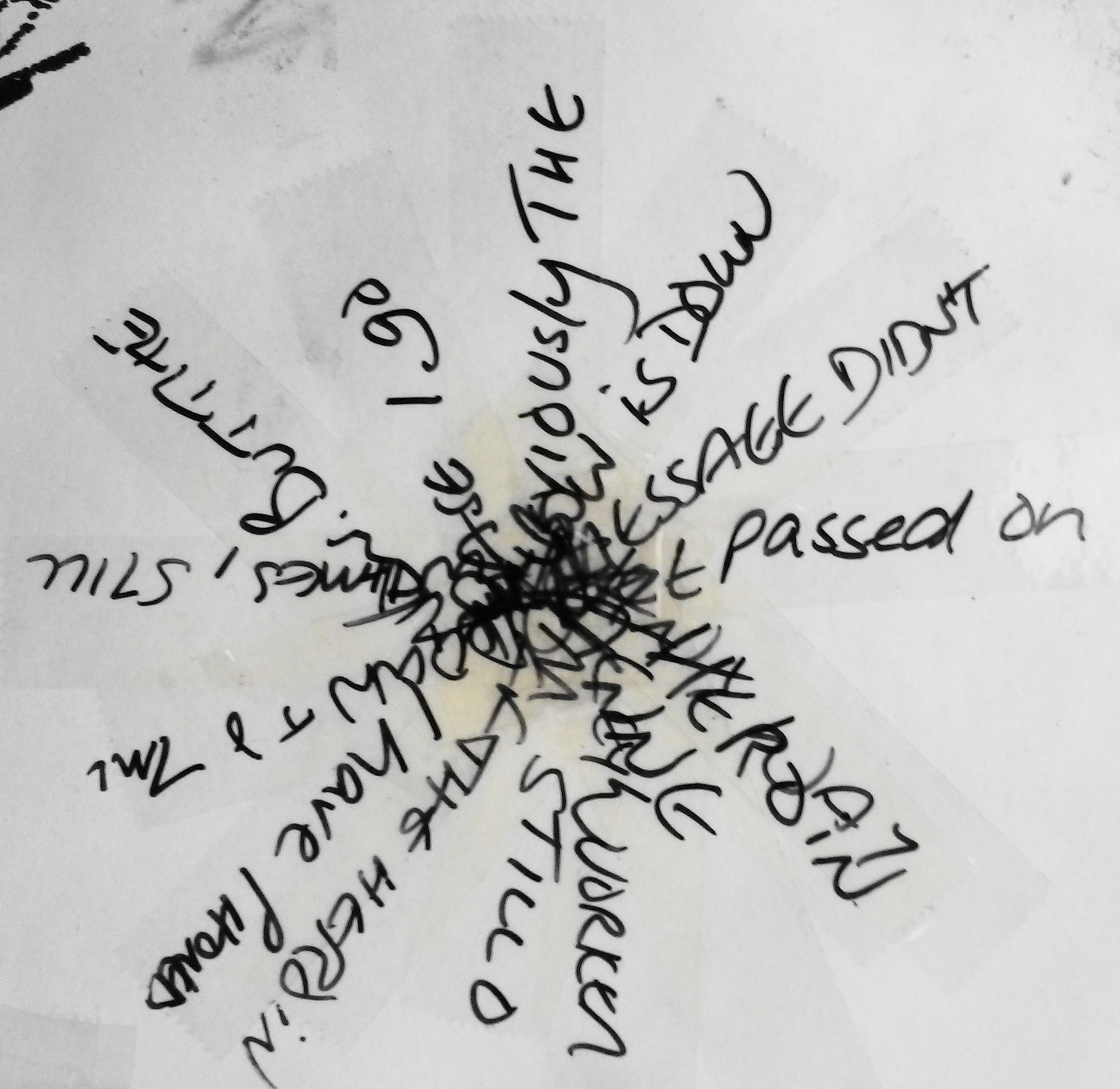
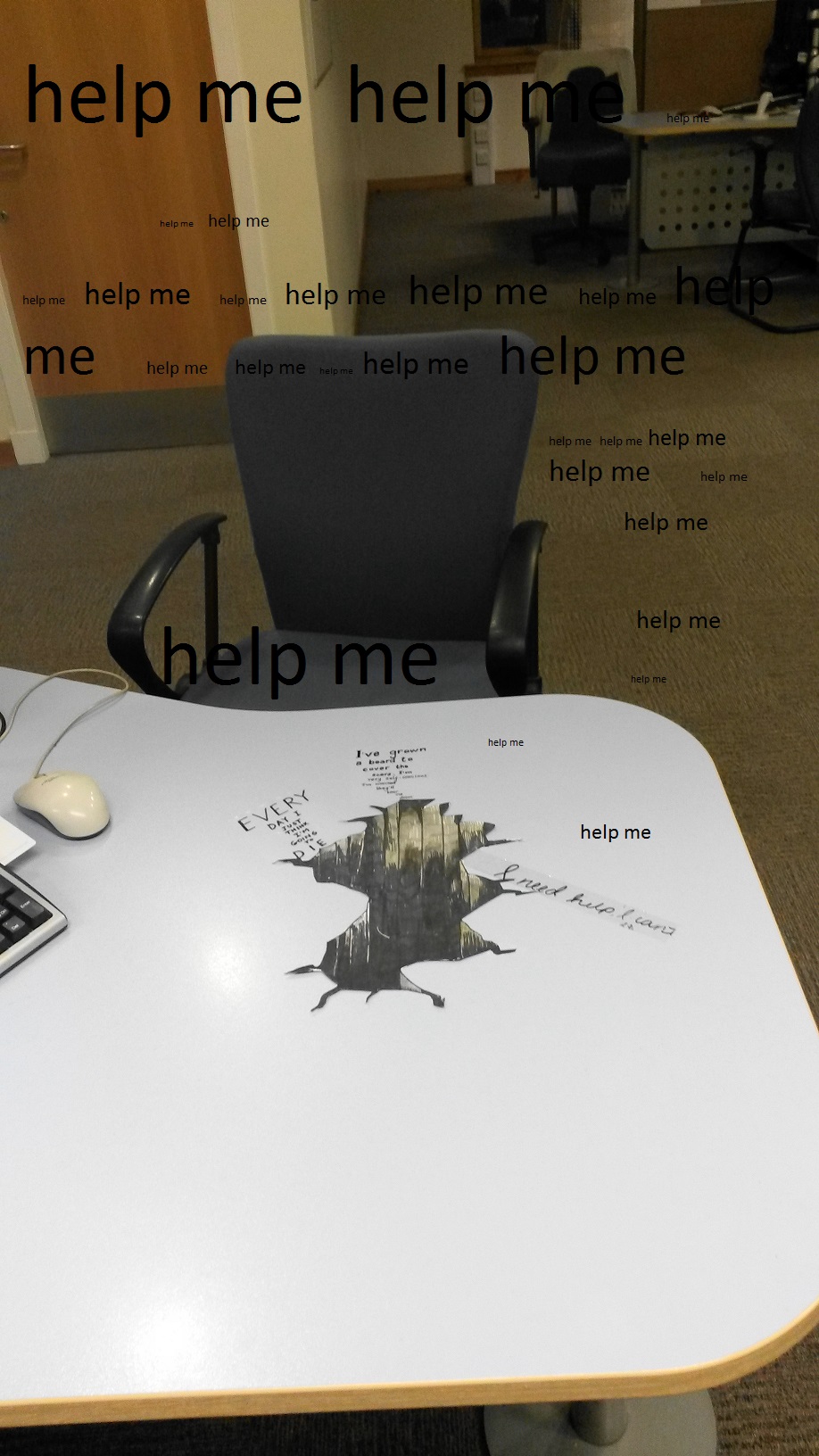
I decided that I would try to show the hole swallowing the dialogue that takes place at my desk. The hole would be a metaphor for me, absorbing the information I receive from my customers on a daily basis. I played about in my sketch book with different kinds of writing for the dialogue.
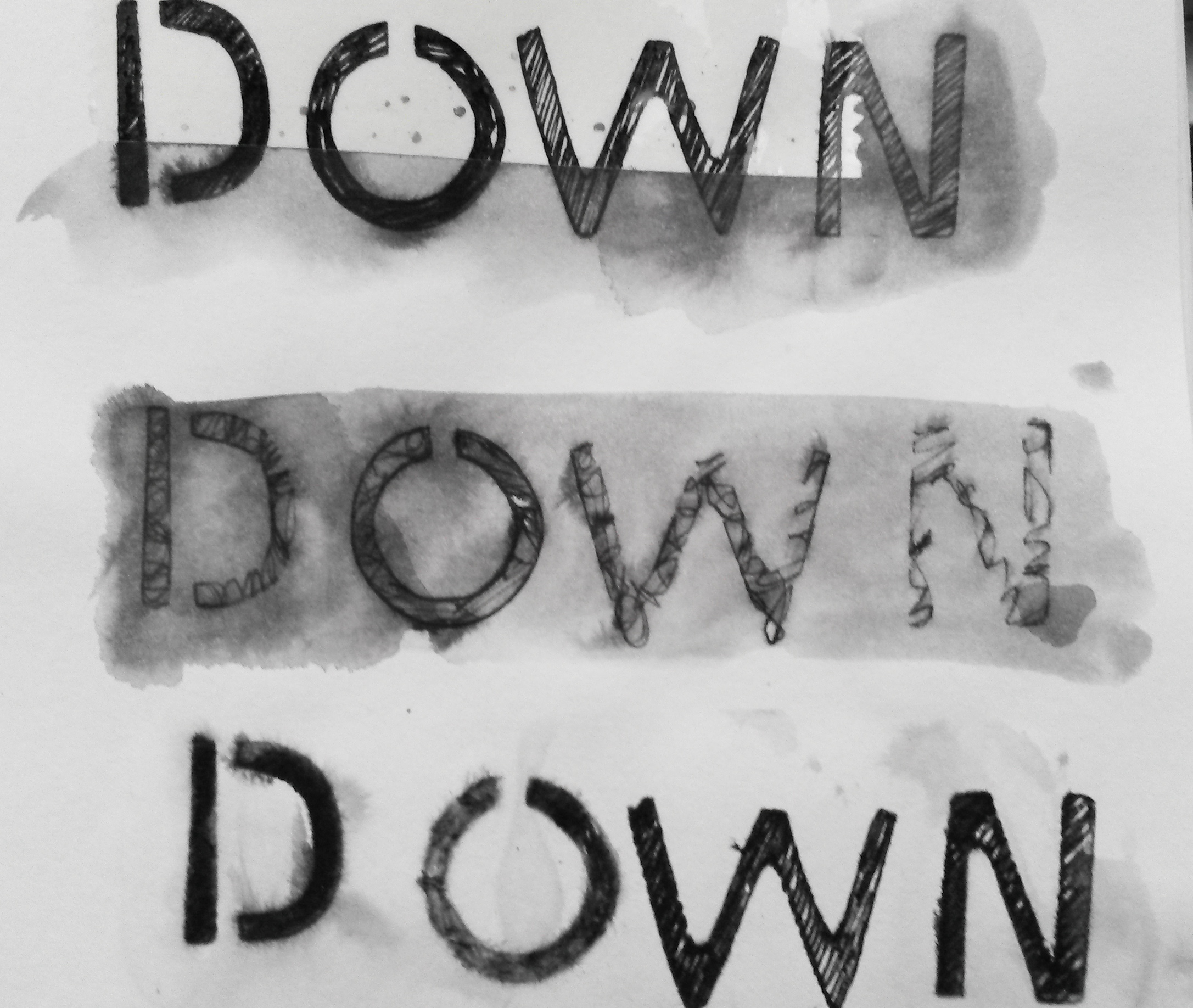
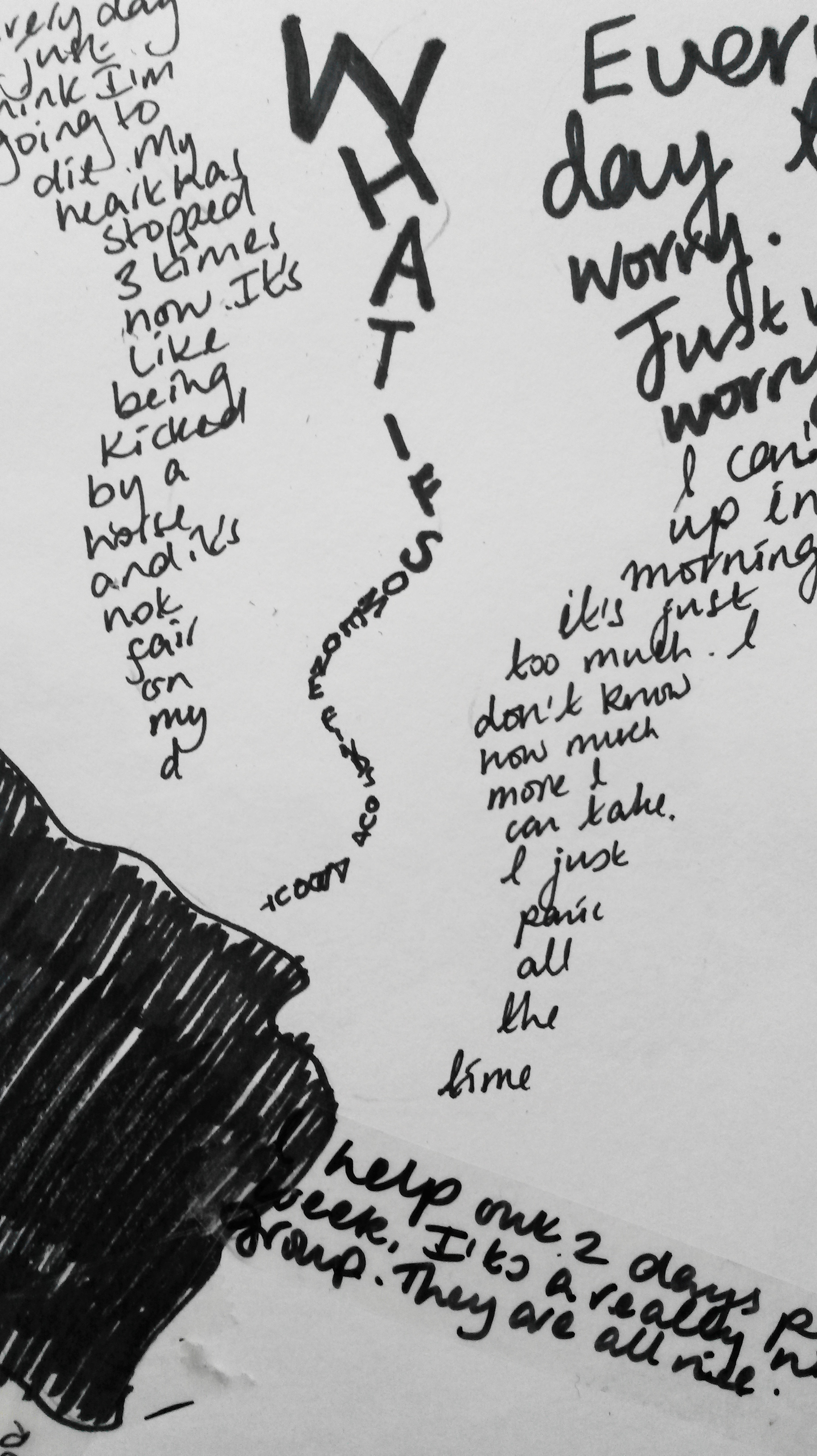
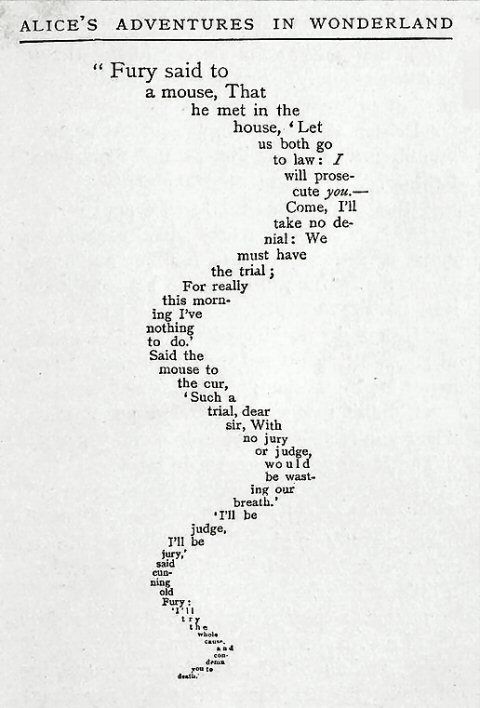
I was thinking of the poem ‘The Mouse’s Tale’, as it almost implies movement, like a snake weaving from side to side.

 My drawing2 blog