Category Archives: Research & Reflection

Bibliography

The following is a list of books I used for the majority of reference, although I did read many others not included;

The Amazing World of M C Escher. The National Galleries of Scotland.  Edinburgh.  2015

Art Since 1960.  New Edition, Archer, Michael.  Thames & Hudson world of art.  London. 2012

Drawing Now. Between the Lines of Contemporary Art. TRACEY. I B Taurus.  New York.  2007

Drawing Now: Eight Propositions, Hoptman, Laura.  The Museum of Modern Art, New York.  2002

Drawing Projects.  Maslen, Mick and Southern, Jack. Black Dog Publishing. London. 2014

Gombrich, E H (2011) The Story of Art, 16 Edition. London: Phaidon Press Ltd

‘John Bellany, Keith Hartley with Alexander Moffat, John McEwen & Paul Bellany.  National Galleries of Scotland 2012

Modern Art.  Flame Tree Publishing. London 2005

The Poetry of Place, Duncan Shanks sketch books and the Upper Clyde, Freight Books.  2015

The Two Roberts, Robert Colquhoun and Robert MacBryde, Elliott, Patrick.  National Galleries of Scotland.  Edinburgh. 2014

The 20th Century Art Book.  Phaidon 1996


M C Esher exhibition

Last year I went to see The Amazing World of M.C. Escher at the Scottish National Gallery of Modern Art.

About the Exhibition

M.C. Escher is one of the great conundrums of modern art. He is an artist whose work is as instantly recognisable as anything by Salvador Dalí, yet his name means little to a British audience. Escher was never affiliated to any group, rarely travelling far from his modest home in the Dutch town of Baarn, and focusing exclusively on graphic art. He was a one-man art movement who created some of the most famous and popular images in modern art, yet he remains a complete enigma.

This exhibition features over 100 prints and drawings spanning his whole career, and is drawn in its entirety from the Geemeentemuseum in The Hague, in the Netherlands, which holds an almost complete set of Escher’s prints. It is also mounted in collaboration with the Escher in Het Paleis, a museum of Escher’s work which opened in the centre of The Hague in 2002.

I have always liked the work of Escher.  I like the precision and perfection of it and I learned at the exhibition that this was in part because his brother was a Mathematician and helped him work out the exact calculations for the reflections on the spheres etc. In addition his father had very exacting standards and would point out any flaws in his work and suggest he did it again.

I particularly admire his Metamorposis 1 where the negative spaces between fish gradually morph into black swans.

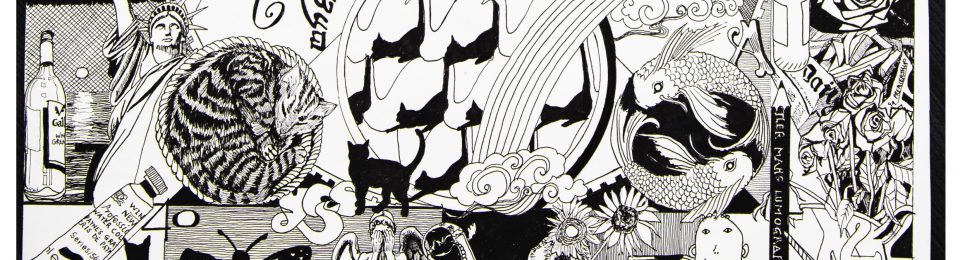
I included his drawing in my Time and the Viewer drawing.

cropped-annemacleoduni1.jpg

Time and the Viewer black drawing pen

cropped-annemacleoduni12.jpg

Time and the Viewer

My homage to Escher; black cats morphing into white swans.

References

https://www.nationalgalleries.org/whatson/on-now-coming-soon/the-amazing-world-of-m-c-escher/about-the-exhibition-23618

Adrian Wiszniewski demonstration

Adrian Wiszniewski was born in Glasgow in 1958 and trained at Glasgow School of Art from 1979 to 1983. He was a leading figure in the revival of figurative painting in a group known as the New Glasgow Boys.

Adrian Wiszniewski RSA, HonFRIAS, HRSW (b.1958) creates work characterised by a strong drawing element and fertile imagination. Populated with contemplative figures set in vividly coloured Arcadian landscapes, his paintings are rich with symbolic, political and philosophical depths.

I have attended a demonstration by Adrian Wisznieski at Paisley Artists before.  This one was particularly memorable to me, precisely because it appeared to have been completely unmemorable to him; he arrived half an hour late and seemed to be completely unprepared.

He had brought his sketchbooks with him though, and this was particularly interesting because he told us he was starting to develop an interest in landscape drawing that he had never had before, as a result of securing a Creative Scotland Grant for a trip to New Zealand.

User comments

Adrian Wiszniewski


User comments

Adrian Wiszniewski

User comments

Adrian Wiszniewski


User comments

Adrian Wiszniewski


User comments

Adrian Wiszniewski

User comments

Adrian Wiszniewski

User comments

Adrian Wiszniewski

He said that he was not much of a Painter, he preferred to draw.  When he starts to draw, he has no intention of how the drawing will look.  He will start out with a large sheet of paper, often taped to a wall.  He will begin in the middle of the paper by drawing an eye, for example, then will start to fill the sheet.  He makes marks, like a piece of music, adds different layers, has repetition, and won’t know what it’s going to be about until the last stroke.  He was influenced by Van Gogh, his work is full of energy.  He trusts his subconscious mind; it’s almost like an archaeological dig, drawing to uncover what the picture is about.

He always has a sketchbook with him, but seldom works from what is in front of him, preferring to work from his imagination.  He showed us some drawings he made recently on a train journey.

User comments

Adrian Wiszniewski

User comments

Adrian Wiszniewski

User comments

Adrian Wiszniewski

Here he is drawing at the demonstration;

User comments

Adrian Wiszniewski

And here is the drawing;

User comments

Adrian Wiszniewski

I found him to be fascinating to listen to.  He has eclectic interests and seemed to jump from one subject to another.  He said the trick was to stay interested in what you are doing, if he stops being interested he will move on to different media and has used Perspex, stained glass and fluorescent light.  I liked that his work was under pinned by drawing, and he wasn’t interested in ‘art speak’, as he called it, as he thought an artists should at least be able to draw.


http://www.openeyegallery.co.uk/artists/adrian-wiszniewski/?p=artist-details/adrian-wiszniewski/


Research on Stephen Walter Part 5

Reflection: Stephen Walter is a contemporary artist who works a lot with drawing and mapping.  He works I such detail that the viewer needs to use a magnifying glass to experience parts of his art work.  Look at Walter’s work, read his comments and reflect on them in your log.  What does such a fine level of detail lend to the image?

Stephen Walter’s biography on his website states ‘Stephen Walter’s work is an investigation into obsessive drawing techniques, semiotics, the glory of maps, and where Landscape is seen a receptacle for meaning. Each work is an intricate world in itself. The maps are a tangle of words, symbols and drawn elements where cultural residues inhabit certain locations‘.

When I first looked at the level of detail in Walter’s drawings, particularly in his maps,

I was a bit over whelmed and thought ‘do I really want to read all that?’ Curiosity drew me in and the whole thing really grabbed my attention.  It is packed full of information, often amusing, such as a place called ‘Eyesore’ in Nova Utopia, 2013.  The scale is sometimes large, particularly the maps, for example the print Nova Utopia, 2013 is 133.5 x 171.5 cm.  The large size of the map contrasts with the tiny intricate pieces of information it contains.  The viewer has to get up close to the print to absorb all the information and it is worth the effort as they view Paranoia HQ and Middle age water colourists. I found it to be very funny and clever and wanted to read everything, and despite the size, I really enjoyed it.

Reference

http://stephenwalter.co.uk/

Pre -assessment review of Drawing 2

Overall Evaluation

Now that I have come to the end of Drawing 2, when I look at the final pieces I’ve made, I barely recognise my own work.  I decided from the outset that I would push myself during this course.  Being my first level 2 course, I knew it would be very different from what I’d experienced before.  Prior to studying with OCA, I had very little experience of contemporary art, particularly Installation.   When I was researching Cornelia Parker’s Poison and Antidote drawing, I thought at first, it made no difference what medium she used to draw with; it was the visual image at the end that was important.  Now I am at the end of the course and my opinion is the complete opposite, hence the subject matter of my Critical Review; the Artist as a Recorder.

It wasn’t an over night change for me; it has been more gradual.  The research in the course work prompted me to look at artists I would never have known about, like Martin Werner, Janice Kerbel and Steven Campbell.  It taught me there is an infinite number of ways to make art.

The projects pushed me into trying some of these ways for myself.  Some were familiar, such as the observational drawing in Part 1, mark making and composition, but many I found very difficult to do, such as the drawing with a machine, using found images, interacting with the environment and my nemesis; installation. In addition, I had to relearn academic writing and referencing.

I think looking at the Parallel Project highlights the process I went through from the start of the course to the end.  I began by making observational drawings, initially portraits of the staff, then graduated to drawing the office environment.  Using my new way of looking at every day things, my attention was drawn to the grey dots on the privacy panels, and I thought about repetition and pattern, and the way in which they are used to protect someone’s privacy, and this eventually lead to me finding a way portray the experiences of the people.  By developing a new way of seeing and recording, added to the encouragement from my tutor, I was brave enough to attempt to express these experiences in an authentic way.  It was very daunting showing other people this work, and I was so out of my comfort zone, but I believe it has paid off.

I think the turning point for me came at Part 4, when completing the project on interacting with the environment.  I read the instructions and literally made images using material from the environment, such as leaves and twigs etc.  I had stalled at this point, lacking confidence in my choices, and eventually decided I would just need to do something, rather than hesitate any longer.  I contacted my tutor Bryan, and showed him the images, expressing my disappointment in the outcome.  I told him about the groundwork I was doing for the parallel project, and how capturing my experiences at work had caught my interest.  He suggested focussing on this area and I decided to outline some hypothetical interactions I could make at work.  I enjoyed doing this; it caught my imagination, I had fun with it and added humour.  I also enjoyed the new experience of making art by writing.  This made me realise for myself, how you make art, what you use, what you do with it, what you want the outcome to be, these are all up to the artist to decide.  There is no definitive guide and there is no one out there to tell you want to do, it’s all up to you.

With this experimentation has come understanding; it helps to to understand the process and the concept, and looking at and researching other artists help you do this.

Although apprehensive, eventually I realised that the only way to learn is to embrace the challenges. If you do what you’ve always done, you get what you’ve always got.

In addition, the OCA Study visit to the Turner Prize I participated in, couldn’t have come at a more fortuitous time. Whilst I may not personally have appreciated seeing fur jackets sewn on to tubular chairs, because of the research I had already undertaken, I was able to understand Nicole Werner’s concept.  This again, reinstated my new-found discovery that art can be; a choir singing, an environmental project, a library, or indeed fur jackets from Ebay stitched onto chairs.

Looking back, I found Drawing 2 to be a very difficult course to complete, but definitely worthwhile.  In addition, I feel I have been very fortunate in having Bryan Eccleshall as my tutor.  He was most encouraging, and gave me the confidence to try new things, and his own work as a practicing artist was inspirational.

My local art group enjoyed watching me drawing the Time and the Viewer piece so much, we gave it a name Autobiographic, and three other members have since made their own.

It has helped me to develop a new way of looking at every day things.  I can look at something objectively, see it as a shape, a series of lines or composition, I’m curious when I see areas of grass or carpet worn by constant tread of people. Or marks left by repeated activity, or ephemera left lying around in a particular way.  I would never previously have noticed these things, or associated them with making or appreciating art.

The course also helped me develop problem solving skills, in so much that it forced me to think about alternative ways to make marks.  For example the Collography process I used on the Parallel project artists book, my experimentation with the use of Letraset to add text to a drawing, the use of bubble wrap to censor the personal details.  And who could forget the drawing with an electric tooth brush!

More than ever, the artists books I made were a huge step forward for me.  It was most enjoyable pointing out the idiocy of some of the rules at work.  I found the parody of the rules and regulations cathartic.  I enjoyed the writing part very much, and again, would never have contemplated this as ‘making art.’

This has given me a confidence I hope will stay with me as I continue on my Painting Degree Pathway


Collaborative Drawing Project

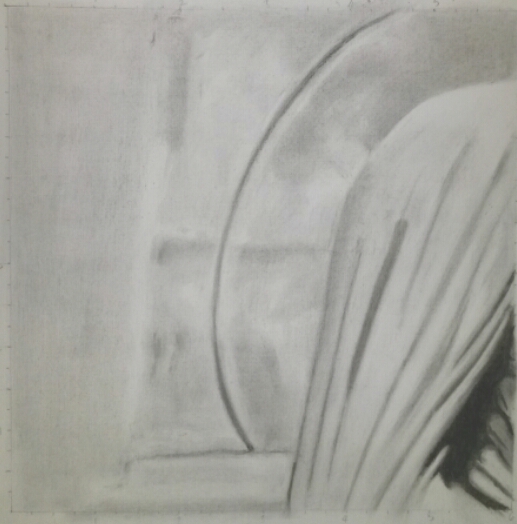
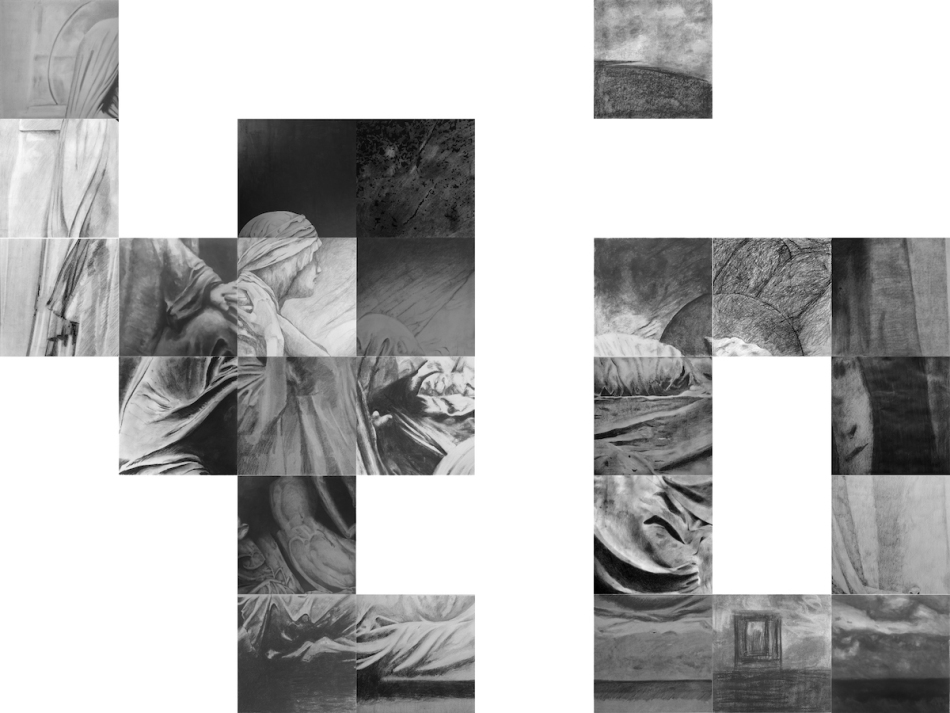
I participated in a Collaborative Drawing Project organised by my tutor Bryan Eccleshall.  The instructions were that each person would have two panels to draw.  Each drawing was to be 12 inches x 12 inches, and had to be monochrome, but could be in any appropriate medium. It was to be made using the grid method, so that the proportions would be fairly accurate.  This is one of my panels;

2015-11-24 18.27.08

12 ” x 12″ charcoal

And here is how it fitted in to the overall drawing.

collaborative-drawing2

I wasn’t asked to send the actual drawing, just a photograph.  Bryan said that if the actual drawings wee to be assembled the whole piece would be eight feet by six feet.

I found the project exciting to participate in.  It made me think about Bryan’s role as the artist.  He didn’t complete any of the panels, however he was still the creator.  In a way, the participants became his media and he dictated what we created for him.

What is art for?

The video I watched in preparation for my Study Visit to the Turner Prize,

reminded me of an OCA Blog Post I had read before.

http://weareoca.com/fine_art/what-is-art-for-2/ posted by Brian Eccleshall.

In the first video Alistair Hudson, Director of MMA (and part of the judging panel on the 2015 Turner Prize), talks about a ‘crisis’.  We need hospitals, but do we really need museums and galleries?  He states that visiting a museum is ‘Spectatorship’ and asks ‘What is the use of art in society? Why do we have it and what is it for?’

In part 2 he states that art needs to be part of society, it needs to be more useful.  At present we try to educate society about the importance of art in society, but he asks what if it is the other way around, what if what we do in society is the ‘programme’, what if art is what we do as citizens in the museum?  What if, as a citizen where our main goal is social development and to make the world a better place, what if we use art in that process?  In demonstrating and applying art in everyday life, a museum doesn’t become an island, but another civic building.  You will no longer be a spectator with the connoisseur acting as an intermediate.  Art is created out of how we use it, so art will be something we develop communally, we develop it as part of our daily lives.  ‘The language of usership comes from the digital culture, and a good analogy is YouTube, where the value of YouTube is not created necessarily by YouTube, it’s created by how it is used, it is created by people themselves, the user makes a video, uploads it, other users watch it, comment on it.  Similarly, could we create a museum which operates in the same way, where the value of the museum is created by all the sum activities of all its users?’

This is interesting, but I can’t help feeling he is concerned more about the future of museums, than what art is for, (although this is only part 2 of a series).  People already use YouTube and other social media sites such as Instagram and Facebook to share their art, although that is still spectatorship.

This post interest me because of my parallel project.  I am thinking about what my final piece of work for Assignment 6 can convey by way of invoking emotion and telling a story that couldn’t be conveyed by say a documentary, or by photographs.  An artist can be a ‘recorder’ and a story-teller and in that regards art is still ‘useful’ and relevant today.

OCA Study Visit Turner Prize 2015

I attended the OCA Study Visit to the Turner Prize 2015 at the Tramway in Glasgow on 9th Jan 2016 with tutor Wendy McMurdo.

This is the first time I’ve taken more than a passing interest in the Turner Prize;  I’ve seen articles in the newspaper and on television, but that’s been about it.  I decided to research its history before I went.

1 ‘Over the recent decades the Turner Prize has played a significant role in provoking debate about visual art and the growing public interest in contemporary British art in particular, and has become widely recognised as one of the most important and prestigious awards for the visual arts in Europe.  The Turner Prize is a contemporary art award set up in 1984 to celebrate new developments in contemporary art. It is awarded each year to ‘a British artist under fifty for an outstanding exhibition or other presentation of their work in the twelve months preceding.  Nominations are invited each year, and the prize is judged by an independent jury that changes annually.  The four shortlisted artists present works in a show normally held at Tate Britain before the winner is announced in December. Artists are not judged on their show at Tate. The decision is based on the work for which they were nominated.’

The exhibition

The study day began with a tour led by two curators. I learned that there have been several students from Glasgow School of Art nominated in previous years, and this is the first time it has been exhibited in Scotland, however none of the artists shortlisted this year were Scottish.

The information sent by OCA prior to the visit recommended that we watch the following film; https://vimeo.com/148607435  , in which Turner Prize Judge Alistair Hudson (Director of Mima) battles it out with artist Pavel Büchler in a discussion, Art: Useful or Useless?  I did watch this video, and on the whole it was interesting, however the discussion began to become a little pedantic to me, as they debated the meaning of the word ‘art’.  It did give me food for thought though.  I am familiar with the idea of a conceptual art, but I’m not sure if I believe that something is an artwork just because it’s labelled as such.  I wasn’t swayed by the argument put forward that Art should be useful.  I believe that if it does serve a purpose, such as the winning entry by Assemble, which worked with local residents in Granby to refurbish 10 houses in order to provide affordable housing, then that is a bonus and it is to be applauded but I don’t necessarily believe that the Artist should only seek out ‘worthy’ useful projects.  As a Contemporary Art award it isn’t surprising that is influenced by whatever is current and environmently friendly projects, affordable housing, recycling materials and social justice are all subjects current with public focus.  In addition, for me, art’s use can be to enrichen people’s lives, enhance their environment, educate and entertain.

Secondly, we were asked to read an article; http://conversations.e-flux.com/t/teleology-and-the-turner-prize-or-utility-the-new-conservatism/2936

This adds another dimension, where the winner of the Turner Prize isn’t a practicing artist at all, but instead is a group of 18 people from the fields of art, architecture and design.  This makes it apparent that the selection of the winner is very dependant on who is on the judging panel, which changes annually.  Some think it also adds a political slant to things.

I was very interested in attending this study visit, as I had hoped the experience would feed into my Critical Review in the parallel project, where I compare traditional drawing and representational art work to contemporary art and installation.

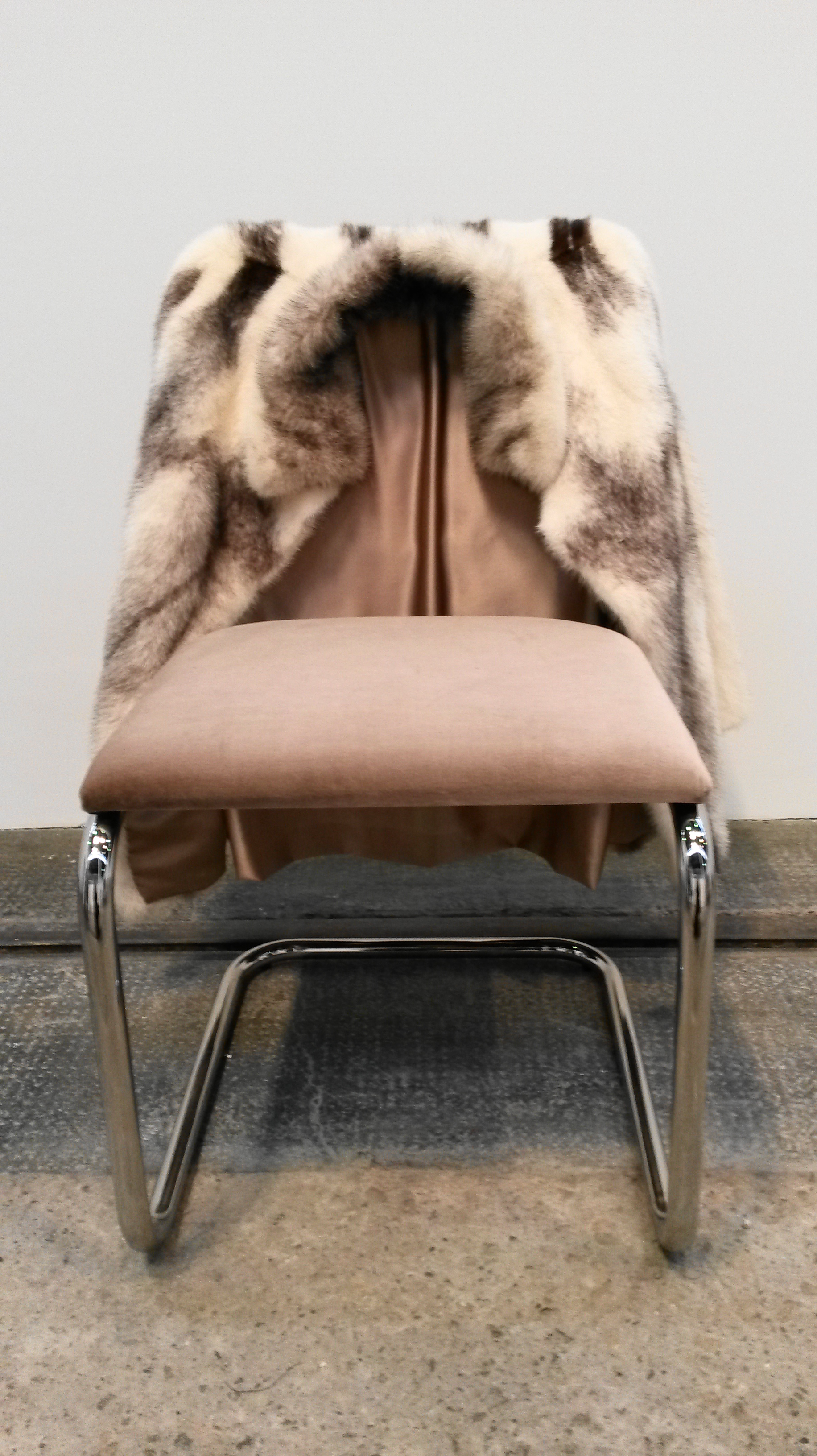
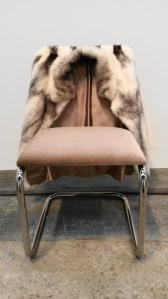
The first short listed artist was Nicole Werners with her Untitled Chair sculptures.  I had no clue on first viewing these what they represented.  It consisted of several tubular chairs with fur jackets draped over them.  The curator explained that the chairs were an adapted version of Marcel Breuer’s Cesca chair.  The lining of the vintage fur jackets are actually sewn around the chair so that the two become one and the purpose is to comment on a private claiming of a chair in a public space.

User comments

User comments

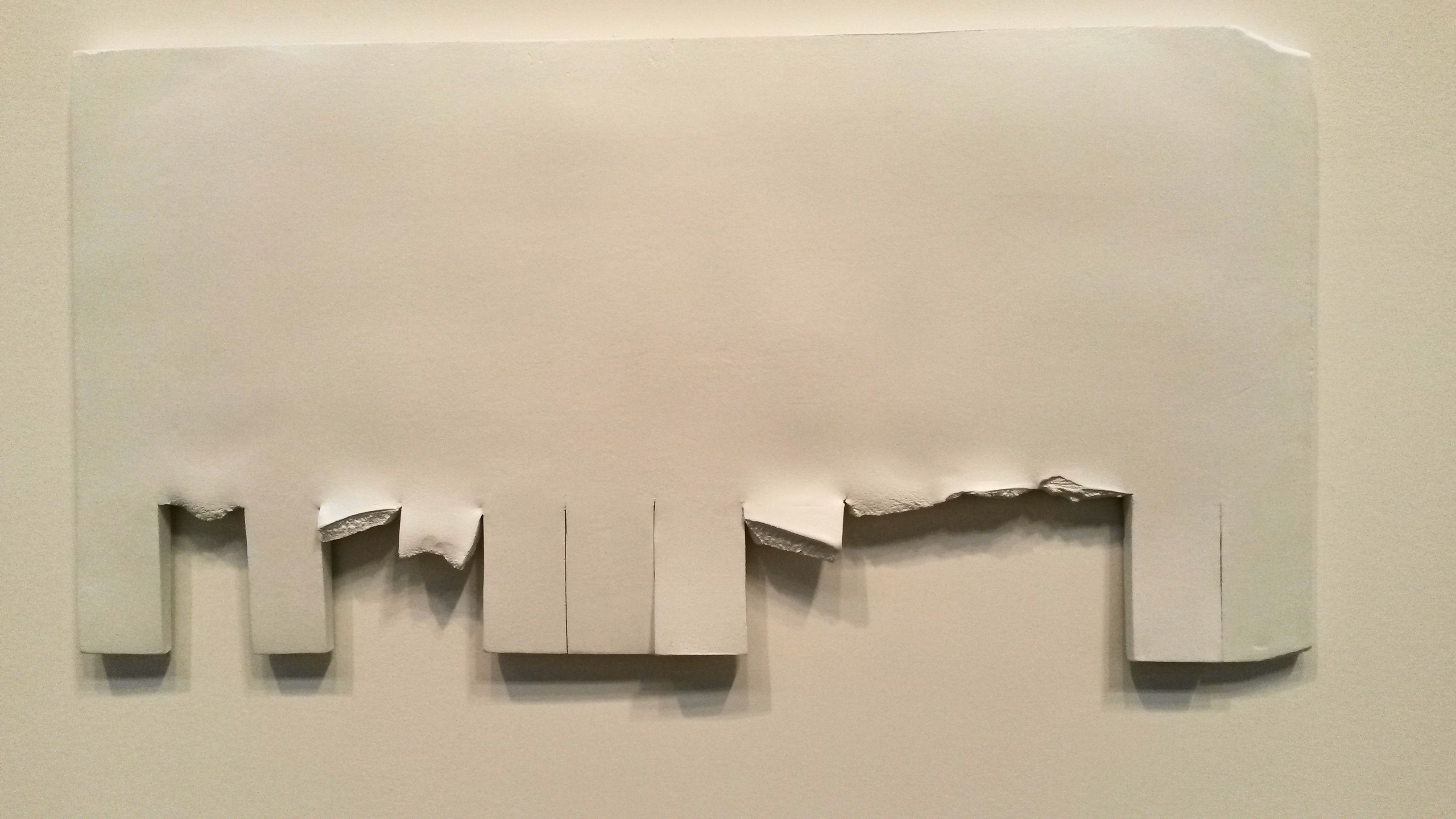
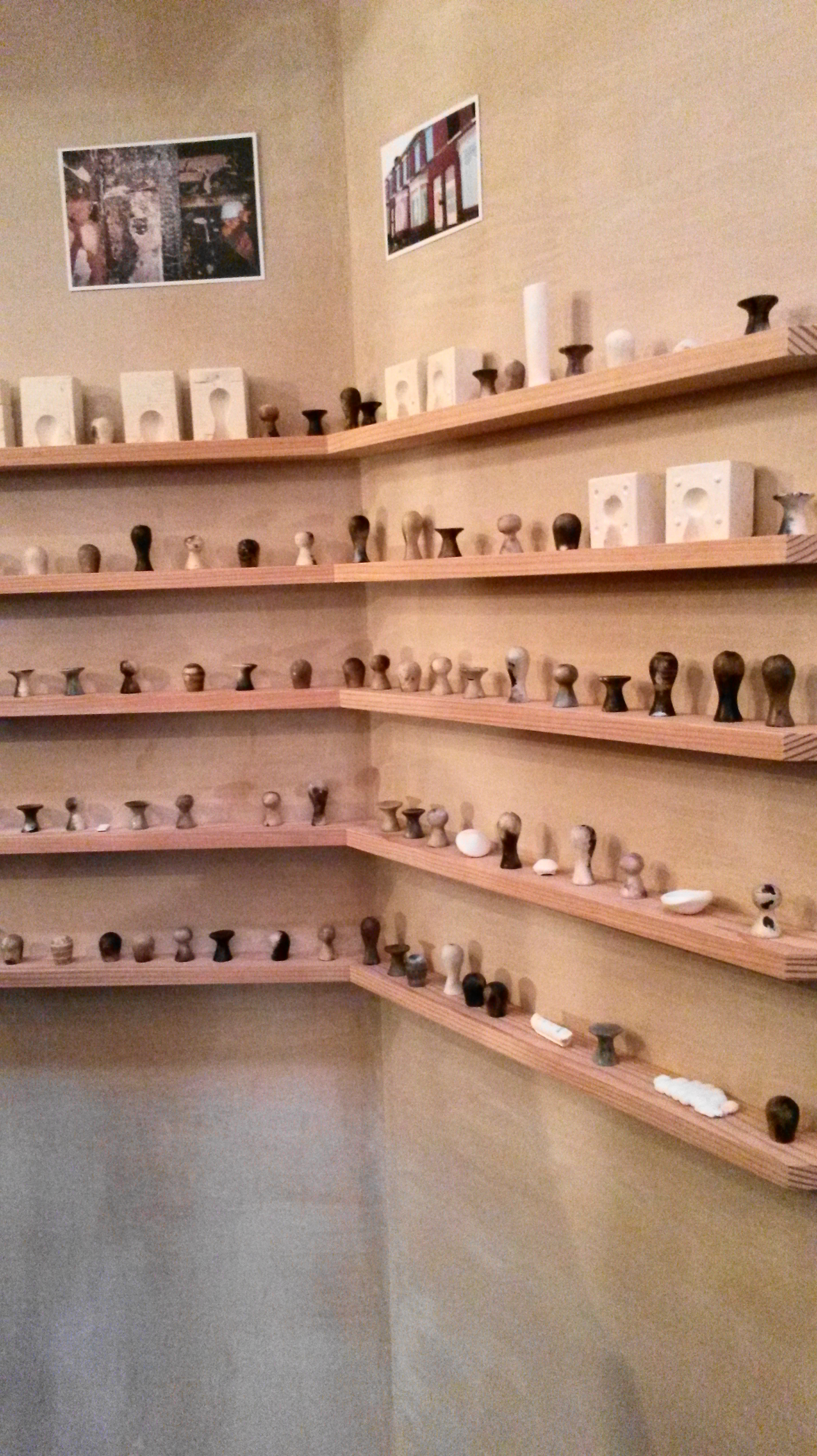
On the walls accompanying the chairs are ceramic sculptures which represent the posters you often see (more commonly in the USA) in colleges etc, where you tear off a portion at the bottom with a phone number etc on it.  This was a comment on a social phenomenon; the change of material from paper to ceramic transforms it into a more permanent fixture.

User comments

My overall opinion on viewing this was that it was quite an interesting concept once it was explained, but I wouldn’t have understood it without the explanation.  It seemed irrelevant to me that the jackets were vintage and the linings were hand sewn to match the fur.  For me, I had already seen photographs of the chairs before my visit, so I suppose in this regard it was a success as it captured the public’s attention, and this is one of the purposes of the Turner Prize; to raise the profile of contemporary art with the general public.

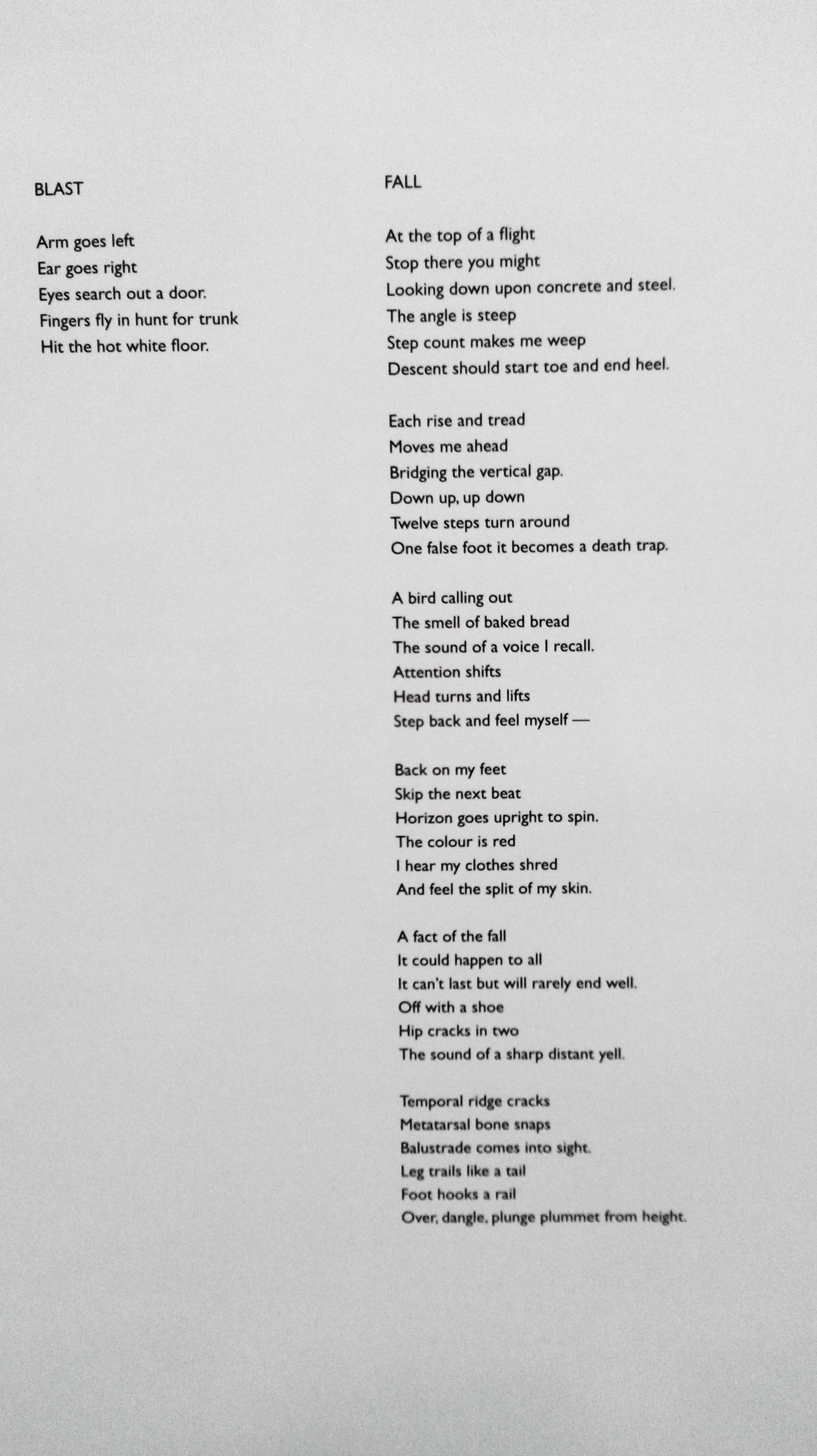
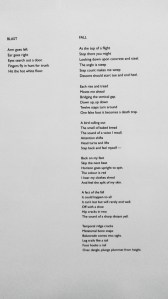
Next was Janice Kerbel, who wrote an operatic piece entitled DOUG, in the form of nine songs, written for six unaccompanied voices.  It was inspired by cartoon violence and explores the different ways in which an imaginary figure could meet his death, such as falling down a flight of stairs (‘Fall), to being struck by lightning (‘Strike).  Each song is designed to test the range of the vocals, stretching them from their highest to lowest notes.  Our tutor suggest we go to hear one of the pieces and we duly went along at 1:00pm and joined the small waiting audience.  There were six music stands at the front and at 1:00pm sharp the six singers came out and silently made their way to the stands.  They began gently humming for a minute or two then suddenly each singer sang one word, each a different word, in a different key, in a cacophony of sound.  Only one word was sung and then they bowed and walked off again.  It was quite a surreal experienced and the audience appeared bemused (as did a few of the singers).  The Exhibition Guide describes it thus; ‘Kerbel explores the possibilities of the written and spoken word to suggest material and visible states, giving form to impossible or imagined events.”  And “DOUG calls on the history of physical comedy, animated cartoons, narrative ballad and operatic librettos to imagine a new kind of compositional choreography.’
User comments

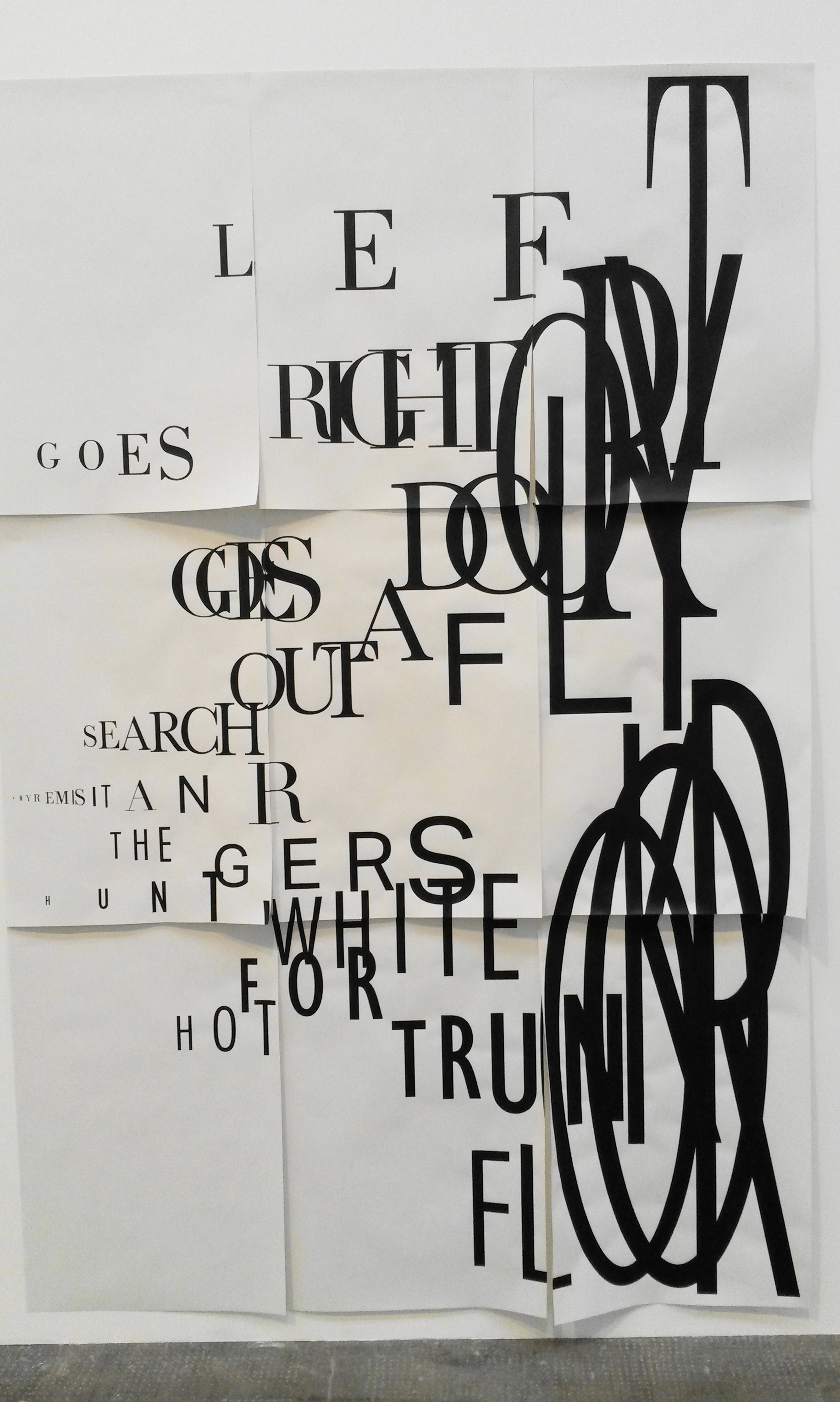
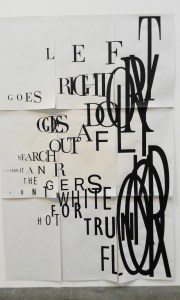
This was my first experience of this kind of art work.  I think I would have needed to see the whole performance in order to understand what it was trying to do.  All of the lyrics were written on the wall for viewers to read.  I did like the ‘poster’ on the wall, which recorded some of the words used and the size of the letters represented how loudly the word was sung and I wondered if I could use this idea when adding dialogue to the drawings in my parallel project.
User comments

One of the curators described a previous work of the artist, which also interested me.  Apparently, posing as an architecture student, she staked out a bank for 18 months,and based on this experience, she wrote book which detailed how the bank could be robbed.  I researched this further as it may be of use to me in the parallel project.

2 15 Lombard St. is a rigorously researched master plan of how to rob a particular bank in the City of London. By observing the daily routine in and around the bank, Kerbel reveals the most detailed security measures such as: the exact route and time of money transportation; the location of CCTV cameras in and around the bank along with precise floor plans that mark the building’s blind spots.  Kerbel’s meticulous plans include every possible detail required to commit the perfect crime. The ubiquitous fantasy of a bank robbery functions as a backdrop for Kerbel’s ‘play of subversion’. By surveying surveillance Kerbel shows how different systems are interrelated, forming a web of control. Kerbel’s aim is not simply to subvert but to emphasise the fact that the idea of absolute control and the fantasy of robbing a bank are interconnected and mutually sustaining.’

Next was Patterns by Bonnie Camplin.    This was an installation consisting of a study room/library containing books, leaflets, magazines etc all of which referenced beliefs and Mental Health.  The guide stated ‘An artwork that is also a research tool, Patterns centres around five video interviews in which individuals recall extraordinary experiences (from encounters with inter and extra-dimensional beings to systematic trauma-based mind-control techniques).’

There were screens with headphones in the centre of the room where you could watch the videos.  The literature round the room was annotated with remarks hand written by the artist and many of the items were original copies, however we were told we could pick things up to read.  In addition there was a photo copier, which the public were encouraged to use to copy any item of interest to them (although I never saw this happen).  The material was arranged in a specific way in order to form pattern-based relationships between different ideas.  The topics covered included the Occult, Alien Abduction, substance abuse and psychosis.

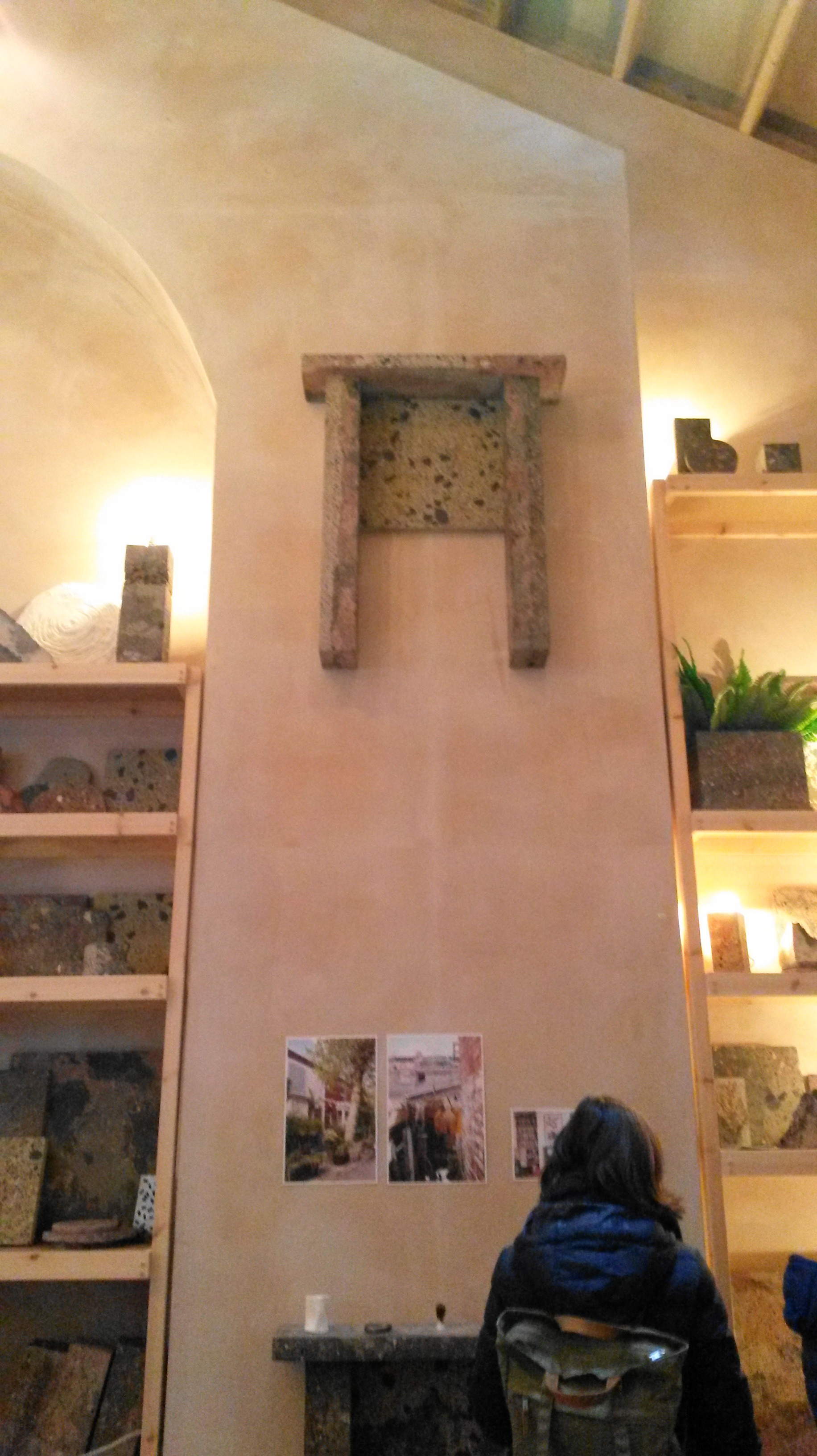
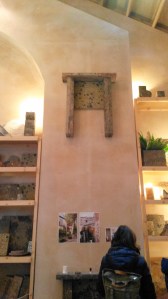
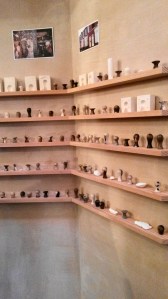
The final piece and winner of this year’s Turner Prize was Granby Workshop by AssembleAssemble is a collective of 18 members from the fields of art, design and architecture.  They assisted Granby Four Streets Community Land Trust to refurbish 10 boarded up houses in order to provide affordable housing for local residents which will remain in community ownership.  The exhibit consists of a show room displaying hand-made items such as mantelpieces, door knobs, furniture and fabrics.  The mantelpieces are cast using brick and rubble waste from the derelict houses.  Their catalogue states; ‘All products are manufactured using processes which embrace chance, so that each is unique, developing in the hands of the people making it.’  I was interested to see that during an interview with one of the Assemble, they commented that ‘The nomination (to the Turner Prize) created an uncomfortable feeling.’  This, I imagine is why we were given the link to the video Art; Useful or Useless.  I’m not convinced that I consider Granby Workshop to be a piece of art; yes there were artists involved in the collaboration, yes there is artistic skill involved in the design of the items for sale, yes it could be considered conceptual; the guide describes it thus; ‘Their practice seeks to address the typical disconnection between the public and the process by which places are made, working across the fields of art, architecture and design to create playful environments and spaces.’
User comments

I see this as a very successful and creative social enterprise.  I don’t see it as an artwork, but I can understand why it has won the Turner Prize; it is the first winning piece that cannot be defined as a fine art work, video or installation, therefore it is different from all previous winners, this causes controversy which keeps the public interested and it ticks all the boxes for ‘useful’ art, and it is a project with a social conscience, whilst remaining environmentally friendly.
User comments

A very worthwhile study visit, which I hope to use as reference in my parallel project.

2.http://www.theguardian.com/artanddesign/2010/may/12/artist-week-janice-       kerbel

https://www.bookworks.org.uk/node/74

http://granbyworkshop.co.uk/


Contextual focus point: Emily Kngwarreye

Emily Kame Kngwareye began painting on canvas in 1988 at the age of 80 and had painted around 3,000 canvases by the time she died aged 86.  Herr story is an incredible one; find out about her life and work and reflect in your log on the importance of place and belonging for you in your own work.  Can you think of any other artists who use place with such an immersive passion?  You might like to reflect on the relationship between painting and drawing in her work.

Emily Kame Kngwarreye is one of Australia’s most significant contemporary artists. Emily was born at the beginning of the twentieth century and grew up in a remote desert area known as Utopia 230 kilometres north-east of Alice Springs, distant from the art world that sought her work.

Although Emily began to paint late in her life she was a prolific artist who often worked at a pace that belied her advanced age. It is estimated that she produced over 3000 paintings in the course of her eight-year painting career — an average of one painting per day.

For virtually two-thirds of her life she had only sporadic contact with the outside world. It was not until she was about 80 that she became, almost overnight, an artist of national and international standing.

Her remarkable work was inspired by her cultural life as an Anmatyerre elder, and her lifelong custodians of the women’s Dreaming sites in her clan Country, Alhalkere.

Whenever Emily was asked to explain her paintings, regardless of whether the images were a shimmering veil of dots, a field of ‘dump dump’ dots, raw stripes seared across the surface or elegant black lines, her answer was always the same:

Whole lot, that’s whole lot, Awelye (my Dreaming), Arlatyeye (pencil yam), Arkerrthe (mountain devil lizard), Ntange (grass seed), Tingu (Dreamtime pup), Ankerre (emu), Intekwe (favourite food of emus, a small plant), Atnwerle (green bean), and Kame (yam seed). That’s what I paint, whole lot. [1]

Until the success of her painting took off, she had not ventured from her homeland.  It was all she had known for her 80 years.  The subject matter she painted was all she had ever known and loved, everything from Nature, from the plants and creatures to the land itself.  She had never known anything else.  There has been much debate over what differentiates a drawing from a painting. I can understand why Kngwareye’s work has been included as reference in a drawing course because it is predominantly made by dots and lines, as opposed to a painting made by using tones and blocks of colour.

There have been many artists over the years whose art was influenced strongly by place.  L S Lowry painted scenes of life in industrial districts of the North, in particular Salford and Pendlebury in Lancashire where he lived and worked for over 40 years.  Claude Monet painted the water lilies in his garden in Giverny for over 20 years.  John Belany attended Edinburgh College of Art in the 60s when Abstract Expressionism was in vogue, however against the advice of his tutors he painted in a figurative style.  ‘He wanted his art to focus on the everyday life he knew, especially the fisherfolk and boats from Port Seton, Cockenzie and Eyemouth, the ports on the Firth of Forth where he grew up. It was the heroism of ordinary people that he wanted to celebrate in large, monumental paintings, some of which he displayed on the railings outside this very building on the Mound’.

Another artists who was strongly influenced by place was Scottish Artist Duncan Shanks.  I visited an exhibition of his recently and you can access what I wrote about it here;

https://annemacleoddrawing2.wordpress.com/2015/08/04/exhibition-visit-duncan-shanks-sketchbooks-the-poetry-of-place/

‘Working in harmony with nature in my notebooks has been an act of faith and an adventure which has taken me to and beyond the poetry of place on a personal odyssey’.  (Shanks, 2015: 7).

‘ Duncan Shanks’s sketchbooks provide a distinctive insight into the artist’s changing interpretation of the landscape he has known and loved all his life.  They also vividly illustrate his ambition to capture not just space and atmosphere, but the passage of time and life’s transience.’ (Shanks, 2015: 10).

The exhibition described how initially he used the sketches to work into paintings.  In addition he used them as a teaching aid for his students at Glasgow School of Art where he taught from 1961 to 1979.  When he retired in 1979 to paint full-time his use of sketchbooks increased dramatically; from 8 in the 1970s, to 26 in the 1980s.  The exhibition had 106 sketchbooks containing 6500 drawings.  ‘This was a direct outcome of his new, full-time commitment to painting and the growing importance of the sketchbooks as visual diaries of his daily thoughts and perambulations which were taking him further from home.’ (Shanks, 2015:12).

‘I have never had to travel far for inspiration.  A need for solitude has attracted me to unpeopled places, where man’s intervention is least apparent, the haunts of dippers and goosander by the river, fox in the glen, hare on the hill-top and buzzard and hawk in the clouds above the thorn hedges of the valley.’ (Shanks, 2015:16).

I personally do not yet feel a strong influence of place and belonging.  Through necessity I often sketch at home using family and surroundings as subject matter.  In several of my courses I have often used the view from my house of a row of traditional cottages across from me, partly because of convenience but also because I like the effects the differing light has on the slate tiled roofs and white washed walls.  It is a recurring subject for me, but not an obsession.  I am drawn to certain subjects, trees for example, but not from a specific place.  Perhaps the difference from my work and the artists I’ve looked at is that I’ve yet to find my own voice.  It occurs to me that all of the artists I’ve looked at were driven by a sense of connection and belonging to a place and this has been the driving force behind their passion.


http://www.nma.gov.au/exhibitions/utopia_the_genius_of_emily_kame_kngwarreye/emily_kame_kngwarreye

http://www.nma.gov.au/exhibitions/utopia_the_genius_of_emily_kame_kngwarreye/emily_kame_kngwarreye

https://www.nationalgalleries.org/whatson/exhibitions/john-bellany/the-1960s