Category Archives: Tutorials and Tutor Reports

Tutor Report Assignment 2

Tutor report

Overall Comments

Thanks for speaking with me about your transfer to me and about your second

submission. As discussed this report will be more note-like than the longer

narrative reports. You have a copy of the conversation so please feel free to revisit

that.

You’ve made a solid start to the course, There’s some good experimentation going

on, especially in the last piece.

We talked about the Critical Review and Parallel Project. I recommend that you

start work on these sooner rather than later as they are crucial to you building up a

practice, rather than an ‘exercise’ oriented approach to work.

We talked a bit about the tension between the handmade work and the digital. You

needn’t pursue it, but it’s interesting that work make by hand is often seen online.

How does this change the work? Can the digital be folded into the handmade?

Select one of the statements below:

I understand your aim is to go for the Painting Degree and that you plan to submit your

work for assessment at the end of this course. From the work you have shown in this

assignment, and providing you commit yourself to the course, I suggest that you are

likely to be successful in the assessment.

Feedback on assignment

Demonstration of technical and Visual Skills, Quality of Outcome, Demonstration of

Creativity

Lots of interesting experimentation, but based on solid observation.  The result might not be as satisfying as you’d hoped, but there’s some really good work en route to it.

  • Photoshopping is a good idea.  Think about how you might print these off and them back into the drawings. Collage? Repetition?

Sketchbooks

Demonstration of technical and Visual Skills, Demonstration of Creativity

• Try and notice existing ‘Still Life’ arrangements. You do this a bit with the ‘narrative’ set of work but keep an eye out for interesting stuff.  this could include stuff you incorporate in the Parallel Project.

• Think, too, about the accidental bits of the world that impinge on your blog

photographs. This might include materials that don’t work properly together.

• The ‘narrative’ images are good. You’re working loosely and discovering

interesting calligraphic marks.

  • Taken alongside the final assignment there is some strong work here.  Keep playing with composition and marks.

Learning Logs or Blogs/Critical essays

Context

• When writing about artists and their work, analyse more. Find something to be

positive about even if you don’t like the work.

• Use compare and contrast technique to help unlock useful insights.

• Compare your work or approach to another artist: helps with contextualisation.

Parallel Project / Critical Review

You think that you’re going base the project on your workplace.

• Think about an ongoing visual diary that plays with the constraints of your job.

You could submit a book or series of books. Perhaps a ’work’ format might also

be appropriate. Powerpoint?

The Critical Review is to help you contextualise your practice. Look out for

relevant artists and think how they can help you explain your position.

Suggested reading/viewing

Context

we didn’t talk about this, but the Reading List has some useful stuff in it.  If you find artists whose work you like, feel free to incorporate it into your blog. You do this anyway, but it needn’t just be the art you see in the flesh.

If you stick with flowers, look at Georgia O’Keefe (1887-1986)

http://tate.org.uk/whats-on/tate-modern/exhibition/georgia-okeefe

You might also look at more botanical illustrations. Less composed or ‘artistic’ but

that can be an interesting way to present work.  John Ruskin (1819-1900):

Sigrid Muller(born 1962) came second in last year’s Jerwood Prize with

this image (http://www.artwales.com/artists-detail-mtg-en.php?artistID=38):

John Piper (1902–1992), for his bold colour and approach to materials:


Pointers for the next assignment

In a way a lot of the work included in this submission relates to what comes next.

The inky line drawings, especially. Think about what it feels like to have and ache

when drawing.

The machines exercise can be pushed a bit. Try using a paintbrush on a long stick of bamboo to make large flower drawings perhaps.

Look through the artists you like and see what you can borrow / steal. Colours,

compositions, marks.  By the time you’ve processed it, it will be different.

You have real potential to explore as your basic drawing skills are good. Don’t

worry on that score. They way to succeed on Drawing 2 is to listen to the work and

to pursue interesting lines of enquiry. If you can turn the exercises into something

useful for the Parallel Project, then do so. This will help develop your voice and, in

turn, your practice.

If you need more time, let me know.

Tutor name Bryan Eccleshall

Date 9/8/15

Next assignment due 13/9/15


Tutor Report Assignment 1

 Tutor report


Student name Anne Macleod Student number 497519
Course/Module Drawing 2 Assignment number 1


Overall Comments

Dear Anne, thank you for sending me your work, its great to see it. Thank you also for the outstanding clarity of presentation. You make it very easy for me to follow your ideas. Overall it is great to see you are pushing yourself and being very creative in your response to the projects. I feel that projects 1, 3 and your assignment pieces work especially well. Already I can see evidence that you are developing a strong personal voice, or voices, which I think will continue to grow naturally as you, go along. Your thoughtful progress through project one is an excellent exemplar of drawing as a tool for enquiry. As you say “a good start”

Assessment potential

 I understand your aim is to go for the PaintingDegree and that you plan to submit your work for assessment at the end of this course. From the work you have shown in this assignment, and providing you commit yourself to the course, I suggest that you are likely to be successful in the assessment.


Feedback on assignment

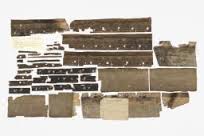
 This is a thorough an interesting project. Your process of evaluation is very articulate and self-aware. It is good to see you taking stock at intervals during the project and gathering comments from your peers. These are both very worthwhile activities. Overall I think this unit has revealed a number of strengths and possible directions for your work. I don’t think you need to decide now and it may be worth thinking about synthesizing some of the things learnt in the projects rather than choosing one route. The drawings you produced were fluent and effective and although you felt they didn’t develop enough, there is definite evidence that you headed towards a strong conclusion. As I looked at them I found myself wanting to know that they were still drawings of your bookshelf? Was this the case or had you moved away at that stage? For example the one with watercolour works well but the colours seemed a bit arbitrary. For me the work is most successful when (abstract or not) it has a strong basis in the experienced world. Your experimentations with other materials are good to see also. The later works look like you have mastered the tape and bent it to your needs. I think if you are interested in using found materials further it would be worth looking at the work of Cornelia Parker. She is an extreme case but her care in using and understanding the meanings held by materials is outstanding. Here is an image of a drawing made with canvas strips from a Turner painting.

cornelia parker

I thought the comment from a fellow student about topographical imagery was a good one and may be worth looking at further but maybe this is too literal. This is an early drawing by Whistler. There is more detail on this below.

whistler drawing

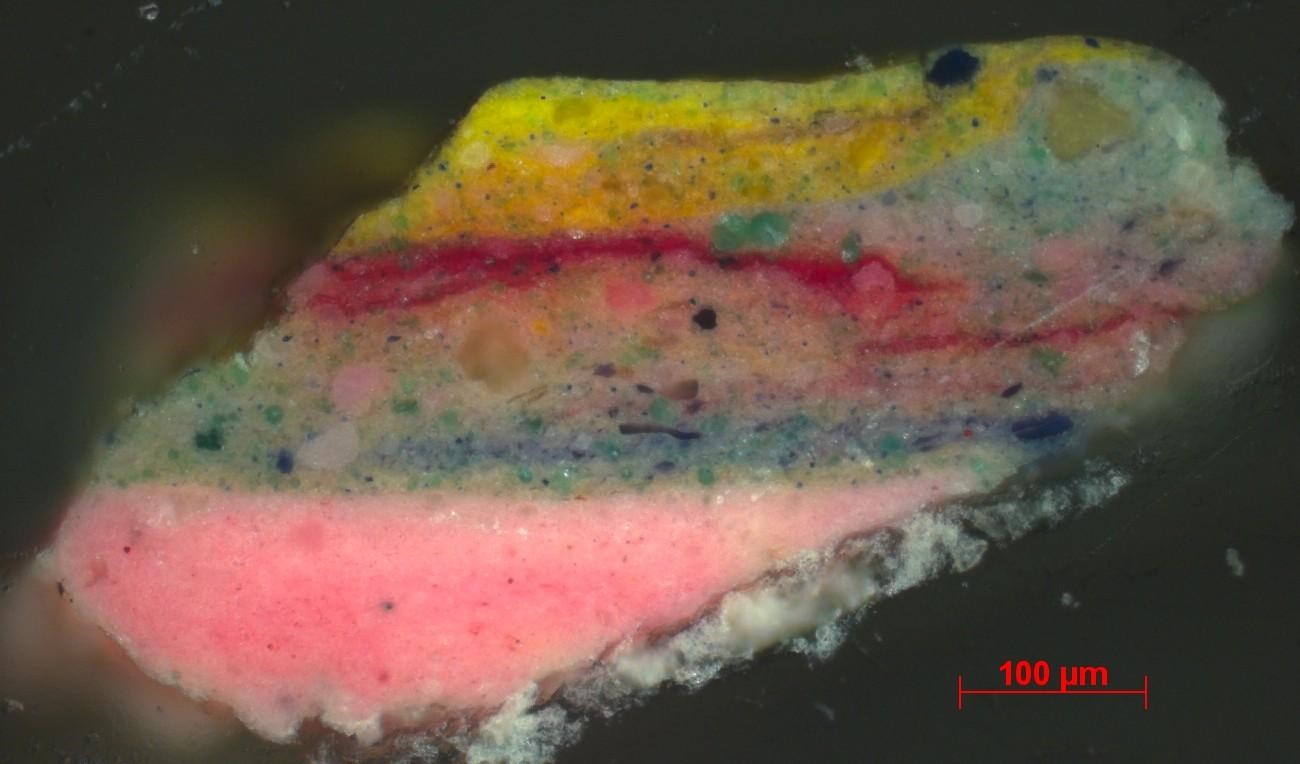
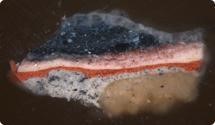
 Also have you seen the cross sections of old master paintings made by the national gallery? For me these could provide an interesting bridge between your “barcode” drawings and the beautiful renderings of pebbles.

tutor 2tutor 1

Projects & Learning Logs

Project One.

The thoughtful process exhibited here is very strong. I like that you deliberately started with subjects that you would usually avoid in your painting. The results show a strong sense of rhythm and an ability to use observation creatively. Your reference to bar codes is an interesting one as drawing too can be viewed as a way of coding reality. It reminds me of Torsten Lauschman’s video work Curtain, 2006 which was made by translating data into visual form.

http://www.torstenlauschmann.com/#/the-curtain-2006/4549785527

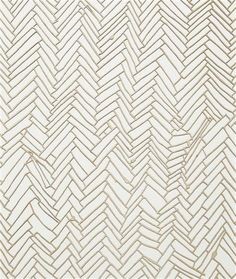
And Rachel Whiteread’s drawings of parquet floors.

racheal whitbread

 You might also want to look at the paintings Claude Heath makes from his drawings.

It also looks like your visit to the Alisdair Gray exhibition was very useful. His work as City Recorder does look interesting and I can see how your proposal for making paintings at your job centre makes perfect sense. To quote my overused phrase, go for it!

Project 2

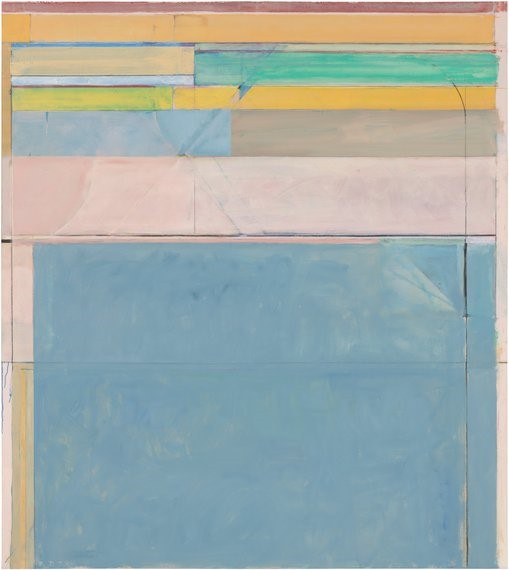
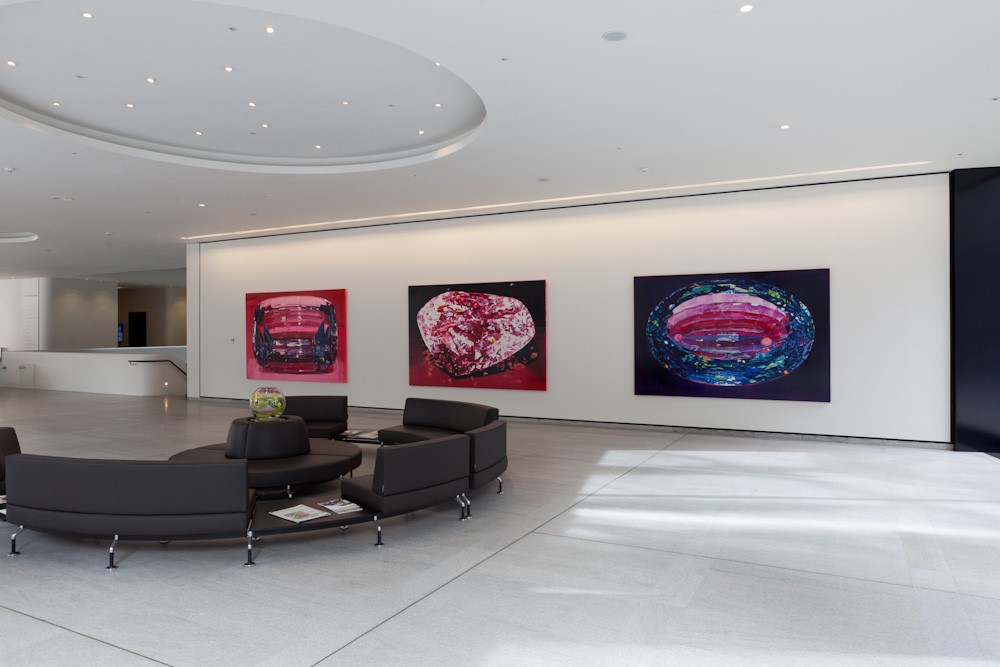
As you note this project doesn’t work quite as well as project one. However it has strong qualities in terms of illustration. It might have benefited from an even more daring approach to composition. Have you come across the Diebenkorn retrospective at the Royal Academy? There are lots of images online. Compositionally they are quite dramatic.

 tutor 3

To be perfectly honest although strong in ways I am not sure Blackadder is the best example for a current student. Instead have a look at Kathy Prenderghast, Miranda Whall and Zoe Mendelson for a bit more challenge and relevance. If you like The Joy of Sex you might like the last two!

Project 3

These are very strong images; although the scale is difficult to judge on the blog what is most striking about them is the abstract quality of the marks when blown up. They look like a Cy Twombly. But then they coalesce into a beautifully observed figurative image. This is an idea that is definetly worth looking at further if you are excited by it. Your use of layering is also excellent, I think pastel is a difficult medium to use well.

If you are interested in exploring this further have a look at:

Gwen Hardie – meticulously painted enlarged images of the human body. Up close they hover between abstraction and alien landscapes.

paula macarthur

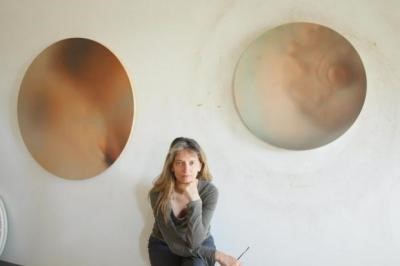
and Paula MacArthur, she also works on exploded imagery.

tutor 5


Project 4

Again you are very thorough in your approach to the project. I especially like the way you keep pushing until you have it right. Your forms are strong and you create a convincing impression of the weight of one object on another (possibly slightly more in the second drawing than the third). You have covered quite a lot of ground in the four projects (this is good) and all are successful. In a way this makes life more difficult in choosing a personal direction as any would do. At the moment just carry on as you are but try not to think of each project as necessarily being separate.


Suggested reading/viewing

In terms of viewing, I have mentioned lots of people above. Try to pick the ones you feel are most relevant for a closer look.

Paula MacArthur

Gwen Hardie

Kathy Prenderghast

Miranda Whall

Zoe Mendelson

Cy Twombly

Rachel Whiteread

Cornelia Parker


Pointers for the next assignment

In summary, don’t worry about a personal voice yet, but make sure you are drawing things that interest you, even if you have to twist the project a bit. Have a look at the artists above; Parker is particularly relevant for the next unit. Also a quick look at Claude Heath’s process between drawing and painting might be useful. Generally I would say keep going as you are. Your approach and enthusiasm is excellent.


Tutor Name Annabel Dover
 Date  7/04/15
 Next Ass due 7/06/15


Tutorial 1 19th Jan 2015 by Skype

I had never used Skype before, so when my tutor suggested it I was both interested and terrified.  Once my 9 year old had shown me the basics; got me set up, showed me what to do in simple language, I was good to go.

My tutor was very encouraging from the outset.  She discussed some of the content of my Student Profile, for example I had commented that I had often received criticism that my drawings were too tight.  She encouraged me to draw how I like to draw and if that includes small detail, so be it.

She advised me not to worry too much about timescales and to work at my own pace.  She suggested that I try to draw every day, even if it is only on a scrap of paper that I don’t keep, it is the drawing process that is important and not the end result.  She encouraged me to try continuous line drawing and blind drawing.

I asked what media I should use and she told me to use whatever I like; pen, ink, watercolour even.  she encouraged me to look at entries to the Jerwood Drawing Prize where, film and sound have been used as a drawing medium.

She said she would email a document to me which included artists to look at, books to read and competitions.

She gave me her website address http://www.annabeldover.com where I could view her own drawings.

Having a conversation over Skype was most helpful as it was a dialogue and more than anything it allowed her enthusiasm and encouragement to come through.  Throughout the conversation she frequently said “Just go for it!”, I will make that my motto for this course and JUST GO FOR IT!