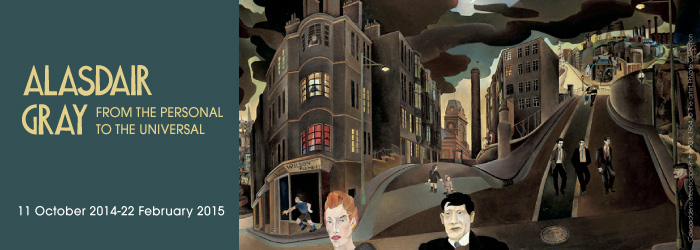
Today I went to the Kelvingrove Art Gallery to see the Alasdair Gray Exhibition “From the Personal to the Universal”. I went because I thought it would be useful for my Drawing Course, and also because I remembered seeing an exhibition of his in 2012 and I really liked his style of drawing people.
Alasdair Gray (born 28 December 1934) is a Scottish writer and artist. His most acclaimed work is his first novel, Lanark, published in 1981 and written over a period of almost 30 years. It is now regarded as a classic, and was described by The Guardian as “one of the landmarks of 20th-century fiction. Gray’s works combine elements of realism, fantasy and science fiction, plus clever use of typography and his own illustrations.
It was Alasdair Gray’s portraits that I enjoyed seeing the most and was most drawn to. He drew them on a large scale, often using brown parcel paper (because he said it was cheap). He used a variety of media; ink, pencil, watercolour, acrylic, oil, typex and crayon. The figures were drawn in line only with no tone added, often leaving the brown paper untouched for the skin tone. In contrast, the clothes were coloured, or hatched to show form. This contrast is very striking. He said “I felt free enough to use a thick nibbed fountain pen and the outline varied with the angle of the stroke. Hatching I kept for garments; I liked the contrast.”
His style of drawing figures may have been influenced by his illustrative work.
In 1977, Elspeth King, the curator of the People’s Palace, was concerned that the museum didn’t have any artworks depicting Glasgow’s people and places beyond the early 20th century. She commissioned Alasdair Gray to become the city’s “artist recorder”, documenting contemporary Glasgow in visual form.
In his year on the job he produced around 33 works for the Palace of typical or well-known Glaswegians going about their daily lives, as well as buildings and street scenes and together these form a portrait of Glasgow at that time.
The pictures provide a unique insight into a period when much of the old industrial Glasgow was being demolished. The exhibition is interesting both for fans of Gray’s work and for its snapshot of Glasgow life in 1977, seen through his eyes.
I think perhaps I may have been viewing the paintings with some nostalgia, as I grew up in the seventies. A fellow viewer at the exhibition commented that the style reminded him of the illustrations in the book “The Joy of Sex”, which made me smile. I was also reminded of my art teacher in High School showing me figure drawings in coloured pencil by David Hockney.
More recently I’ve seen figure drawings, also simplified and pared down by Kevin Atkin, a competitor on the series Sky Portrait Artist of the Year.
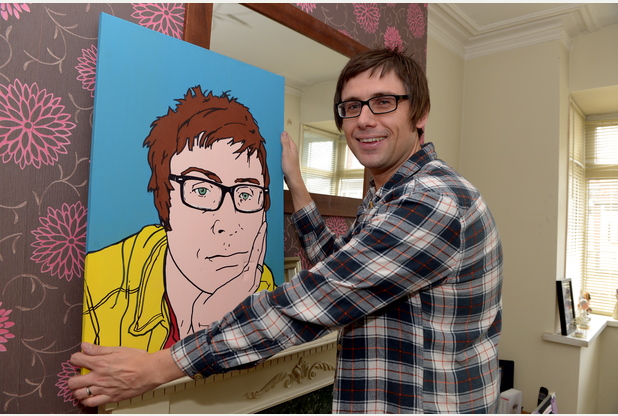
Kevin Atkin, competitor in sky Portrait Artist of the Year
I did some very quick sketches of some of these portraits. This was a little daunting as the exhibition was very busy and there were a lot of people about. Despite this, I chose a quietish corner and worked in Faber-Castell Pitt artist pen in dark sepia in a small pocket sized sketchbook. Whilst sketching, I discovered that some of the hair in the portraits was drawn with continuous line. Drawing in pen makes you really look and think quickly before committing to the drawing; there is no room for correction in the way that you can use an eraser when working in pencil. A girl came up behind me to watch. I suppose it was a testament to my increasing confidence that I didn’t just stop and walk away (as I would have in the past). The reward for this was her commenting “Wow, you’re as good as him. I’m impressed”.
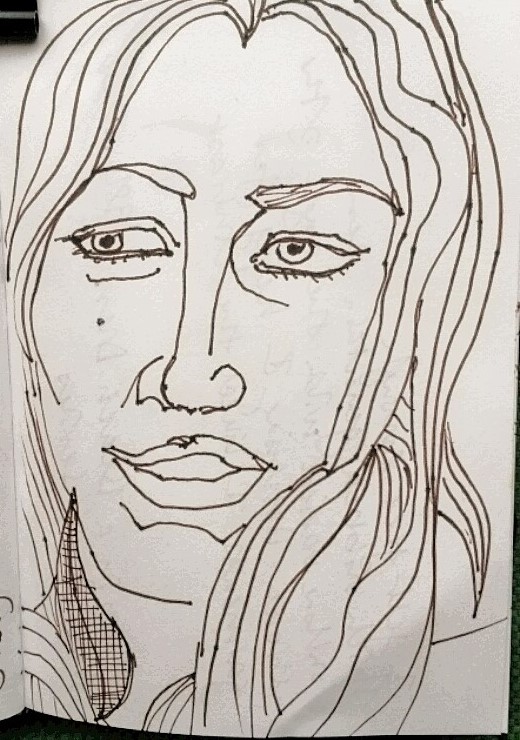
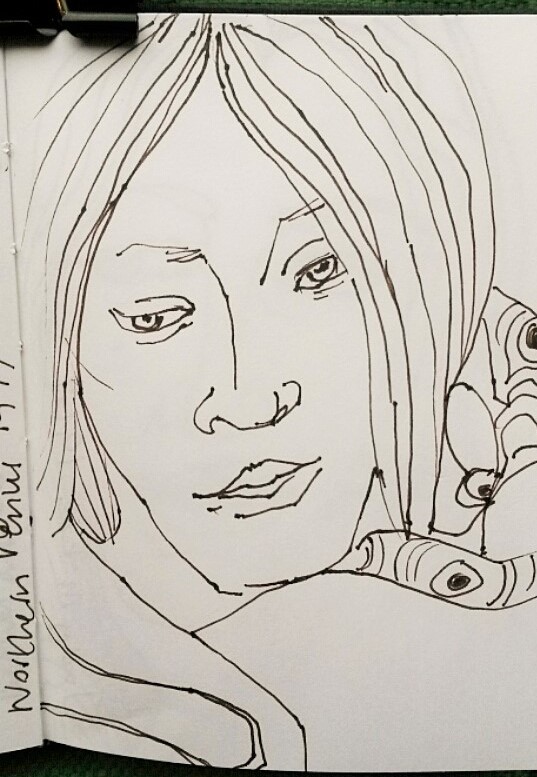
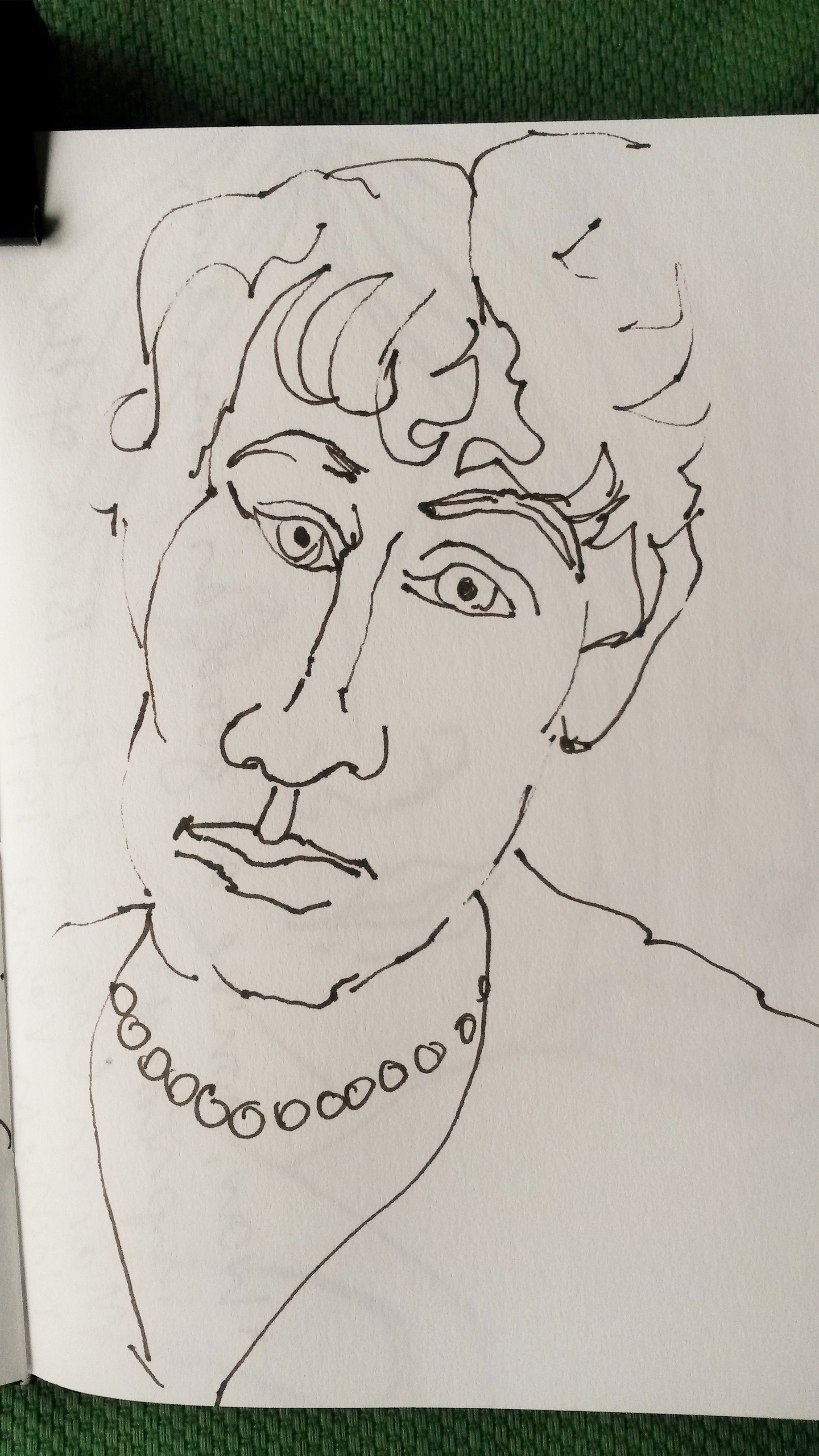
Some of my sketches
I came away feeling that I’d like to try this style of portrait for myself.
Later I began to think more about what was gained by Alasdair Gray becoming the “City Recorder”. What did he achieve in his paintings that wouldn’t be captured by a photographer etc? The city buildings would be recorded more accurately, probably, by a skilled photographer. One of the portraits was of a young girl, “Frances Gordon, Glasgow Teenager” and surrounding her portrait was a collection of items from her hand bag; a bus ticket, a ticket stub for her first pop concert etc. This is reminiscent of the current trend of collecting “found” items, and paints more of a picture of her life, interests and personality than a photograph ever could.
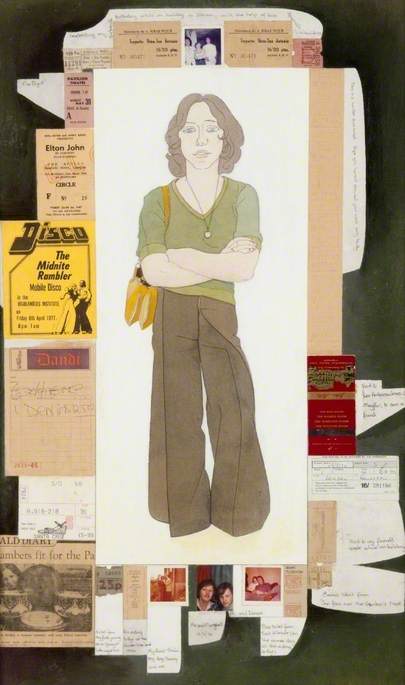
Frances Gordon, Glasgow Teenager 1977
Alisdair Gray’s City Recorder portraits have a sensitivity in them that it would be difficult to capture in a photograph. His people are “real”, many of them engage with the viewer, looking straight into their eyes. His way of simplifying a scene, pairing it back, makes it easy for the viewer to read and understand. Similar to the way in which a war artist captures the emotion and pain of combat in a way that a news report or photograph does not.
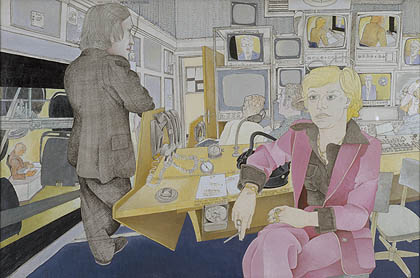
Fidelma Cook (b.1953), in the BBC News Gallery
References


Pingback: Assignment 6 Notes for a work in progress | My drawing2 blog