Liz Myhill trained in Print Making at Dundee and as well as making art, currently works as a freelance Illustrator.
Liz explained that she uses mixed media to describe “Place, narrative and atmosphere”. She first started using mixed media in an attempt to get rid of the white of the paper as quickly as possible. She began the demonstration by showing us a selection of the media she regards as her basic kit; a box of watercolours which were very messy, (however she explained she preferred them that way and often started a painting using a wash mixed for a previous painting), System 3 acrylics, sometimes used with texture gel, modelling paste, glaze or self levelling gel, pastels for sketching outdoors, and watercolour pencils for tightening up paintings. To this she applies tissue paper, “found papers” and other hand-made paper.
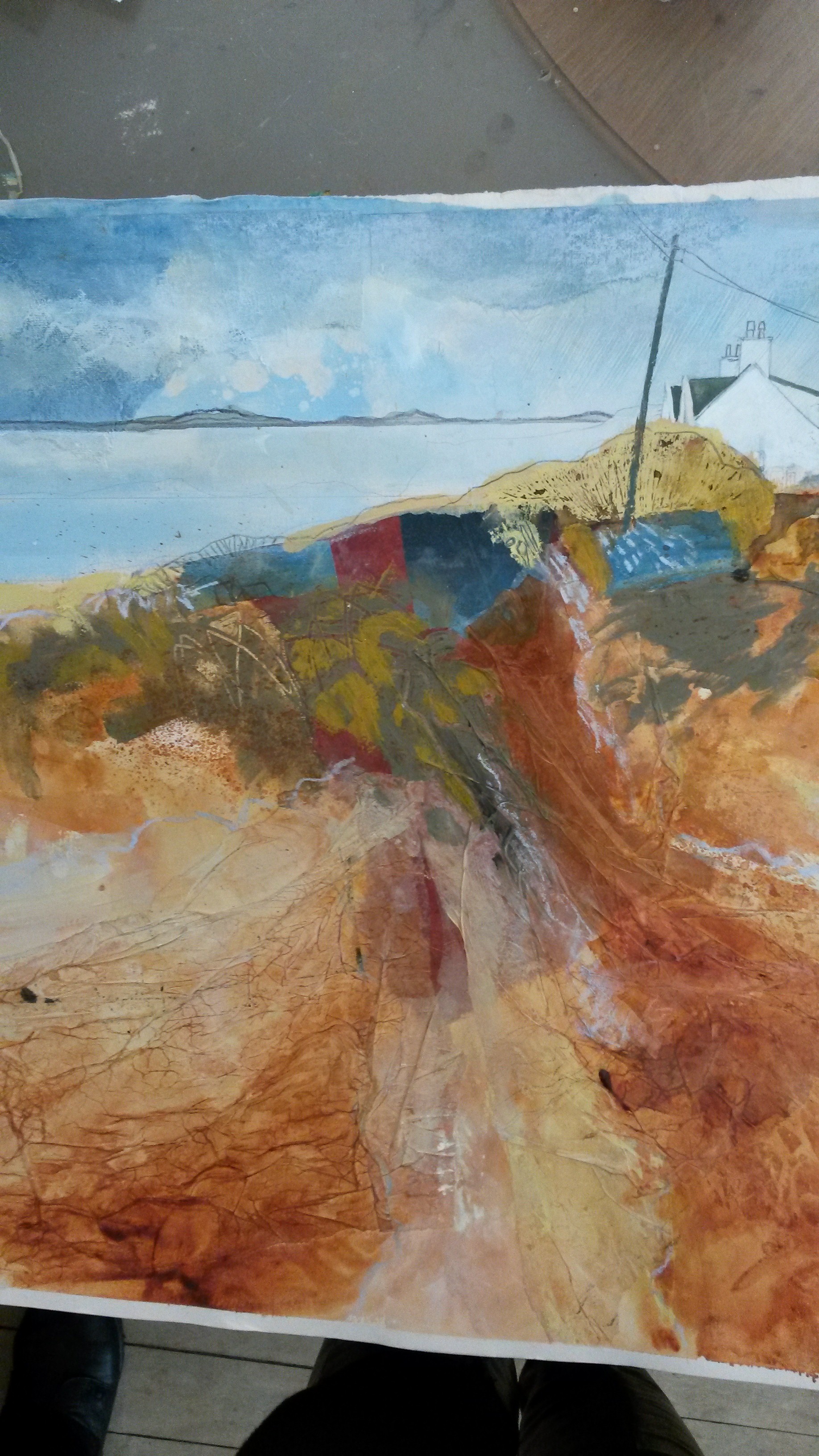
For the first demonstration she did a landscape with a square composition. She began by gluing tissue paper to the board, then covered this with watercolour. She added handmade paper then drew on top of this with an oil bar. She then added handmade paper for the sky and used diluted pvc glue for the white clouds.
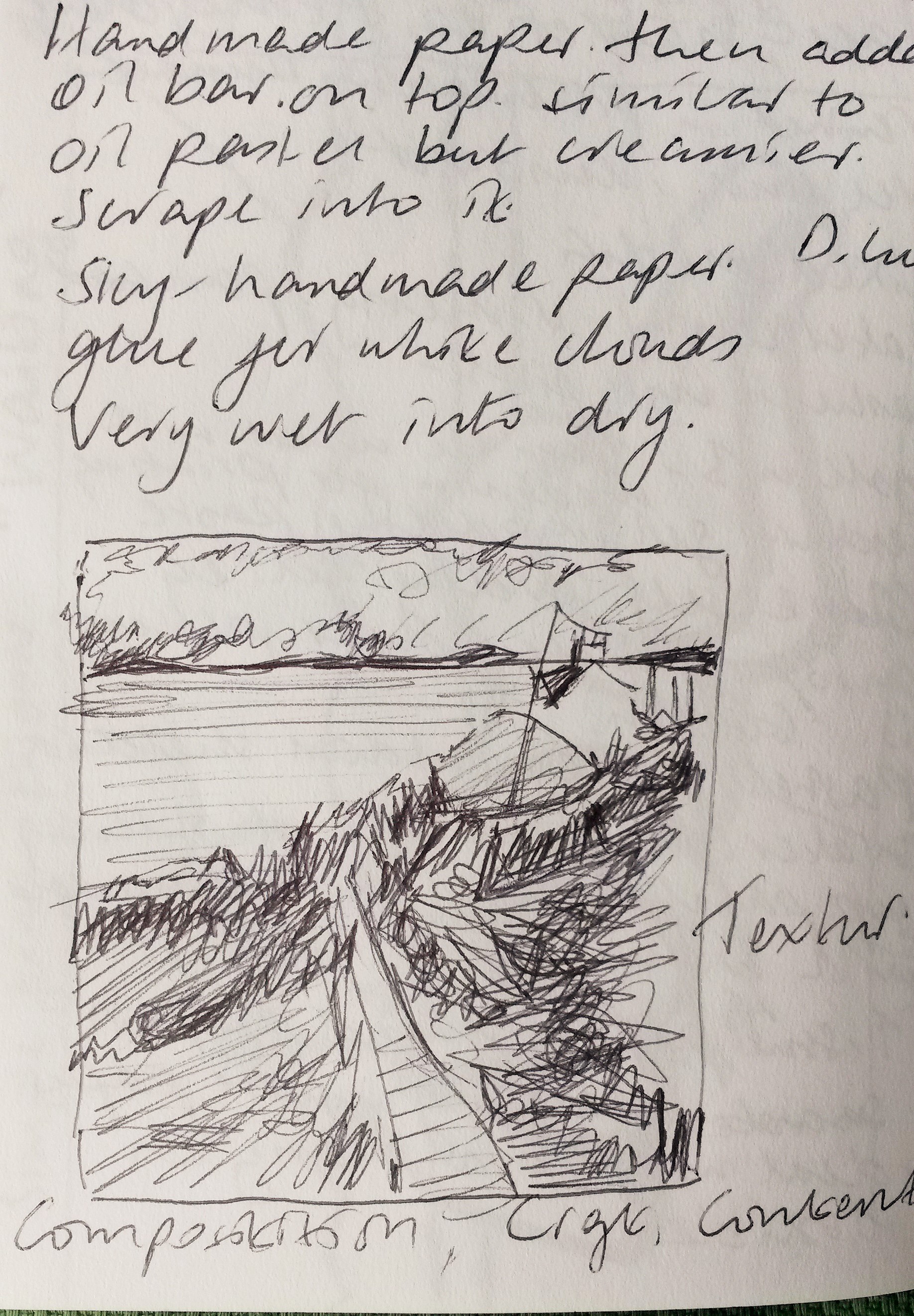
A sketch of one of her paintings

Liz Myhill “Soft Morning Light”
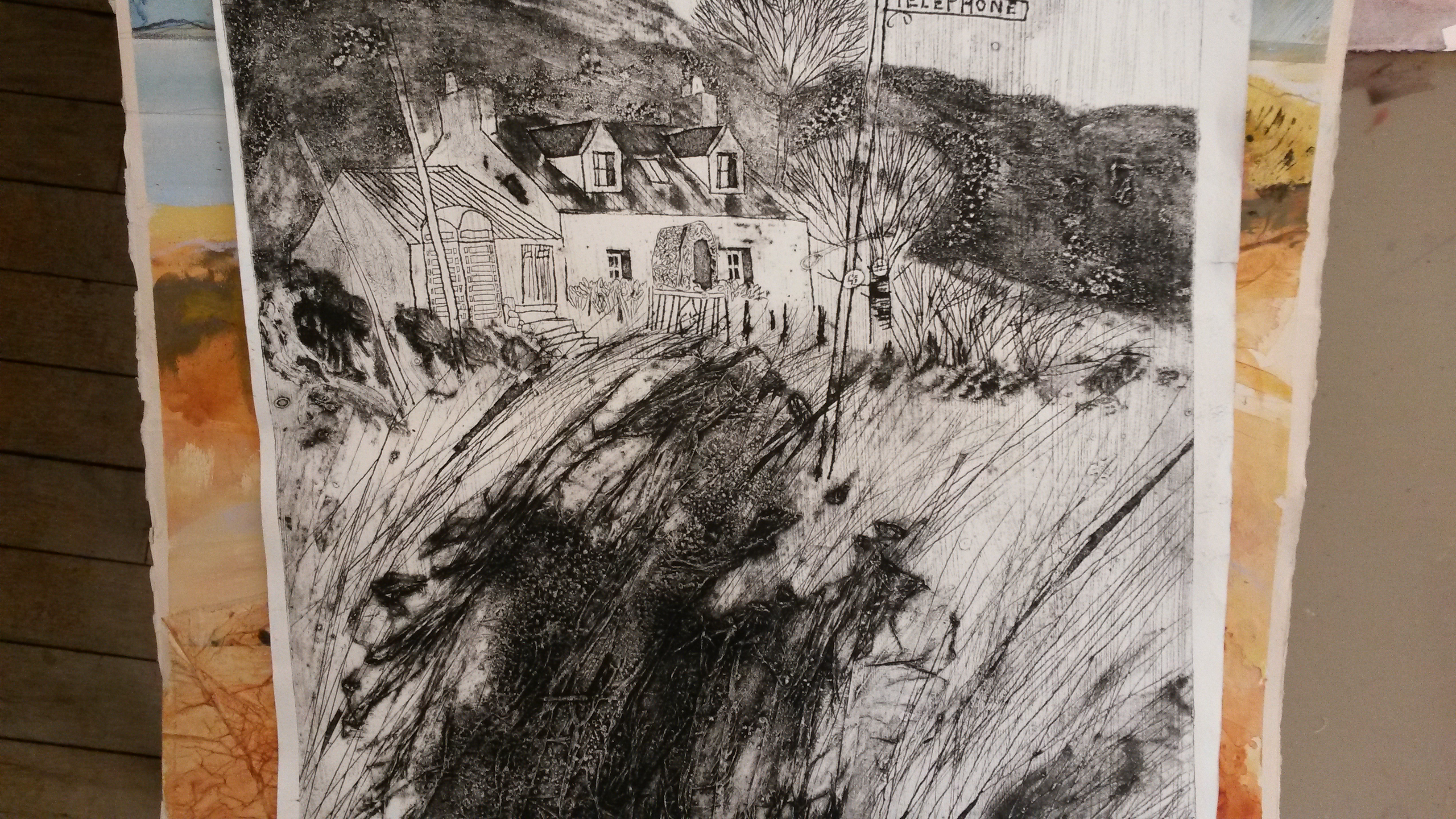
While this was drying she showed us a mono print she was working on.
Monoprint; A form of printmaking where the image can only be made once, unlike most printmaking which allows for multiple originals.
To do this she used acrylic with print making medium added on top of Perspex sheet. She said you could use glass, plastic or even a poly pocket. You can draw on to this with a pencil or your finger, or use the creases on tissue paper to add texture.
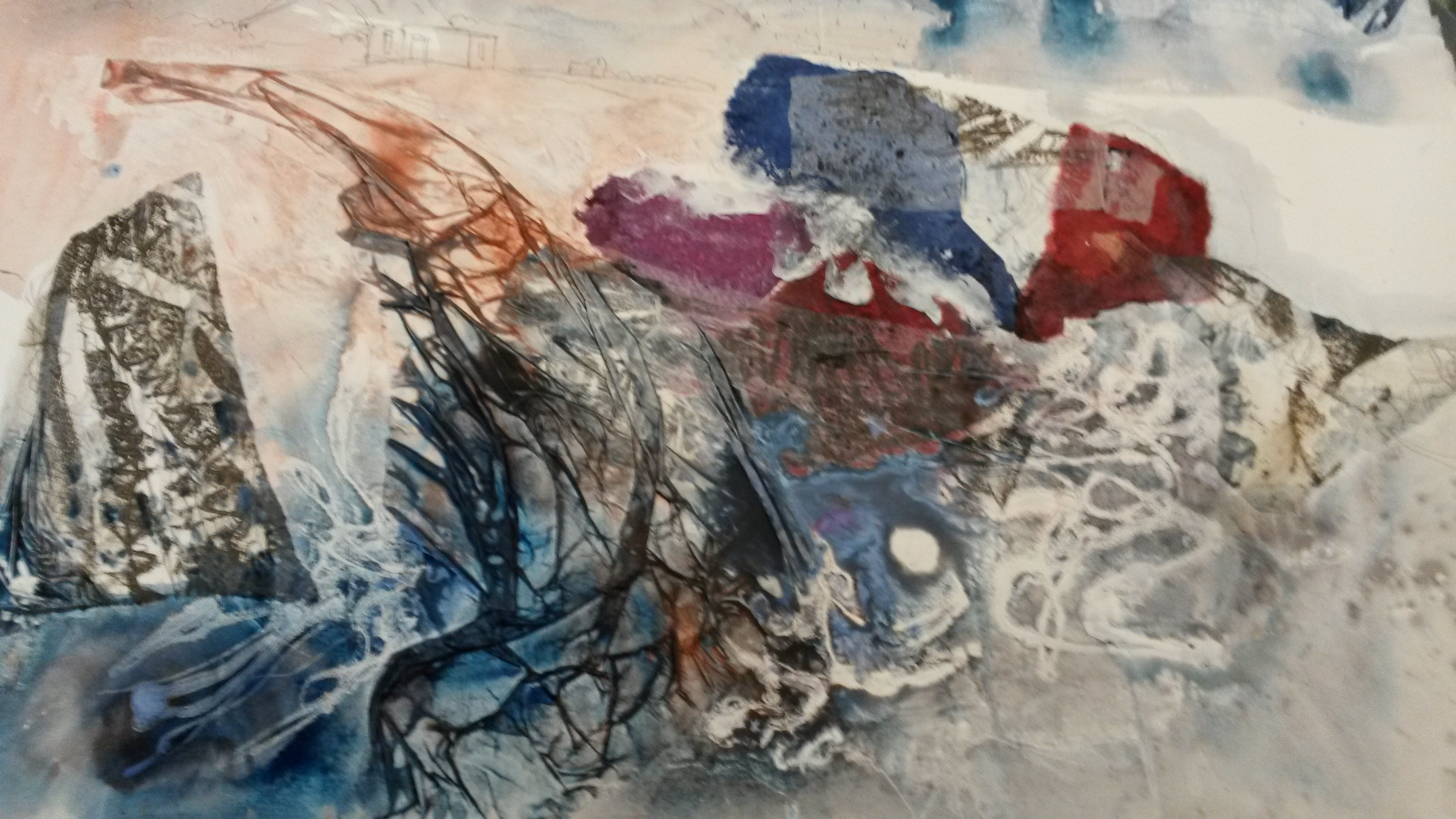
Liz makes her own paper. She said that she used a lot of tissue paper in her degree work, however discovered much later on that it isn’t light fast. She finds her own hand-made paper is much more light fast and retains it’s colour better. She likes to experiment with layers; print on top of paint, paint on top of paper etc.
Following her graduation she had a residency in India, where she learned the hard way the limitations of printing, where you can’t travel with a lot of heavy equipment. She only had basic chemicals and the use of an old tin bath, but also found she didn’t want to work with toxic materials.
She prefers to work on mountboard, which she seals with household floor varnish first. She likes to mix painting with printing because it is then a unique image, whereas prints come out identical to each other.
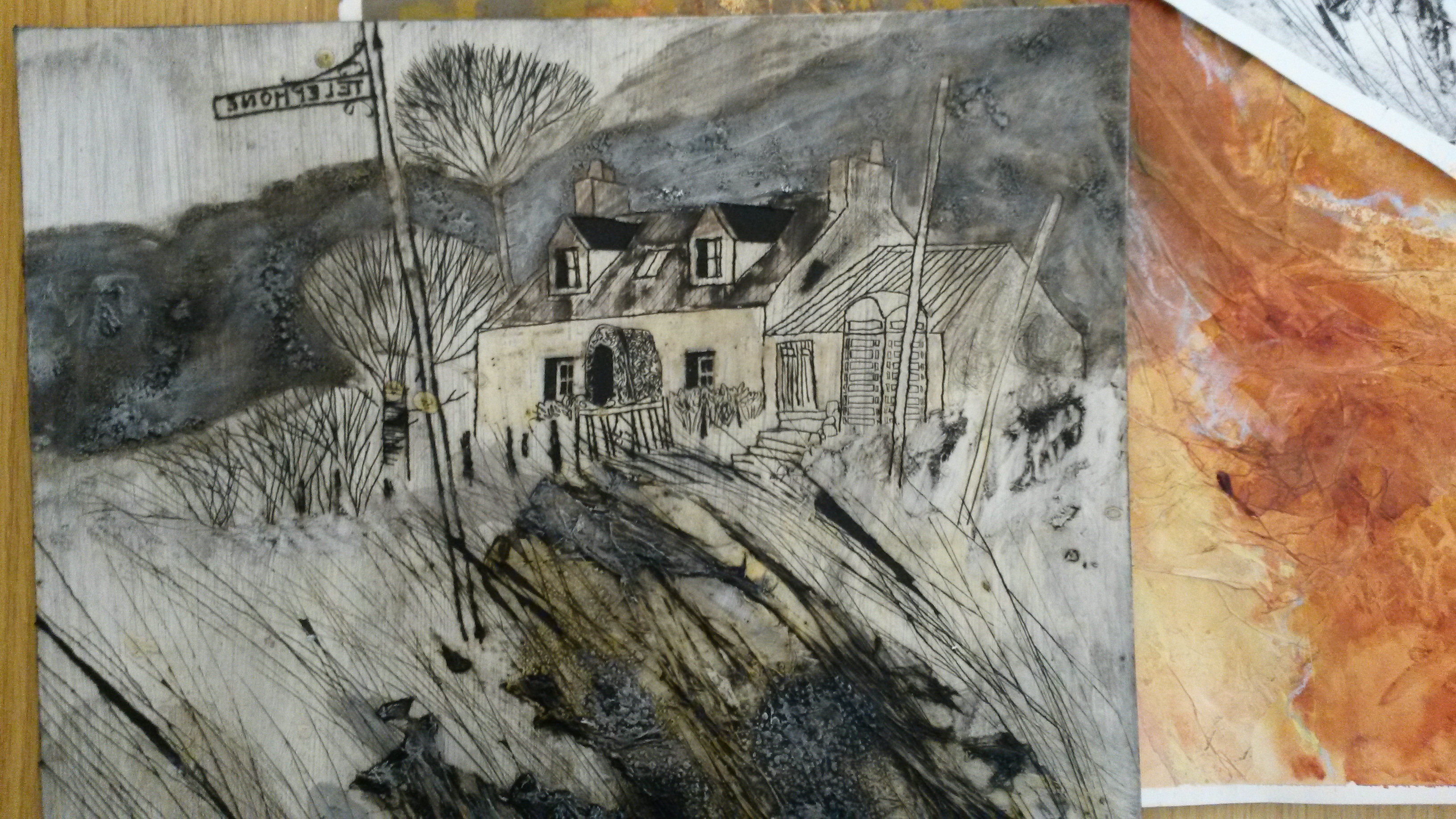
Collagraphy (sometimes spelled collography) is a printmaking process in which materials are applied to a rigid substrate (such as paper board or wood. The word is derived from the Greek word koll or kolla, meaning glue and graph, meaning the activity of drawing.
During her stay in India she filled her sketchbooks with found things such as saris, sweet wrappers and flowers. She found that collographs could incorporate all these things.
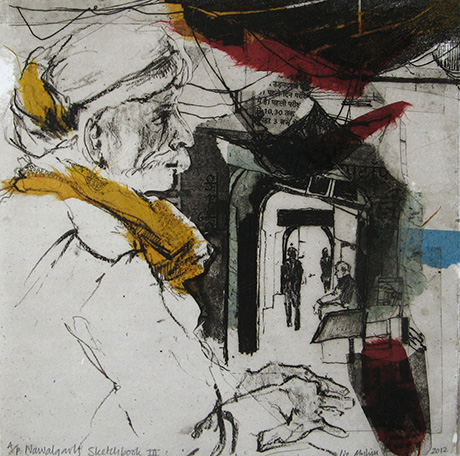
Narwalgarh Sketchbook iii
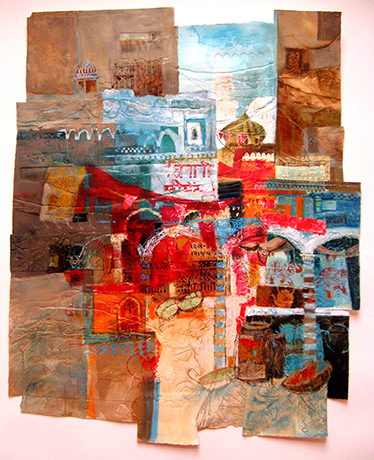
Through the Arches, Liz Myhill
She showed us a sketchbook containing a drawing of a man in the middle of a dessert wearing crisp white clothes. She developed this into a print by photocopying it onto acetate, which was then copied digitally onto polycarbonate. Photocopying allows you to change the dimensions and move things around. If an image needs something extra, she will go ahead, pushing all the time for the result she wants. That is what she did with the sketch, used collage, added handmade paper, lino cut, added text and photo etching. She took inspiration from the bustling market place, crumbling buildings, murals, white washed walls and adverts. She uses self levelling gel, which causes paint to granulate and acts as a resist. She uses Windsor and Newton white ink on top, wetting an area first, then allowing the ink to run into the creases on the paper. Once dry she added soft pastels to the sky. To define the result she uses watercolour pencils.
I found her creative process very inspiring; she pushed an idea to its limits, what started as a sketch would be added to, become a print, a painting a design in a never-ending process. She added tissue paper for texture, used a scribe to scrape marks and modelling paste for relief.
She said to worked with “spectacular mistakes, instead of safe results”, and have fun on a wonderful, explorative journey.
I was enthralled by this artist because she is the first person I’ve seen who pushed a subject on and who had so many creative processes. I’d like to try using collage and print in an experimental way in my Drawing Course.
References
http://www.tate.org.uk/learn/online-resources/glossary/m/monoprint
 My drawing2 blog